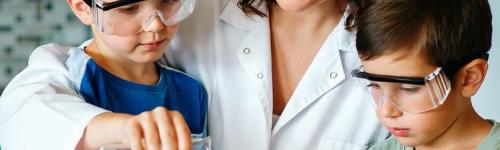
The EPA does not regulate indoor air quality; its purview is the great outdoors. However, we spend a great deal of time inside. A new study looks at children: vulnerable individuals who may spend the most time in that environment. But does the study clear (or pollute) the air on indoor air quality? Let's take a look.
Search results
Greenpeace may be committed to "saving the whales," but it's happy to let poor children go blind and die.
As social creatures, humans often synchronize with each other while watching movies, dancing in groups, and mirroring the behavior of our romantic partners. Could this synchronicity actually influence whom we find attractive? A new study says ... maybe.
Happy Independence Day! Let's celebrate by mocking a bunch of idiots who played (hilariously) with explosive devices. It's all on video, frame by frame. Enjoy some yuks.
Russia has been aggressively trying clandestinely for years to interfere with American elections and to damage U.S. economic interests, national security, and public health. Examples include election interference, discouraging vaccine uptake, promoting opposition to genetic engineering, and sowing social divisiveness.
“Should you pack Lunchables for Your Kid’s School Lunch?” asks a piece in the April 9th edition of Consumer Reports. The article claims that these lunch kits contain lead and other contaminants, and may harm children’s health. Do parents need to worry?
The U.S. has been adept at inventing The Next Big Thing, but sometimes stumbles when it comes to exploiting it. From cars to electronics, solar panels, and semiconductors, this pattern has been repeated. Biotechnology could be next unless we invest aggressively and regulate wisely.
This past weekend at West Point, President Trump had trouble drinking a glass of water and he displayed an unsteady gait when descending a ramp. It is possible these problems indicate some type of neuropathy. And while it's unlikely, one potential cause is hydroxychloroquine.
Perhaps someday a ballad will be written about the tragic tale of hydroxychloroquine (HCQ) and its ugly cousin chloroquine (CQ). HCQ, a potential (and controversial) therapy for COVID-19 at one time, is no more. The FDA revoked the emergency authorization of both HCQ and CQ. This was an example of how NOT to develop a drug. A lesson learned -- or not.
Some 54 scientists have resigned or been fired as a result of an ongoing investigation by the National Institutes of Health. At issue is the failure of NIH grantees to disclose financial ties to foreign governments. In 93% of those cases, the hidden funding came from a Chinese institution.
Remember the wisdom of the not-so-distant past? Leaving delivered boxes outside for 24 hours, then donning gloves to wipe them down before carefully opening the cartons? It’s time to shed a bit of scientific light on what we know now.
Most drug and vaccine candidates fail. However, the success rate varies wildly depending on the therapeutic area. The probability that at least one coronavirus vaccine will win FDA approval is quite high, though that does not mean it will work well.
The more recent cases of COVID-19 seem to be coming from homes and family contacts, rather than from strangers. And there, with the "opening up" of social mobility, is an increasing interest in the spread and dispersion of airborne COVID-19 particles. There are lessons to be learned from atmospheric science, especially when it pertains to the dispersion of small particles.
A walk on the thoughtful “wild side” of why old-school epidemiology has over-promised and under-delivered, discovering that population density is more than how tightly we are packed, an alternative hypothesis for how sleep refreshes our bodies and spirits, and an update on a maligned energy source, fusion.
We have rightfully focused our nation’s health care attention on how best to manage the potentially deadly COVID-19 virus through treatment and/or prevention. The next few months will be telling, but we can now begin to focus on the future — one that may include new health care challenges given that fewer patients have been seeking preventative care or measures during the pandemic. ACSH friend Dr. Robert Popovian (pictured), VP of Pfizer's U.S. Government Relations, and colleague Dave Hering, regional president, North America for Pfizer Vaccines, discuss the challenges ahead.
Are bald men more likely to get severe COVID-19? There are more than 30,000 news stories about this, almost all of which without question, accept the findings of a flawed epidemiological study from Spain. Is this a valid conclusion? Let's ask a biostatistician.
Making life or death decisions has been brought into sharp relief by the COVID-19 pandemic. For the estimated 500,000 people on dialysis in the U.S., that is a bridge already crossed. Having chosen a life requiring continuous life support, do any of them have second thoughts?
Discredited journalist and conspiracy theorist Paul Thacker, who became infamous for spreading disinformation about GMOs and biotech scientists, is back. This time, he's ranting about 5G. But it seems he could only get his most recent work published in a foreign language with the help of a collaborator, Dutch journalist Jannes van Roermund.
From Washington DC to Washington's Puget Sound, from Chicago to North Carolina, Great Britain and even India, the American Council has been making its mark, bringing science-based reasoning to important conversations the world over. While COVID-19 has dominated the healthcare headlines, our experts weighed in on that essential subject as well as several others.
Now that the paper published in The Lancet, on the use of hydroxychloroquine for COVID-19, has been retracted, we need to look at how eminence continues to trump evidence. When we talk about humans and their behavior, everything is political.
We tend to overlook how natural disasters like the coronavirus pandemic shape human behavior. Maybe that should change.
As an anti-coronavirus therapy, Remdesivir has been rather disappointing. That's primarily because the drug is given intravenously to those who are already very ill with COVID-19. But what would happen if the drug could be delivered directly to the lungs, to prevent severe disease? Gilead is giving it a shot. Here are some of the pros and cons of that approach.
In the first days of the pandemic, our thinking was greatly influenced by models of viral spread and the Imperial College. Also, IHME work comes readily to mind. As we enter months four and five, we have more and more objective evidence from our experience with COVID-19. So the question now is: Should we make policy based upon the models, or the evidence?
It has been some time since my children were in school, even longer since I was in high school let alone elementary school. One of the first realizations from COVID-19 was how our public schools have become the daily source of food for so many of our children. Education and feeding the hungry have become so intertwined. How has COVID-19 changed school and child care? These images are from a report by McKinsey and Co, Charting the path to the next normal.
"I disagree with @CDCgov on their very tough & expensive guidelines for opening schools. While they want them open, they are asking schools to do very impractical things. I will be meeting with them!!!"
That, of course, is President Trump's summary of the CDC guidelines for opening schools. It ignited a predictable political back and forth fueled more by politics than facts. Let's take a minute to see what they recommended. You decide how tough they are.
Pagination
ACSH relies on donors like you. If you enjoy our work, please contribute.
Make your tax-deductible gift today!
Popular articles