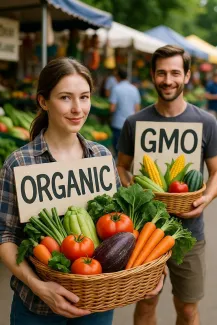
Some 15 years ago, scientists were engaged in a ferocious battle to dispel the myth that organic food was superior to its conventional counterpart. The dispute gradually petered out in the following decade as the public abandoned its phobia of "GMOs," a shift that left some environmental activists despondent.
But in the wake of COVID-19, the organic movement regained some of its prominence as a new generation of health "influencers" capitalized on the public's frustration with the pandemic response. Why exactly did this happen, and what can scientists do about it? I joined Dr. Folta on his long-running Talking Biotech podcast to answer those questions.
The conversation was prompted by viral clips, particularly from nutrition influencer Dr. Rhonda Patrick, asserting that switching to organic produce meaningfully lowers pesticide exposure and disease risk. We walked through why those claims don’t hold up. Detectable pesticide metabolites in urine, for instance, usually signal that the body is successfully clearing tiny residues, not ongoing harm. The weedkiller glyphosate is used mainly on commodity crops, not the produce most people eat daily, and residual levels are vanishingly small. Meanwhile, real dangers—alcohol consumption, driving—dwarf whatever statistically meaningless risk comes from pesticide exposure.
Bottom line: nobody in science objects to organic food. The problem is the “organic at any cost” rhetoric that sells the USDA organic label as an implied safety or nutritional guarantee. Check our discussion on Spotify, iTunes or right here:

Cameron English
Executive Vice President
Cameron English is a writer, editor and co-host of the Science Facts and Fallacies Podcast. Before joining ACSH, he was managing editor at the Genetic Literacy Project.