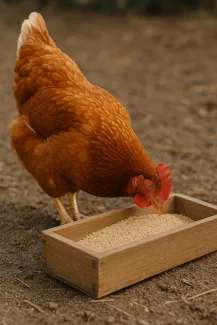
The poultry feed market is witnessing growth because poultry is considered one of the most economical sources of protein, leading to consistent demand for products such as eggs and meat. Consequently, the demand for sustainable, high-quality feed solutions is on the rise.
The first question that arises when it comes to feeding the flocks is whether to give organic feed or conventional feed. In recent years, there has been a growing demand for organic products. Organic poultry and eggs have become increasingly popular, commanding
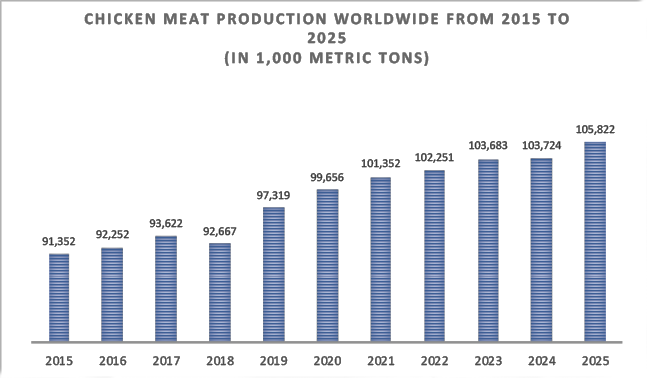
premium prices, as consumers believe that chickens fed organic feed produce healthier and safer food. But is this true? Does organic poultry feed meet the human health and environmental expectations? Or is it a well-planned marketing gimmick?
What is Organic Poultry Feed?
To be considered “organic poultry feed,” the product must meet strict guidelines set by the United States Department of Agriculture (USDA).
- Artificial preservatives, colours, or flavours should be absent.
- Genetically modified organisms (GMOs) should be absent.
- It should be free from animal by-products, antibiotics, or synthetic additives.
- No synthetic pesticides, herbicides, or fertilisers are used in crop production.
How Does Organic Feed Differ from Conventional Feed?
The sourcing of ingredients for preparing organic poultry feed is at the base of organic poultry products. Grains, such as corn, wheat, and soybeans, form the backbone of most poultry diets, as they are sources of essential carbohydrates and proteins. Grains, protein sources, minerals, and vitamins must be cultivated without the use of genetically modified organisms, hormones, antibiotics, or pesticides. The producers must follow stringent policies and procedures to obtain the “Organic” stamp on their products. Due to the limited availability of multiple organic protein sources for poultry, the cost relative to conventional protein sources, which do not have similar restrictions, increases.
While there is a notable difference in the manufacturing of organic and conventional feed, they have the same building blocks of nutrition that the poultry needs.
Adding organic feed ingredients offers several benefits to poultry, customers, and the environment. Some of the key advantages are:
- Improved Animal Health and Welfare – Organic standards include guidelines on animal welfare, such as providing outdoor access for poultry and sufficient space to move. The overall health of the poultry is promoted, as organic feed ingredients contain no harmful pesticides, herbicides, or artificial additives.
- Enhanced Product Quality – some consumers find that the flavour, texture, and nutritional value of the eggs and meat are improved, although this cannot be attributed solely to the feed. A chicken raised on organic feed but kept in poor hygiene may be less healthy than a conventionally fed chicken raised in a clean, enriched environment.
Is Organic Poultry Feed More Nutritional?
Organic poultry feed can have a significant impact on the quality and nutritional value of layer poultry. These feeds are a cleaner and a major source of essential nutrients. The nutrients in organic feed improve gut health with the help of the digestible and high-quality ingredients. Hens lay eggs with stronger shells and highly pigmented yolks that contain higher levels of antioxidants and vitamins. This is because Omega-3 fatty acids are included as an essential ingredient in organic poultry feed. Organic feed also reduces the stress levels, leading to improved immune function. The absence of pesticides or chemicals in organic feed doesn't necessarily make it a better poultry food; simply choosing organic doesn’t guarantee optimal nutrition. There is a marginal difference in the nutritional composition of the eggs and meat from organically fed poultry. Chicken feed formulation and quality are the most important points to consider, regardless of whether it’s organic or conventional.
Why is Organic Feed More Expensive?
As with human organic products, organic feed production is more challenging and labour-intensive. Certification and labelling require additional resources and efforts to meet strict government certification, adding to producer and ultimately consumer costs.
Is Organic Feed Better for the Environment?
Organic feed is also beneficial for the environment. Compared to conventional methods, this approach has a lower environmental impact, resulting in reduced water contamination from chemical fertilizers and improved soil health. However, organic farming for feed production requires more land and resources to achieve the same results as conventional methods. It is environment-friendly but less efficient.
Conclusion
The organic poultry feed offers benefits in terms of reduced chemical exposure and potential marginal nutritional differences, but it is not a magic bullet. The real differentiator isn’t simply what the birds are fed, but how they’re raised: responsible farming practices matter just as much, if not more, than whether the label says "organic."
Choosing organic poultry feed isn’t wrong; however, assuming it’s automatically healthier, safer, or more sustainable without understanding the full context is. It's time we fed our choices with facts, not just feelings.
Source: Poultry Feed Market Report
The author is employed by Pristine Market Insights Pvt. Ltd., the publisher of the source material. ACSH was not compensated for this contribution.