
As summer rolls on, we're making headlines, covering everything from AI-generated health videos featuring fake doctors to the latest absurdities in America's war on pain patients.
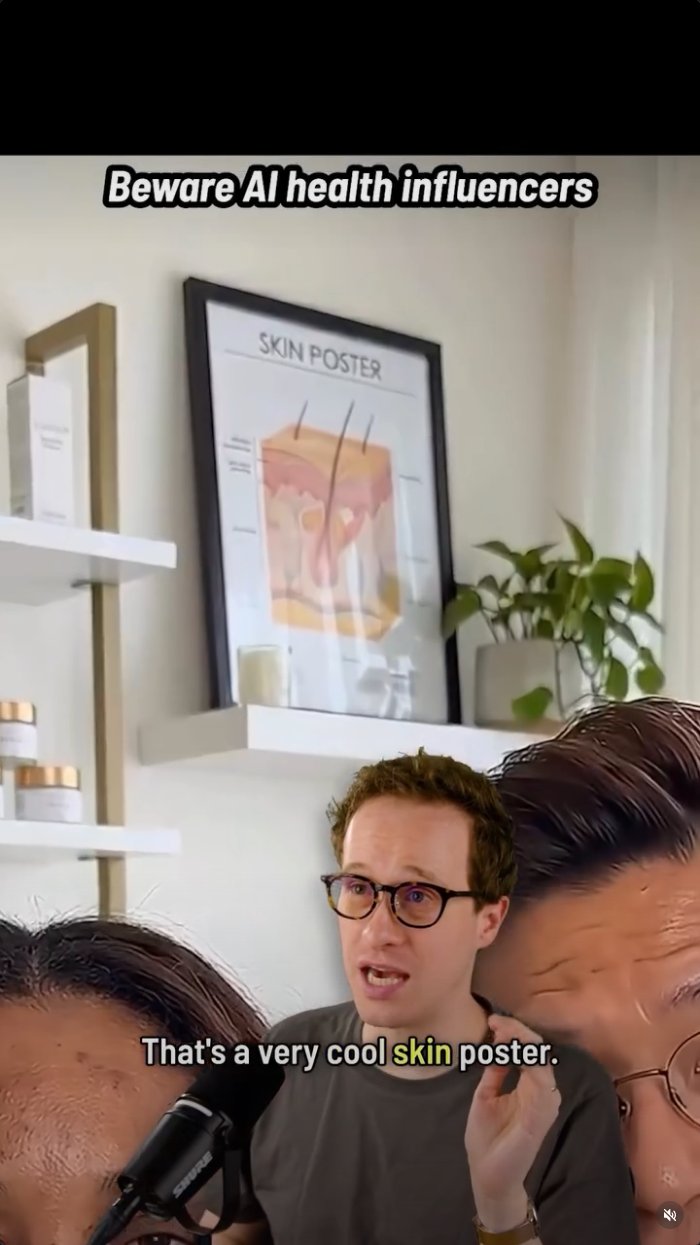
Cameron English recently examined the rise of AI-generated medical nonsense in Agri-Pulse. A growing share of health videos on YouTube, TikTok, and other platforms are fabricated. One recent analysis found that 42 percent of senior-focused health videos were AI-generated, many featuring nonexistent “experts.” Sometimes there are obvious tells—like an undeniably fake "skin poster" in a dermatologist's office.
English noted that synthetic influencers and deepfake personas are increasingly attacking modern agriculture and food production. They claim conventional produce is full of toxins, then pitch unproven supplements as the solution.
These messages spread quickly because platforms reward controversy over accuracy. The result is often poorer nutrition and eroded trust in science. English urged readers to verify sensational claims through reliable sources (like ACSH!) before sharing them.
Dr. Josh Bloom and the Cato Institute's Dr. Jeffrey Singer argued in KevinMD that opioid pain contracts turn doctors into parole officers.
Before receiving opioids, many patients must sign one-sided “patient-prescriber agreements.” These require regular drug tests, disclosure of personal and family substance-use history and strict compliance rules. Violation can mean loss of treatment.
Unlike other medications that carry serious risks—anticoagulants, benzodiazepines, stimulants—opioids alone face this heightened level of surveillance. The practice demeans patients, shifts the doctor’s role from clinician to compliance officer yet does little to combat addiction.
The same authors also described the emergence of cychlorphine in The Hill.
This synthetic opioid has appeared in forensic samples in Europe, Canada and several U.S. states, often mixed into counterfeit pills. Unlike fentanyl, it belongs to a different chemical family and can be made with common industrial chemicals that fall outside familiar precursor controls. Bloom and Singer placed the development in a long pattern: pressure on one drug simply pushes the illicit market toward something stronger and harder to track.
It's another illustration of the iron law of prohibition operating at the molecular level. Suppressing one molecule does not end the arms race; it accelerates the search for the next one.
Bloom and Singer used the recent Tylenol-autism scare in the New York Post to highlight a broader failure in pain care.
Pregnant women worried about acetaminophen and pain patients now face the same message: tough it out. NSAIDs are often unsafe for long-term use, acTylenol offers limited relief and opioids remain heavily restricted. The authors argued that addiction rates among adults prescribed opioids have stayed below 1 percent, but policy still assumes these patients are abusers.
The Tylenol controversy, built on weak evidence yet still making its way through the courts, underscores just how few options remain. Bloom and Singer called for restoring clinical judgment and clearing regulatory barriers that discourage better pain treatments. It's time for opioid policy to follow, rather than ignore, the evidence.