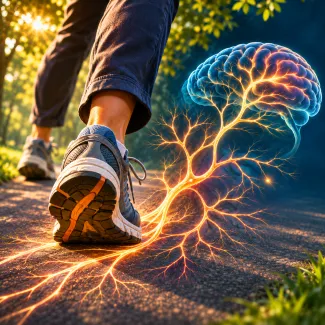
While exercise strengthens our hearts and muscles, our brains may be among the biggest beneficiaries. New research suggests that even five minutes a day of moderate-to-vigorous physical activity is associated with a lower risk of dementia. Understanding the connection between cardiovascular fitness and brain health may help explain why a little bit of exercise matters more than athletic ambition.
Anyone who has ever cared for a family member with dementia, as I have, understands the heavy emotional, physical, and financial strain that comes with it. With over 56 million people living with some form of dementia, and a projected 137 million by the year 2050, the urgency to provide preventive strategies is significant.
Every Minute Counts
One less obvious strategy is regular physical exercise. A new prospective study found that engaging in moderate-to-vigorous physical activity (MVPA) was associated with a statistically significant reduction in incident all-cause dementia risk among older adults. Physical activity is, of course, one of the standard prescriptive refrains of physicians. However, the elderly and frail, both significant comorbidities in dementia, found it difficult to meet the standard 150 minutes/week of MVPA. The data came from roughly 90,000 participants in the UK Biobank who wore accelerometers for up to a seven-day interval to establish an activity baseline and were followed for an outcome on dementia based on a documented diagnosis in their medical records.
The overall median (most common) weekly MVPA was 89.8 minutes. Patients who developed dementia logged a significantly lower median of 45.5 minutes. The researchers found a dose-response, with higher MVPA levels yielding progressively lower dementia risk. But even a small amount, five minutes a day, conferred a lower risk. While frailty is an independent risk factor for the onset of dementia, frailty status did not modify the “protective” association between MVPA and dementia.
The protective effects of low-dose MVPA are likely mediated through overlapping biological pathways, including our vascular and metabolic health, inflammation, and neuroplasticity—the brain's ability to adapt, reorganize, and grow new neural connections in our aging brains.
From the perspective of public health, we once again see that we can personalize recommendations and still obtain a benefit—a one-size-fits-all policy fits few in this at-risk group.
What Your Heart and Lungs Reveal About Your Brain
My focus draws on my years running a metabolic lab for a large medical practice, where direct-measurement cardiopulmonary exercise testing using oxygen and carbon dioxide analyzers provided several critical clinical variables used to diagnose and monitor heart, lung, and metabolic diseases, as well as strong indicators of dementia risk. Among the key physiological variables for dementia:
-
Ventilatory threshold, often called the aerobic threshold, marks the point when exercise begins relying more heavily on glucose and stored glycogen rather than fat for fuel, typically at 50–70% of maximum oxygen uptake in healthy individuals. As effort increases, lactate production rises, and buffering the resulting acidity generates additional carbon dioxide (CO₂). To clear it, the brain triggers a significant increase in breathing, producing a noticeable upward turn in ventilation that can be correlated with a specific heart rate. Most people interpret this increased breathing as a need for more oxygen, when it actually signals the upper boundary of comfortably sustainable effort. The problem is not simply a shortage of oxygen, but the need to clear excess CO₂.
A low ventilatory threshold is a primary indicator of poor cardiorespiratory fitness and physical deconditioning, which directly correlates with a significantly higher risk of developing dementia because it reduces blood flow to the brain and nitric oxide production that regulates vascular tone and keeps blood vessels dilated.
- Oxygen pulse measures cardiovascular efficiency, indicating how much oxygen your body uses with each heartbeat. Studies have found that a higher oxygen pulse is associated with better cognitive function and greater brain volume, whereas a lower oxygen pulse is linked to cognitive decline. Improvements in cognitive performance may also accompany improvements in oxygen pulse through aerobic training, although a direct protective effect against dementia has not been established.
- Peak oxygen uptake (VO2 max) reflects how effectively oxygen and blood reach and protect our tissues, including our brain. It is a strong predictor of cognitive longevity, showing a strong inverse relationship: higher VO2 max reduces the risk of developing dementia. A study of 61,000 Biobank participants found that better cardiorespiratory fitness, as measured by VO2, was associated with better cognitive function, and that in individuals at greater risk based on genetic testing, that risk was reduced by 35%.
How Movement Nourishes the Mind
Because the study we began with was observational, it cannot prove that exercise caused this protection, but laboratory and clinical research point to several plausible pathways.
- Exercise increases blood flow, and the extra drag on vessel walls triggers the release of nitric oxide, which “relaxes” (dilates) arteries and encourages the growth of "collateral" vessels, the brain's natural bypass routes. Working muscles release lactate, which signals the brain to make a growth factor (VEGF) that sprouts new capillaries.
- Exercise raises brain-derived neurotrophic factor (BDNF), often described as “fertilizer” for neurons. In a randomized trial of 120 older adults, a year of walking enlarged the hippocampus, the brain's memory hub, by about 2%, roughly reversing one to two years of age-related shrinkage. The gains tracked with BDNF levels and better spatial memory.
- Physical activity dampens chronic inflammation and improves blood pressure, cholesterol, and blood sugar, all of which slowly damage the brain's small vessels.
Exercise isn’t just about burning calories. Your moving body is actively building a delivery order of protective molecules that travel through the bloodstream, pass through the blood-brain barrier, and deliver the tools your brain needs to repair, optimize, and upgrade itself.
Neglected Advice: Exercise for the Long Haul, Not the Finish Line
Huffing and puffing. This indicates you have crossed your ventilatory threshold, shifting your body out of the optimal zone for building aerobic capacity, metabolic efficiency, and maximizing neuroprotective benefits. Constantly pushing into this zone can counter your goals for sustainable fitness and long-term brain health.
Rhinos who think they’re gazelles. Genetics and body build play a large role in what you should consider for a sustainable exercise program. If you are built like a rhinoceros, you are unlikely to sustain a program meant for a gazelle, such as long-distance running. Find something appropriate for the shape and size of your carcass to prevent structural overload and injuries that will cut your effort short.
If it’s inconvenient, it is unlikely sustainable. Convenience makes it easier to follow through consistently even when motivation may be waning.
Age. Aging has many benefits, but sprinting is not one of them. If you wish to be more supple than The Tin Man in The Wizard of Oz post-training, pick age-appropriate activities. Believing your body will respond exactly to exercise as it did 20 years ago may not be a clinical sign of dementia, but it’s certainly delusional.
Exercise is not an insurance policy against cognitive decline, and observational studies cannot prove that movement alone reduces dementia risk. Yet the accumulating evidence makes a persuasive case for incorporating physical activity into our daily lives, even in modest amounts. We should not treat the recommended 150 minutes a week as an all-or-nothing proposition. The best exercise is the kind we can sustain, because when it comes to preserving our minds, what matters may be less how hard we push ourselves than how consistently we keep moving.
Stay curious. Stay informed. Free, independent writing delivered weekly
— no ads, no sponsored fluff.
Join Now
Donate