Millions of chickens have been slaughtered to contain bird flu, yet the prospect of vaccinating them has sparked controversy even within the poultry industry. Egg producers want to protect their flocks, while chicken growers worry vaccination could jeopardize lucrative export markets. Washington hesitates.
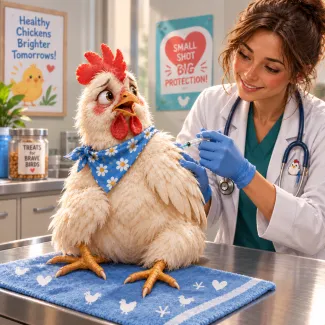
Avian flu (H5N1) has concerned pandemic prognosticators for at least two decades. Twenty years ago, when I addressed the issue before a specially convened group of Canadian security experts, I recall large posters depicting the dangers of a human H5N1 epidemic materializing at airports. The feared bird flu epidemic never materialized, but concern is reemerging, and the government's systemic response remains on hold even as bird flu-related diseases rise.
When the Chickens Come Home to Roost
The feared bird flu has prompted various prevention and control measures, with careful inspections and culling (slaughtering) of birds showing signs of flu (biosurveillance) being the international standard. Some countries also require vaccination. USDA protocols require strict farm-level biosecurity, active surveillance, and rapid outbreak response. If authorities detect signs of highly pathogenic avian influenza (HPAI), they systematically cull entire flocks to prevent wider regional or national spread. [1]
Biosurveillance appears to be failing. Since February 2022, detection of HPAI in flocks has resulted in the slaughter of over 100 million chickens and turkeys. Roughly 75% of these were egg producers. The government is under pressure to impose vaccination and reevaluate prevention methods.
Depending on perspective, the driving force is either rising egg prices or the idea that bird vaccination will reduce pandemic risk by lowering the likelihood that the virus will mutate and jump species to infect humans. Human-to-human transmission is currently absent, though at least one American has died and 70 have been sickened through zoological contact since 2024.
The Price of Prevention: Two Flocks, Two Bottom Lines
The scale of poultry losses is unsustainable and raises a legitimate question: Could vaccination, combined with effective surveillance and biosecurity, reduce the overall costs of controlling avian influenza? The answer may depend in part on the economic incentives facing two segments of the chicken industry: egg producers and breeders of chicken-for-food (roasters and broilers). And partly, it may be political.
Public sentiment has coalesced around the two stakeholder groups. The chicken-for-food farmers, represented by the National Chicken Council, oppose vaccination. The egg distributors, represented by the United Egg Producers, “firmly believe that vaccination is a necessary tool.” [2]
Each group’s concerns are driven mostly by economics, not by the possible consequences of human infection. These economic concerns stem from the likelihood that the flocks will be infected while under the producer's or distributor’s care. The lifespan of roasters and broilers is short, typically 6-8 weeks, and the likelihood of detecting infection while the birds are under their care is minimal—albeit not nonexistent.
Moreover, according to the Congressional Research Service, broilers and roasters account for only 8% of bird flu infections. Egg distributors keep their flocks as long as they lay eggs, typically two years. Maintaining flock health and longevity is crucial, so egg producers unsurprisingly favor universal flock vaccination to prevent or reduce the need for culling. The broiler and roaster group argues that vaccination would impair trade, threatening to derail the nearly $4.7 billion industry, and therefore opposes it.
A Vaccination Policy That Never Hatched
Although pandemic “panic” over avian flu began in the early 2000s, serious discussion regarding vaccinating chickens did not materialize in the US until about three years ago. In 2025, the USDA committed to investigate poultry safety measures and conditionally approved a vaccine to protect poultry from the disease, an initiative launched after what Reuters describes as “the nation's worst animal-health emergency.” It has now backtracked, and a review of the US prevention plan has stalled.
Is further delay wise? To answer that question, we need to address several issues:
- Will trade issues significantly impair the sale of broilers and roasters?
- What happens if an avian flu epidemic occurs?
- Will disparities in chicken losses and their financial consequences unduly penalize the egg suppliers, leaving the chicken-for-food farmers relatively unscathed?
- What is the cost-benefit of vaccination?
A Global Standardized Pecking Order
The World Organization for Animal Health (WOAH) now allows, but does not require, vaccinations against bird flu without trade restrictions if adequate surveillance of vaccinated flocks shows no virus is circulating.
The US is a prime exporter of both chickens and eggs. Our major export partner (about one-quarter of all exports) is Mexico, with a lesser amount going to Guatemala. Regulations in these countries thus warrant special scrutiny when assessing trade impact.
Currently, more than 30 countries vaccinate both egg-layers and meat chickens (broiler or roaster), including Mexico (which had been forced to cull 5.9 million birds in the latest outbreak) and Guatemala. China, the world’s second-largest chicken meat producer (after the US) and largest egg producer, now has a country-wide vaccination program. The 27 EU members have crafted a Harmonizing Policy, ensuring that vaccinated birds can be traded freely within the bloc.
While the UK prohibits vaccination, our major competitor, Brazil, the world’s largest and a major player in the broiler/roaster group, has the greatest impact on chicken meat production. Until recently, avian flu was completely absent in Brazil.
When Protecting Trade Threatens Trade
Brazil prohibits vaccinating commercial chicken flocks, a position that protects its pre-eminent trade status. Trade groups, government agencies, and industry leaders argue that vaccination can mask viral circulation and prompt trading partners to impose restrictive import bans or mandatory testing. Instead of vaccination, Brazil relies on the same approach as the US: strict internal biosecurity, rapid containment, and culling affected flocks. Additionally, it pushes for regionalized trade agreements so trade limitations from regional outbreaks stay localized.
This may change. Despite these precautionary measures, Brazil confirmed its first outbreak of highly pathogenic avian influenza in May 2025, triggering country-wide trade bans from major importers. After learning of the outbreak, the EU, which accounts for 15% of Brazilian poultry exports, banned imports of poultry and poultry meat from all of Brazil. The US imposed a similar nationwide ban on Brazilian poultry products. In the wake of this trade crisis, Brazil has signaled its willingness to negotiate trade rules following the 2025 outbreak that led to a boycott.
Currently, the 2025 USDA initiative to reassess poultry vaccination and safety measures has been frozen, leaving American policy in limbo. It is in this limbo that severe problems surface, ones that have affected the broiler/roaster manufacturers as much (or even more than the egg distributors), a situation that materialized in at least one legal case where insufficient government directives and pressure within the industry resulted in one broiler/roaster producer unnecessarily culling thousands of chickens that later proved healthy.
“Without a new policy including vaccines, the government will continue to slaughter every flock with a bird flu infection to limit the spread of the disease. Those deaths have totaled over 166 million birds in the U.S. since 2022.”
Brazil has signaled its willingness to negotiate trade rules following being boycotted after the 2025 outbreak. Implementation of vaccine requirements and new security procedures will be very expensive. But surely, the chicken lobby can’t be motivated by cost?
America’s bird flu policy remains grounded in surveillance and mass slaughter of chickens suspected of disease, while vaccination sits on the shelf. With millions of birds lost, egg prices soaring, and trade fears increasingly complicated by global outbreaks, inaction is getting more expensive. If vaccination can reduce losses without closing export markets, shouldn’t it at least get a fair hearing? Or is one segment of the chicken industry protecting its bottom line at the expense of a more resilient poultry supply and better protection for both chickens and humans?
[1] The Avian flu strain at issue comes in two forms: a low pathogenic strain (LPAI), which causes little to no disease in birds and results in mild superficial signs (like ruffled feathers) but a drop in egg production; and a highly pathogenic (HPAI), which causes severe, systemic illness with up to 90% or greater mortality in poultry, often within 48 hours.
[2] However, egg groups like the USA Poultry and Egg Export Council are concerned about its trade impact and oppose vaccination.
Category

Barbara Pfeffer Billauer JD MA (Occ. Health) PhD
Professor Barbara Pfeffer Billauer is an internationally recognized scholar of public health law, bioethics, and the laws of medical care, focusing on the integration of science and law and its impact on day-to-day policy and legal outcomes. She has lectured and published extensively, in scholarly journals and law reviews, and has written and edited seven books for lay and academic audiences.