In March 2020, the iconoclastic French microbiologist Didier Raoult announced that the anti-malaria drug hydroxychloroquine had cured all 36 COVID-19 patients enrolled in his clinical trial. Many of Raoult's colleagues rejected his conclusions, arguing that the trial was too small and noting that it was not randomized and controlled. But as the deadly coronavirus spread rapidly throughout the world and governments responded with draconian lockdowns, public attention was quickly drawn to the chance that a common and inexpensive drug might rid the world of the danger.
President Donald Trump promoted hydroxychloroquine as a "game changer," which raised the ire of many medical and public health experts. Without randomized controlled trials, they complained, it was irresponsible to prescribe the drug for infected patients. Under pressure from Trump, other Republican politicians, and conservative pundits, the Food and Drug Administration (FDA) nevertheless issued an emergency use authorization (EUA) for adding hydroxychloroquine to the strategic national stockpile of COVID-19 treatments.
After numerous randomized controlled trials failed to demonstrate the drug's effectiveness, the FDA revoked the EUA, leaving the national stockpile with 63 million unused doses of hydroxychloroquine. Florida's Republican governor, Ron DeSantis, had purchased 1 million doses for the state's stockpile, which likewise remained unused.
#This segment is reprinted with permission. The entire article can be read on Reason.com

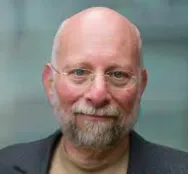
Jeffrey Singer
Jeffrey A. Singer is a senior fellow at the Reason Foundation, where he focuses on health care policy and drug policy. He is President Emeritus and founder of Valley Surgical Clinics, Ltd., Arizona's oldest and largest private group surgical practice. From 2017 to 2026, he served as a senior fellow in the Cato Institute's Department of Health Policy Studies and as a Visiting Fellow at the Goldwater Institute. Singer is a member of the Board of Scientific Advisors of the American Council on Science and Health and serves on the expert panel for Doctors for Drug Policy Reform. From 1994 to 2016, he was a regular contributor to Arizona Medicine, the journal of the Arizona Medical Association. He served on the Advisory Board Council of the Center for Political Thought and Leadership at Arizona State University from 2014 to 2018. His writings have appeared in peer-reviewed medical and scientific journals, as well as in publications such as the Wall Street Journal, Washington Post, USA Today, The Hill, and National Review. He has been a guest on national and local television and radio. Singer received his BA from Brooklyn College (City University of New York) and his MD from New York Medical College. He is a Fellow of the American College of Surgeons.