President Biden announced Thursday that he is pardoning anyone convicted of federal crimes for simple possession of marijuana. The vast majority of such convictions happen at the state level. Therefore, the president asked states to consider pardoning their offenders.
He also ordered the Department of Health and Human Services (HHS) to expedite a review of possibly rescheduling marijuana under the Controlled Substances Act (CSA). Under the CSA, the Department of HHS, the Drug Enforcement Administration, or a petition from any interested party can start the process of rescheduling or de‐scheduling a drug. The DEA currently classifies marijuana as a Schedule I drug:
Schedule I drugs, substances, or chemicals are defined as drugs with no currently accepted medical use and a high potential for abuse. Some examples of Schedule I drugs are: heroin, lysergic acid diethylamide (LSD), marijuana (cannabis), 3,4‑methylenedioxymethamphetamine (ecstasy), methaqualone, and peyote.
From the standpoint of medical science, the DEA can’t claim any of the above examples have “currently no accepted medical use” with a straight face. Marijuana (cannabis) has been used medically for centuries and was prescribed for such ailments as migraines right up until Congress effectively banned it in 1937. Sir William Osler, the “father of modern medicine” was one of the leading proponents of treating migraines with cannabis. Of course, nowadays cannabis has been found helpful in treating a host of medical conditions, and may even reduce the need for powerful narcotics to treat pain. The majority of states recognize this and have legalized medical cannabis.
Diacetyl‐morphine (diamorphine), aka heroin, is a semisynthetic opioid with roughly half the potency of the legal opioid Dilaudid (hydromorphone). It is on drug formularies to treat pain and used as medication assisted treatment (MAT) for opioid use disorder in much of the developed world.
LSD, MDMA (“ecstasy”), and other psychedelics show promise in treating a wide range of mental health disorders and may even help people to quit smoking tobacco. Finally, methaqualone is an effective sedative that was legally prescribed until its popularity among recreational users caused it to be removed from the market in 1984.
By categorizing drugs as Schedule I, the government is obstructing medical research on a host of drugs that could be improving and even saving lives. Implementing and enforcing a controlled substances schedule is not just an example of cops practicing medicine. It’s an example of cops controlling medical research.
Marijuana, a safer drug than alcohol, and with less potential for abuse, should be de‐scheduled and thus federally decriminalized. That will remove barriers to quality research on the drug’s medicinal applications. And it will stop putting people in cages for choosing the cannabis plant instead of alcohol to get high.
#Reprinted with permission. Dr. Singer's Cato Institute post can be read here.
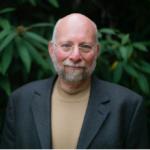
Jeffrey Singer
Jeffrey A. Singer is a senior fellow at the Reason Foundation, where he focuses on health care policy and drug policy. He is President Emeritus and founder of Valley Surgical Clinics, Ltd., Arizona's oldest and largest private group surgical practice. From 2017 to 2026, he served as a senior fellow in the Cato Institute's Department of Health Policy Studies and as a Visiting Fellow at the Goldwater Institute. Singer is a member of the Board of Scientific Advisors of the American Council on Science and Health and serves on the expert panel for Doctors for Drug Policy Reform. From 1994 to 2016, he was a regular contributor to Arizona Medicine, the journal of the Arizona Medical Association. He served on the Advisory Board Council of the Center for Political Thought and Leadership at Arizona State University from 2014 to 2018. His writings have appeared in peer-reviewed medical and scientific journals, as well as in publications such as the Wall Street Journal, Washington Post, USA Today, The Hill, and National Review. He has been a guest on national and local television and radio. Singer received his BA from Brooklyn College (City University of New York) and his MD from New York Medical College. He is a Fellow of the American College of Surgeons.