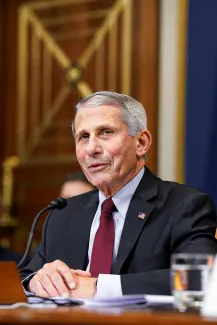
In the days since Dr. Anthony Fauci’s Senate hearing and the accompanying 1,100-page document dump, we’ve learned some revealing facts about the man who spearheaded America’s pandemic response. Never gentle with his detractors or camera shy, he referred to a trio of prominent critics as “the three stooges,” complained that “Crazy RFK, jr. has now made a film trashing me,” and documented his own rise as “an international celebrity."
So far much of the media coverage has treated these reactions to intense criticism and rising fame as endearing quirks of a scientist under pressure. That framing is partially accurate and certainly entertaining, but it overlooks the most consequential material in the documents.
The reality is that these records reveal clear instances of political maneuvering, double talk and attempts to obscure evidence on the part of Dr. Fauci and some of his colleagues. This is the very behavior that crippled public trust in science during the pandemic, and most experts have been reluctant to confront it, broadly dismissing the criticism as a conspiracy theory proffered by the uninformed.
If the science community does not honestly grapple with the misdeeds recorded in these documents, it will continue to cede influence to politicians and ideologues who are doing real damage to medicine and public health—damage that could be limited if academics would police their own.
“Tony’s Diaries”
On July 25, Sen. Rand Paul (R-Ky.), chairman of the Senate Homeland Security and Governmental Affairs Committee, released more than 1,100 pages of Fauci’s near-daily private notes covering December 2019 through December 2022, along with a retrospective volume spanning 2001 to 2015 and Slack messages from other high-profile infectious disease experts. The documents, obtained through an ongoing Congressional investigation into COVID-19 origins, were posted in advance of Fauci's appearance before the committee last week.
There are many striking passages in the diaries, though two have drawn the most attention. On January 26, 2020, Fauci wrote that epidemiological and genomic data indicated the first COVID-19 infection occurred in early December and “was not connected to the [Huanan wet] market." He continued: “Now we know the market was not the source, it was the amplifier. Having said that, somewhere the virus jumped from animals to humans.” The note does not endorse a laboratory origin. It does, however, treat the market narrative as already insufficient only weeks after the outbreak became known.
Less than a week later, on February 1, 2020, Fauci recorded a conference call with roughly a dozen scientists that ultimately informed a key paper, “The proximal origin of SARS-CoV-2,” published in Nature Medicine in March 2020. That paper argued it was improbable the virus emerged through laboratory manipulation and became a central reference point for officials dismissing laboratory-origin hypotheses.
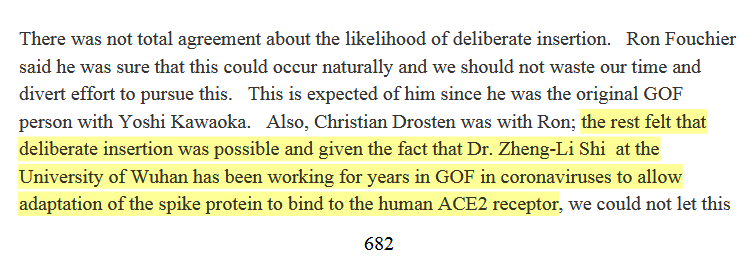
According to Fauci’s notes on the call, only two participants concluded the virus was natural. “The rest felt that deliberate insertion was possible,” he wrote, referencing the infamous furin cleavage site that is supposed to be a hallmark of lab manipulation and the history of gain-of-function work on coronaviruses in Wuhan. He added that the group “could not let this go.” That private assessment came just weeks before the published paper declared a laboratory origin implausible.
As previously reported, Fauci was not a passive bystander as this paper was drafted. When Kristian Andersen, Director of Infectious Disease Genomics at the Scripps Research Translational Institute, first raised concerns that the virus’s genome looked potentially engineered, Fauci urged a rapid expert examination and participated in the February 1 conference call that followed. Andersen later described the resulting paper as having been “prompted by” Fauci, NIH Director Francis Collins, and Jeremy Farrar, then Director of the Wellcome Trust.
After the paper was accepted for publication, Andersen thanked them for their “advice and leadership,” and Collins privately noted that the NIH leaders had helped but should not be named. Weeks later Fauci publicly cited the paper from the White House podium as independent scientific consensus.
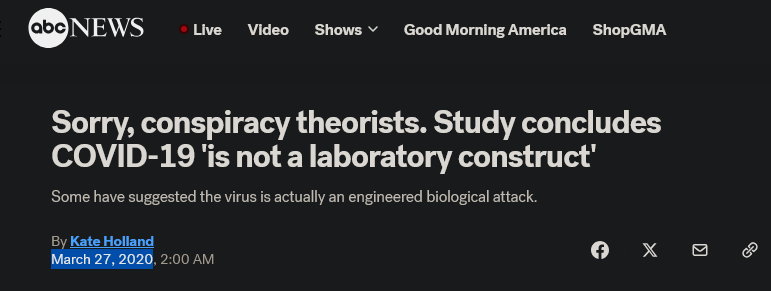
The proximal origin paper quickly became the foundation for public messaging that treated laboratory scenarios as highly unlikely and the science as essentially settled in favor of zoonotic spillover at the market. But not everyone shared that certainty. By early 2021, respected experts were calling for a thorough investigation into the pandemic’s origins—even as a concerted campaign sought to silence discussion of the lab-leak hypothesis. The federal government was also leaning heavily on social media platforms to censor information about a potential laboratory accident.
Five years later, serious scholars continue to raise important questions. Geopolitical analyst Jamie Metzl, an expert on China, wrote in Newsweek on July 30:
The outbreak occurred in a city more than a thousand miles from the natural habitat of the horseshoe bats carrying the closest known relatives of SARS-CoV-2, but home to China’s leading coronavirus research center, where scientists were collecting and experimenting on SARS-like bat coronaviruses.
No animal infected with the pandemic virus before the outbreak has ever been identified, nor has the pathway from bats to Wuhan been established. China has still not provided laboratory records, early patient data and other evidence necessary to resolve the question.
None of this conclusively proves a deliberate cover-up or a laboratory origin for the virus. Yet the contrast between the backroom discussions and the public consensus is real enough to warrant explanation. Fauci’s defenders will insist that this is armchair quarterbacking, looking back with 20/20 vision at officials who were acting on incomplete and evolving evidence.
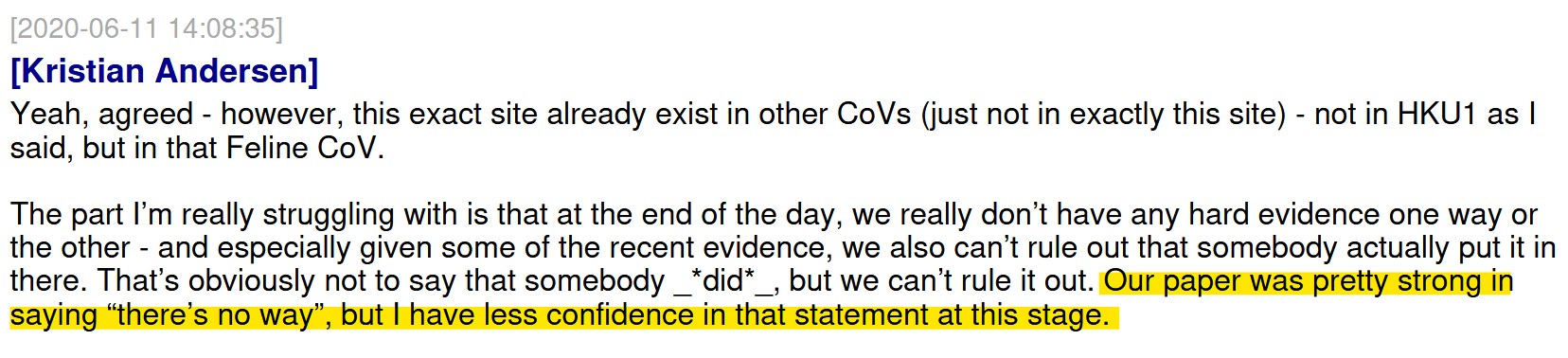
That defense fails for several reasons. Three months after the proximal origin paper was published, one of its authors, Kristian Andersen, privately stated that he wasn't confident in its strongest conclusion:
Indeed, more than a year later, in September 2021, Andersen and his co-author Eddie Holmes, a professor of virology at the University of Sydney, were still privately debating the possibility that SARS-CoV-2 originated in a lab:
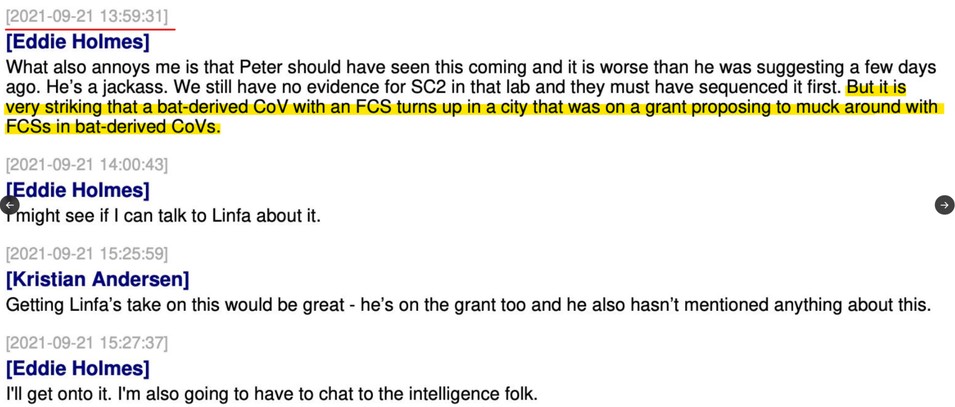
The problem is not that scientists privately harbored doubts, but that the same circle of experts helped enforce a public consensus that treated identical skepticism as anti-science conspiracy theorizing. This conclusion appears repeatedly in Fauci’s diary. “Things continue to heat up regarding the innuendoes about our being responsible for the COVID-19 pandemic because of our grant to EcoHealth,” he wrote in May 2021. “Amazing!!! All the right wing conspiracy theorists are piling on with no data at all" (p. 736).
It's hard to overstate how damaging this dynamic was. High-profile academics and public health officials privately registered doubts about the natural-spillover hypothesis while collaborating to protect that explanation from public scrutiny. As science policy expert Roger Pielke Jr. wrote in 2023:
Scientists and government officials conspired — yes, conspired — to mislead the public by knowingly promoting misinformation in the guise of a peer-reviewed paper in a major journal. Given the stakes, this is a scientific scandal with huge significance.
The larger question remains: why couldn’t the origins debate have taken place openly from the start? Andersen himself made the case for public discussion, but that approach was not pursued. The issue is all the more pressing in light of related revelations:
- High-level NIH officials calling critics “assholes,” deleting messages and using private email accounts to avoid Freedom of Information Act requests.
- NIH official and longtime assistant to Fauci, Dr. David Morens, facing charges for concealing and destroying federal records.
- Peter Daszak, then head of EcoHealth Alliance—which funneled federal funds to the Wuhan Institute of Virology—encouraging the lab not to share data with other scientists.
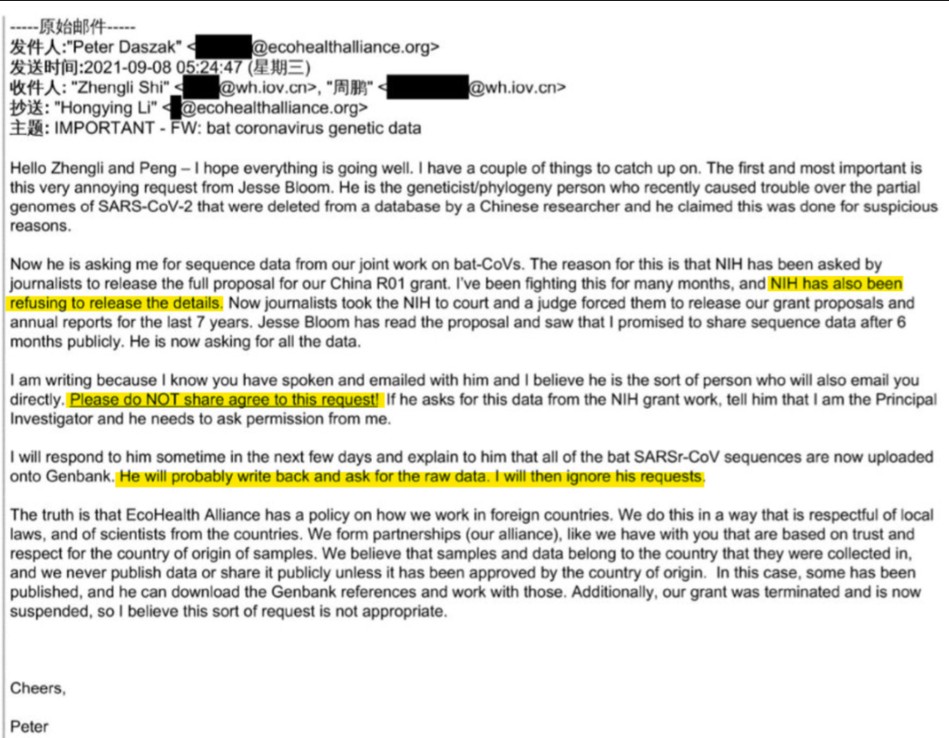
The science community would do well to explain why this behavior—destroying records, dissembling and discouraging data sharing—was acceptable, or else distance itself from it.
Circling the wagons
That has not happened. Instead, many in the science community have moved quickly to frame the documents as irrelevant private musings or to mock those citing them. Former Surgeon General Jerome Adams declared that Fauci “served this nation—mostly in the shadows—for 50+ years, until a pandemic and an election suddenly thrust him into the spotlight.” Another physician asserted in a viral tweet that “Understanding Fauci’s work requires years of training…That’s not something you pick up from TikTok, podcasts, or partisan influencers.”
Both observations contain some truth. They do not, however, answer the central point: what Fauci and his colleagues recorded privately about the pandemic diverged sharply from many of their public statements—before, during and after they had supposedly reached a consensus that SARS-CoV-2 emerged naturally.
There is clearly more in these documents than celebrity anecdotes and personal grievances. Refusing to address the substantive discrepancies carries real costs. Public trust in scientific institutions was already badly damaged by hypocritical pandemic policies and social-media censorship, to the point that America’s public health establishment is now led by the country’s most prominent vaccine skeptic, RFK, Jr.
There is some evidence that scientists are slowly regaining public trust. That recovery is encouraging—but fragile, and easily reversed by continued ideological defensiveness. I fear that may be the path we're on.

Cameron English
Executive Vice President
Cameron English is a writer, editor and co-host of the Science Facts and Fallacies Podcast. Before joining ACSH, he was managing editor at the Genetic Literacy Project.