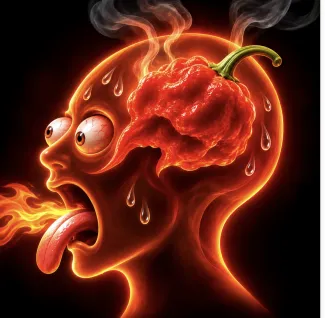
When the term "information superhighway" was coined, few would have imagined that parts of it would eventually be devoted to videos celebrating people's attempts to make themselves extinct.
Most of us know about the TikTok challenges, where kids perform genuinely dangerous stunts in pursuit of internet fame. Some have even been lethal, including the "blackout challenge," in which participants deliberately deprive their brains of oxygen, and the "Benadryl challenge," which encourages taking dangerously large doses of an over-the-counter antihistamine.
As bad as these deaths are, at least children have an excuse: They are supposed to be stupid. Their brains are still developing, particularly the regions responsible for judgment and impulse control. Adults, on the other hand, ought to know better. Yet apparently, some have decided that eating peppers so hot they make Satan reach for a glass of milk is a perfectly reasonable way to spend an afternoon.
This represents an entirely new dimension in stupidity.
A case study in poor judgment
Consider YouTube contributor Dominic Cerna, who decided that eating one extraordinarily hot pepper wasn't enough and went back for another. Fortunately, he recorded the experience, allowing the rest of us to observe the consequences without having to participate (Cerna is hardly the only YouTuber to try this. There are dozens).
At first, he seems genuinely pleased with himself. Even after eating the peppers, he declares that the experience isn't particularly unpleasant. Famous last words. Within seconds, his confidence gives way to obvious distress, followed by an unsuccessful attempt to extinguish the fire with milk. In a kiddie cup.
The entire performance is a splendid demonstration of what happens when capsaicin meets idiocy.
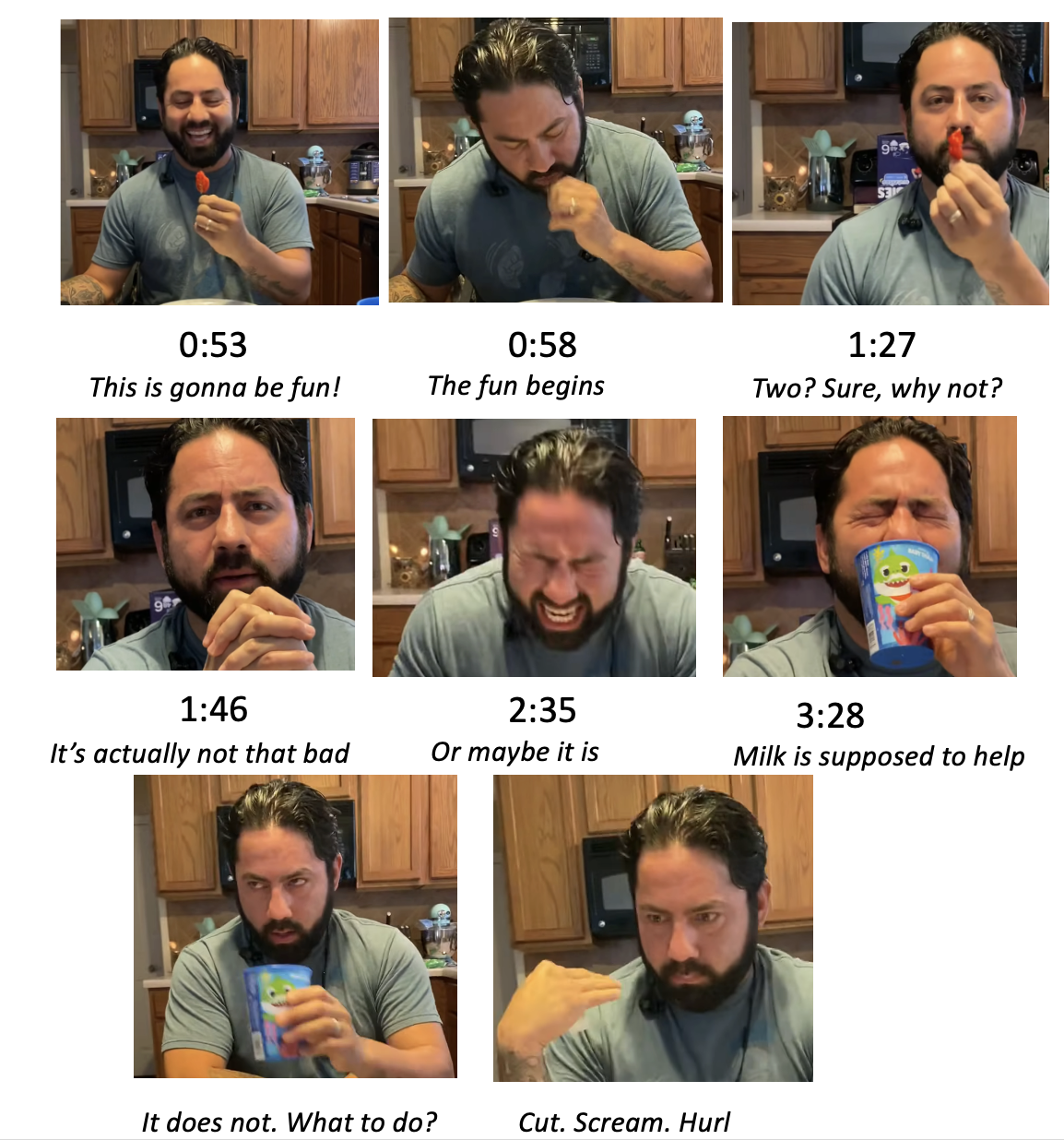
Dominic Cerna eats two Carolina Reapers. Duh.
How hot is hot?
The "hotness" of chili peppers is measured in Scoville Heat Units (SHU), a scale developed in 1912 by pharmacist Wilbur Scoville, who was working for Parke-Davis. His method was delightfully primitive: Dilute pepper extracts in sugar water and have volunteers taste them until the burning sensation disappears.
The more dilution required, the hotter the pepper. Fortunately for modern pepper evaluators, this subjective method has largely been replaced by high-performance liquid chromatography (HPLC), which measures the concentration of capsaicin and related compounds.
A typical jalapeño measures about 3,000–8,000 SHU. The Carolina Reaper, which held the world record for years, averages about 1.64 million. But, for reasons that remain unclear, even that wasn't enough.
In 2023, Guinness World Records recognized Pepper X, developed by Ed Currie of the appropriately named PuckerButt Pepper Company, as the world's hottest chili pepper. Its average rating was an astonishing 2,693,000 SHU – roughly 500 times the Scoville rating of a moderately hot jalapeño, although perceived pain doesn't necessarily increase proportionally.
In an October 2023 Associated Press report, Currie described experiencing intense burning for three and a half hours, followed by severe cramps that left him lying on a marble wall in the rain, groaning in pain, an experience not terribly different from reading this article. He also told Scientific American that recovering from Pepper X took five to six hours, compared with about 30 minutes for a Carolina Reaper.
Capsaicin: The chemical that convinces your brain you're on fire
The culprit behind all this misery is capsaicin, a naturally occurring compound produced by plants of the genus Capsicum.
Capsaicin doesn't actually produce heat. Instead, it activates a protein called TRPV1 (transient receptor potential vanilloid 1), an ion channel found in sensory neurons. TRPV1 serves an important protective function: It detects potentially damaging heat and triggers pain signals that warn us to avoid injury.
The name TRPV1 isn't arbitrary. The V stands for vanilloid (Fig. 1), a reference to a structural feature shared by capsaicin and vanillin, the compound responsible for vanilla's aroma and flavor. Yet despite their chemical resemblance, one tastes, well, like vanilla, while the other can make even a hardened masochist beg for mercy.
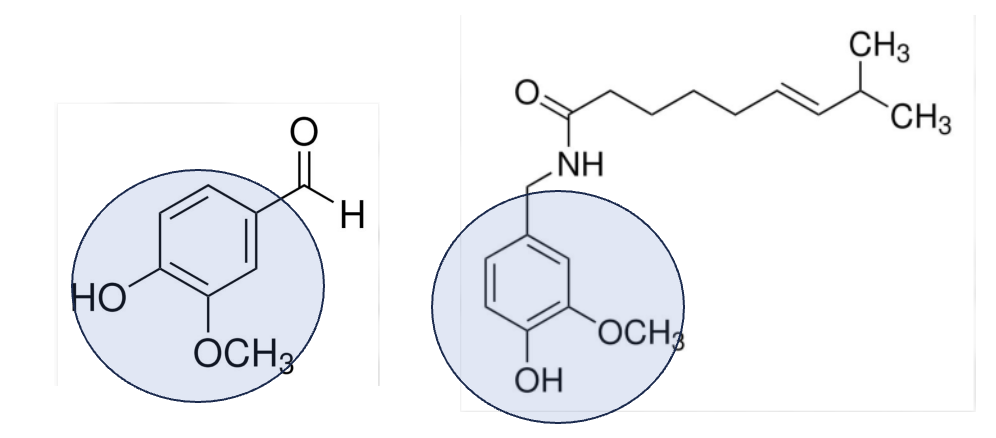
Figure 1. The chemical structures of vanillin and capsaicin. The vanillyl group is shown in blue circles.
Despite their structural similarities, vanillin is only a weak activator of TRPV1, while capsaicin is extraordinarily potent. When capsaicin activates the receptor, the ion channel opens, allowing positively charged ions, including sodium and calcium, to enter the neuron. This generates an electrical signal that the nervous system interprets as burning pain.
In other words, capsaicin doesn't set your mouth on fire. It simply convinces your nervous system that someone has inserted a partially-spent uranium fuel rod into your mouth.
The pain is real, even though no heat is being generated. And because capsaicin is lipophilic, it doesn't dissolve readily in water. This helps explain why drinking water often provides little relief, while milk may be more helpful, at least in theory. As Cerna discovered, you can only milk this remedy so much.
Can capsaicin actually kill you?
In most cases, eating an ultra-hot pepper produces intense but temporary misery. The burning eventually subsides, the sweating stops, and the victim can return to whatever activity normally occupies someone who considers this a worthwhile pastime.
But not always.
As I discussed in a 2023 ACSH article about the Paqui One Chip Challenge, capsaicin is more than a harmless source of culinary entertainment. The National Capital Poison Center warns that high capsaicin exposure can cause severe gastrointestinal distress, vomiting, breathing difficulties, chest pain, and potentially serious cardiovascular complications. Forceful vomiting can also damage the esophagus. In a 2018 case report published in BMJ Case Reports, physicians described a 34-year-old man who developed excruciating headaches after eating a Carolina Reaper during a contest.
Brain scans revealed narrowing of several cerebral arteries, consistent with reversible cerebral vasoconstriction syndrome (RCVS). Fortunately, the blood vessels eventually returned to normal. Whether this made any difference in his future endeavors is less clear.
Perhaps the most disturbing example involves 14-year-old Harris Wolobah, who died in September 2023 after participating in the Paqui One Chip Challenge. According to the autopsy findings reported in 2024, Wolobah suffered cardiopulmonary arrest following ingestion of a substance containing a high concentration of capsaicin. The examination also revealed an enlarged heart and a congenital coronary artery abnormality, which may have increased his vulnerability. The precise contribution of each factor remains uncertain.
Paqui subsequently discontinued the product.
These events are exceptionally uncommon, and most people who eat ultra-hot peppers recover without serious injury. Capsaicin can produce almost unbearable pain without necessarily causing significant tissue damage. Unfortunately, that doesn't mean it's harmless.
A final thought
There's nothing wrong with enjoying spicy food. But deliberately eating something that causes excruciating pain, vomiting, and occasionally a trip to the emergency room is another matter. Then again, perhaps I'm missing the point. After all, millions of people get to watch you suffer, and if you're really lucky, some of them might even subscribe.
In today's world of artificial intelligence, there remains plenty of room for naturally occurring stupidity.

Josh Bloom
Dr. Jonathan (Josh) Bloom, ACSH's Director of Chemical and Pharmaceutical Sciences, earned his Ph.D. at the University of Virginia and completed postdoctoral training at the University of Pennsylvania. During his 20-plus years in drug discovery at Wyeth, his research group discovered the antibiotic Tygacil®, approved in 2005. He holds 25 issued patents and has authored 35 academic papers. Since joining ACSH in 2010, he has written more than 2,000 articles and dozens of op-eds for major newspapers, including The Wall Street Journal and Chicago Tribune.