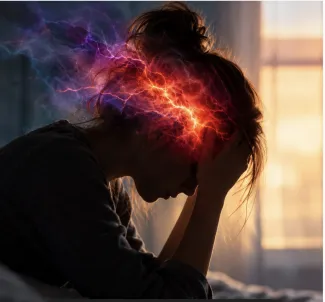
My friends Dan and Diane Henry lost their daughter to pain. Danielle began experiencing migraine disease when she was eight years old. Despite relentless attacks, she worked hard to stay in school and play sports, while her parents pursued every available treatment. In 1999, just three weeks before her eighteenth birthday, Danielle died by suicide.
When I wrote “pain can be as malignant as any cancer,” it was Danielle who taught me that truth. I meant malignant not as a clinical diagnosis, but as a description of what severe, persistent pain does to a life. It erodes sleep, education, friendships, independence, and hope. Danielle wanted a future beyond migraine. She had aspirations and a sense of humor; today, her family remembers her above all for her generosity and determination. Her death should never become the entirety of her story.
September is Suicide Prevention Month. In 2024, 48,824 Americans died by suicide, including 27,593 by firearm. Each loss leaves loved ones with a grief that persists long after the memorial services end. Research consistently documents the lasting physical and mental health toll on those left behind.
Chronic pain is a recognized suicide risk factor. Investigators examining suicide deaths across 18 states found evidence of chronic pain in 8.8% of cases between 2003 and 2014; they cautioned that incomplete records likely made this an underestimate. Migraine holds a particularly stark place in the data: a meta-analysis found that people with migraine face significantly higher odds of suicidal thoughts and attempts than those without the condition. Neither finding predicts what will happen to an individual patient, but both tell us that pain deserves attention when we ask how someone is coping.
Dr. Stefan Kertesz made a similar point in a recent CSI:OPIOIDs newsletter: risk factors and statistical models cannot tell us with certainty who will die by suicide. His advice is to notice when a person feels like a burden or believes they no longer belong. He asks us to “listen like a real human being.”
For someone living with severe pain, distress may first surface as a practical concern: I can’t keep missing school. I’m letting my family down. I’m afraid my treatment will stop working. We need to hear what may lie beneath those words, ask directly about suicide when appropriate, and help connect the person to care. Listening matters most when it leads to sustained support.
Drug overdose statistics—a topic I often write about—further complicate our understanding of pain-related deaths. In 2024, 79,384 Americans died from overdoses, including 7,989 involving natural or semisynthetic opioids—a category that includes medicines used to treat pain. Statistics alone cannot tell us for certain whether an overdose was accidental or intentional. I offer these numbers not to rank tragedies but to emphasize that preventing both overdose and suicide requires us to see the person behind the statistic.
Danielle’s family has chosen to share her story publicly. Through the Danielle Byron Henry Migraine Foundation, they help young people, families, and schools understand migraine and find support. Their work honors the fullness of Danielle’s life while responding to suffering that too often goes unseen.
Pain can be as malignant as cancer. That is not a prediction about everyone who lives with pain. It is a plea to take its consequences seriously, to offer treatment and human connection before despair deepens, and to stand by families and friends when a life is lost.
If you or someone you know is struggling or in crisis in the United States or Canada, call or text 988.

Lynn Webster, MD
Lynn R. Webster, MD, is a physician, researcher, and author specializing in pain and addiction medicine. He is a Senior Fellow at the Center for U.S. Policy and co-author of Deconstructing Toxic Narratives: Data, Disparities, and a New Path Forward in the Opioid Crisis.