The Attack on Cell Phones, Redialed

By ACSH Staff — Feb 15, 2005
A recent article in London's Evening Standard claimed that research completed by the Irish Doctors Environmental Association (IDEA) found the first proof that cell phones cause health problems, but is this research we can rely on? The doctors ignore the lessons learned from previous research along these lines. In September of 2004, researchers in Sweden found links between cell phone usage and acoustic neuroma. The studies were flawed but created a scare nonetheless.
A recent article in London's Evening Standard claimed that research completed by the Irish Doctors Environmental Association (IDEA) found the first proof that cell phones cause health problems, but is this research we can rely on? The doctors ignore the lessons learned from previous research along these lines. In September of 2004, researchers in Sweden found links between cell phone usage and acoustic neuroma. The studies were flawed but created a scare nonetheless.

Where There's Smoke, There May Be Fired Workers

By ACSH Staff — Feb 14, 2005
A February 14, 2005 Journal News article by David Schepp, about the company Weyco firing workers who smoke, included comments from ACSH president Dr. Elizabeth Whelan: "If I had a choice I would not hire a smoker," says Elizabeth Whelan, president of the American Council on Science and Health, a public-health advocacy organization... As a practical matter, Whelan says, it makes less sense in the face of rising health-care costs to hire someone who voluntarily participates in a habit known to further disease.

A February 14, 2005 Journal News article by David Schepp, about the company Weyco firing workers who smoke, included comments from ACSH president Dr. Elizabeth Whelan:
"If I had a choice I would not hire a smoker," says Elizabeth Whelan, president of the American Council on Science and Health, a public-health advocacy organization...
As a practical matter, Whelan says, it makes less sense in the face of rising health-care costs to hire someone who voluntarily participates in a habit known to further disease.

Going in Circles, Precautionary Style

By ACSH Staff — Feb 14, 2005
Back when Jaws was scaring us on the big screen in the 1970s, Americans were being warned of a more subtle danger. On television and in the papers, we were told that saturated fats, the type found in some meat and dairy products and in some processed foods, were on the verge of causing an epidemic of heart disease.

Back when Jaws was scaring us on the big screen in the 1970s, Americans were being warned of a more subtle danger. On television and in the papers, we were told that saturated fats, the type found in some meat and dairy products and in some processed foods, were on the verge of causing an epidemic of heart disease.

Q & A on BPA and Plastic Water Bottles

By ACSH Staff — Feb 11, 2005
A February 11, 2005 "Q & A" feature in the Atlanta Journal Constitution mentioned ACSH's take on The Facts about Bisphenol A: Q: I remember reading about potential problems, such as toxic danger, in reusing plastic water bottles. Can you discuss that? --Howard Schell, Roswell

A February 11, 2005 "Q & A" feature in the Atlanta Journal Constitution mentioned ACSH's take on The Facts about Bisphenol A:
Q: I remember reading about potential problems, such as toxic danger, in reusing plastic water bottles. Can you discuss that?
--Howard Schell, Roswell

Whether Gold or Grain

By ACSH Staff — Feb 11, 2005
Whether gold or grain, humans don't give it away. Globally, a thousand people die of hunger every hour. Over 800 million of us are chronically malnourished. Yet studies consistently conclude that the world actually produces enough food for everyone; if only it were more evenly distributed we could eradicate hunger. This is a major plank in the argument against using modern farming methods to increase food production: there's already enough food, so we don't need modern technology.

Whether gold or grain, humans don't give it away.
Globally, a thousand people die of hunger every hour. Over 800 million of us are chronically malnourished. Yet studies consistently conclude that the world actually produces enough food for everyone; if only it were more evenly distributed we could eradicate hunger.
This is a major plank in the argument against using modern farming methods to increase food production: there's already enough food, so we don't need modern technology.

Mouse-Trapped: The Regulatory Juggernaut of Rodent Cancer-Testing

By ACSH Staff — Feb 10, 2005
Superstitions -- closely held beliefs lacking any scientific support -- have been around for ages. They promise empowerment: if you take some pre-emptive action (avoid broken mirrors, black cats, or ladders) you can dodge dire consequences. True, there is no evidence that such actions protect you, but just in case, you take a few extra steps to avoid the ladder. After all, you never know. Superstitions prevail in our high-tech era. Take for example the common practice of using the results of high-dose rodent cancer tests to predict which substances might cause human cancer.

Superstitions -- closely held beliefs lacking any scientific support -- have been around for ages. They promise empowerment: if you take some pre-emptive action (avoid broken mirrors, black cats, or ladders) you can dodge dire consequences. True, there is no evidence that such actions protect you, but just in case, you take a few extra steps to avoid the ladder. After all, you never know.
Superstitions prevail in our high-tech era. Take for example the common practice of using the results of high-dose rodent cancer tests to predict which substances might cause human cancer.

Public Health Group Optimistic on Bone Disease

By ACSH Staff — Feb 09, 2005
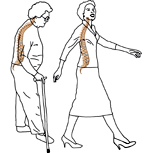
New York, NY -- February 2005. The American Council on Science and Health (ACSH) is pleased to announce the release of an updated version of its publication The Prevention and Treatment of Osteoporosis. Osteoporosis is a progressive bone disorder that weakens bones and can result in multiple debilitating fractures. It is a major health threat in the United States; ten million Americans, most of them women, already have the disease, and millions more are at risk.

New York, NY -- February 2005. The American Council on Science and Health (ACSH) is pleased to announce the release of an updated version of its publication The Prevention and Treatment of Osteoporosis.
Osteoporosis is a progressive bone disorder that weakens bones and can result in multiple debilitating fractures. It is a major health threat in the United States; ten million Americans, most of them women, already have the disease, and millions more are at risk.

The Prevention and Treatment of Osteoporosis: A Review

By ACSH Staff — Feb 09, 2005
Based on a position paper of the American Council on Science and Health (ACSH) by Felicia Cosman, MD, Medical Director, Clinical Research Center, Helen Hayes Hospital. February 2005

Based on a position paper of the American Council on Science and Health (ACSH) by Felicia Cosman, MD, Medical Director, Clinical Research Center, Helen Hayes Hospital. February 2005

The Great Carcinogen Hype

By ACSH Staff — Feb 08, 2005
Hard-nosed reporter and man-about-town Gary Shapiro wrote an article for the New York Sun the week of February 8, 2005 that included a description of the New York release party for ACSH's book America's War on "Carcinogens" and a mention of Johnny Carson's smoking-induced death:

Hard-nosed reporter and man-about-town Gary Shapiro wrote an article for the New York Sun the week of February 8, 2005 that included a description of the New York release party for ACSH's book America's War on "Carcinogens" and a mention of Johnny Carson's smoking-induced death: