Shaky Science at Harvard

By ACSH Staff — Sep 30, 2005
A September 30, 2005 item in the Wall Street Journal noted ACSH president Dr. Elizabeth Whelan's role in drawing attention to the Harvard School of Public Health's award to the unscientific scaremonger Erin Brockovich:
A September 30, 2005 item in the Wall Street Journal noted ACSH president Dr. Elizabeth Whelan's role in drawing attention to the Harvard School of Public Health's award to the unscientific scaremonger Erin Brockovich:

Quietly, Invisibly, Ominously Getting Healthier and Healthier

By ACSH Staff — Sep 30, 2005
Modern life has buffered us from so many of the constant dangers of pre-modern life that few of us fear them. Unfortunately, the removal of the constant threat of disease and starvation seems to cause us to fill in the vacuum with new fears. Instead of fear-mongering, though, the happy story of the last half-century should be told in terms of the cancer epidemics or other dark, unseen forces that didn't strike us.

Modern life has buffered us from so many of the constant dangers of pre-modern life that few of us fear them. Unfortunately, the removal of the constant threat of disease and starvation seems to cause us to fill in the vacuum with new fears. Instead of fear-mongering, though, the happy story of the last half-century should be told in terms of the cancer epidemics or other dark, unseen forces that didn't strike us.

Popular Mechanics and Popular Panics (per Frank Furedi)

By ACSH Staff — Sep 30, 2005
Ah, the contrast! Last night, I was lucky enough to attend Popular Mechanics magazine's 2005 Breakthrough Awards, a reminder that wonderful things that benefit human health are still being invented all the time.

Ah, the contrast! Last night, I was lucky enough to attend Popular Mechanics magazine's 2005 Breakthrough Awards, a reminder that wonderful things that benefit human health are still being invented all the time.

Public Health or Brockovich Wealth?

By ACSH Staff — Sep 29, 2005
A September 29, 2005 column by Michael Fumento criticizes the Harvard School of Public Health's award to Erin Brockovich, noting ACSH president Dr. Elizabeth Whelan, who brought the dishonorable honor to public attention:

A September 29, 2005 column by Michael Fumento criticizes the Harvard School of Public Health's award to Erin Brockovich, noting ACSH president Dr. Elizabeth Whelan, who brought the dishonorable honor to public attention:

The Sweetened Life

By ACSH Staff — Sep 27, 2005
In a September 27, 2005 column largely dependent upon the alarmist Center for Science in the Public Interest for information, Lisa Ryckman does quote ACSH president Dr. Elizabeth Whelan on the scare campaign against cyclamates: And what of cyclamates? That faux-sweetener saga began in 1937 with a discovery by chemistry graduate student Michael Sveda, who tasted something sweet on the cigarette he'd just stuck in his mouth while mucking about in the lab.

In a September 27, 2005 column largely dependent upon the alarmist Center for Science in the Public Interest for information, Lisa Ryckman does quote ACSH president Dr. Elizabeth Whelan on the scare campaign against cyclamates:
And what of cyclamates? That faux-sweetener saga began in 1937 with a discovery by chemistry graduate student Michael Sveda, who tasted something sweet on the cigarette he'd just stuck in his mouth while mucking about in the lab.

The War on Mercury (UPDATED)

By ACSH Staff — Sep 27, 2005
Editor's note: With the Senate narrowly staving off more restrictive mercury regulations recently (see ACSH's new report on mercury emissions for an explanation of the futility of trying to improve human health through further limitations on factory emissions of mercury), New York governor George Pataki recently approving an unscientific and belated call for mercury-free vaccines, and dental quacks perpetually blaming human ills on mercury in dental fillings, mercury may be in the running for America's Least Favorite Ele

Editor's note: With the Senate narrowly staving off more restrictive mercury regulations recently (see ACSH's new report on mercury emissions for an explanation of the futility of trying to improve human health through further limitations on factory emissions of mercury), New York governor George Pataki recently approving an unscientific and belated call for mercury-free vaccines, and dental quacks perpetually blaming human ills on mercury in dental fillings, mercury may be in the running for America's Least Favorite Ele

Diet and Cancer: Is There Really a Link?

By ACSH Staff — Sep 27, 2005
Broccoli and cauliflower help prevent cancer, right? So you might think, if you relied on much of the nutrition news in the popular press. But the reliability of such information has been questioned -- most recently in an article in the New York Times by veteran science reporter Gina Kolata.

Broccoli and cauliflower help prevent cancer, right? So you might think, if you relied on much of the nutrition news in the popular press. But the reliability of such information has been questioned -- most recently in an article in the New York Times by veteran science reporter Gina Kolata.

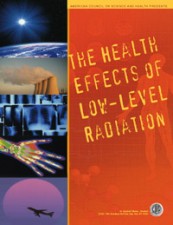
The Health Effects of Low-Level Radiation

By ACSH Staff — Sep 23, 2005
The possibility of suffering adverse health effects as a result of exposure to radiation is a cause for concern and indeed, for outright fear for many people. It is often thought that little is known about the health effects of radiation and that exposure to even low doses of radiation can be disastrous; yet neither of these beliefs is true.

The possibility of suffering adverse health effects as a result of exposure to radiation is a cause for concern and indeed, for outright fear for many people. It is often thought that little is known about the health effects of radiation and that exposure to even low doses of radiation can be disastrous; yet neither of these beliefs is true.