
The images are taken from an article found in this week’s, The Conversation by Jason Qu
Harm Reduction
The science and policy of minimising risks associated with substance use, high-risk behaviours, and public health challenges — grounded in evidence rather than stigma.

“In 1965, two Norwegian social scientists, Johan Galtung and Mari Ruge made a fascinating observation: What counts as "news" depends very much on the frequency with which we pay attention.

Race may once, long ago, been a stand-in for some perceived biological quality, but as the Human Genome project pointed out almost a decade ago, race is not a biological property; it has no genetic code.

The article, Environmental Group Charges EPA With Ignoring Evidence Of Cancer discusses a complaint fi

Amazon, like the aforementioned social media, is driven by algorithms. For social media, algorithms are optimized to keep you on the website, presumably absorbing the advertising along with pictures, articles, and arguments.

The question of the “best” vaccine came up during our group meeting the other day. I have also gotten the question from friends. Here is my best answer.
Efficacy of vaccines

The data set continues to be drawn from Our World in Data and is based on CDC statistics for the US.

The data set continues to be drawn from Our World in Data and is based on CDC statistics for the US.
Global
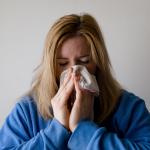
The study looks at deaths attributed to pneumonia and influenza over 23 years, from 1995 to 2018.

The report comes from the CDC by way of JAMA and provides information on the number of anaphylactic reactions during the first week of administration involving roughly 1.8 million doses.
ACSH relies on donors like you. If you enjoy our work, please contribute.
Make your tax-deductible gift today!


Popular articles

ACSH Podcasts