The Scientific Seal of Approval
Publication in a peer-reviewed journal is a key component of the scientific process and progress. It provides initial assurance that the scientific method has been followed, the data is accurate, and the conclusions are valid. Publication also allows outside, independent reviewers to critique the research and attempt to replicate it, another key component of the scientific method. The process is designed to assure scientific integrity. It doesn’t always work that way.
Researchers seek publication to notify the scientific community of an important discovery, gain recognition and kudos, and invite others to replicate their work, which confers legitimacy. Of course, ego can complicate matters, as in the famous case where Brian MacMahon, then head of Epidemiology at Harvard, published an article concluding coffee causes pancreatic cancer in the peer-reviewed New England Journal of Medicine in 1982. To the initiated, multiple flaws surfaced but were disregarded, allowing publication; only when researchers tried unsuccessfully to reproduce the findings did the truth emerge.
In recent years, trash science has proliferated. Various groups attempt to monitor fraudulent work that escapes peer-review censors, including Retraction Watch, under the aegis of The Center for Scientific Integrity. To date, the Retraction Watch Database contains over 66,000 entries of retracted articles from across the scientific literature.
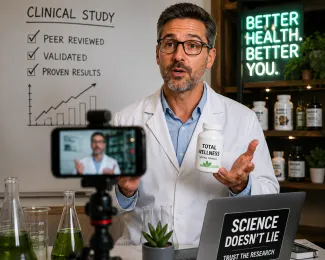
When scientists leave the scientific arena for the commercial arena, using the prestige of peer-reviewed research to influence consumers about products, they begin to resemble those pesky influencers — and the traditional protections afforded to scientific speech don’t seem relevant. While there are legal protections to protect the public from misleading commercial claims, these protections seem inadequate in this situation, and influencers who enjoy the halo of scientific status have escaped inquiry, putting the public at risk.
When Science Becomes a Litigation Tool
Peer-reviewed literature enjoys special status in the law, as it often signifies scientific validity and evidentiary admissibility. As litigation involving science has increased, the many scientific “guns for hire” have conscripted scientific publications to publicize their litigation-driven positions. To be sure, the law doesn’t favor litigation-driven research. It is one of the considerations a judge must evaluate when making a Daubert decision on admissibility:
“Testimony proffered by an expert based directly on legitimate, preexisting research unrelated to the litigation provides the most persuasive basis for concluding that the opinions he expresses were ‘derived by the scientific method.’”
That hasn’t stopped paid experts from using the scientific press as a podium for their work, later referenced in court to legitimize their personal (or paid) conclusions. As long as the research, at least superficially, mimics the scientific method, this has been allowed, and attempts by defendants to penalize these researchers for work disparaging their products on the grounds of slander or defamation have failed. [1]
Scientific Speech Meets Commercial Speech
Defamation cases are difficult to win, especially when they involve public figures, including prominent products and manufacturers. Truth is a defense, and even false speech receives broad constitutional protection, but in an era of bots and 24/7 social media, the old remedy of “more speech” is less persuasive. Commercial speech occupies a middle ground, where the government may impose truthfulness requirements to protect the public.
In 1980, the Supreme Court found that “false, deceptive, or misleading commercial advertising receives no First Amendment protection and could be banned.” This means that certain products, like nutritional supplements, must be scrupulous in their health and safety claims, and actual, tested results must temper cosmetic promises of youth and beauty or include caveats like “may help to promote youthful skin.” In other words, the manufacturer has shackles. Not so the scientific attacker.
Scientific disagreement and scientific acrimony are nothing new. Ilya Metchnikoff, the discoverer of phagocytosis, and Paul Ehrlich, a champion of humoral immunity, famously attacked one another’s work and conclusions, an intellectual feud dramatized in The Microbe Hunters. In the end, both were right: each had identified a different arm of the immune response, and they shared the 1908 Nobel Prize. However heated their dispute became, it remained largely inside the scientific arena, where the goal was to persuade fellow scientists rather than courts, regulators, or the public.
But lately, scientists fancy themselves as commercial influencers, and here is where the First Amendment protections and customary scientific disagreement break down.
When Scientists Become Influencers
Consider sugar substitutes. Much has been written about the collective dangers of various entries, especially against the backdrop of the dangers of refined sugar in ultra-processed food, as noted by my colleague Susan Goldhaber. When saccharin was first introduced, the FDA had major reservations about its safety; urinary bladder cancer was determined to be a risk. The overwhelming needs of patients with diabetes ultimately convinced the FDA to license the product. The argument centered on the scientific merits of the risks and benefits.
The Splenda Case: Science Enters the Marketplace
Today we come to Splenda, the trade name of a product that contains trace amounts of sucralose (at FDA-approved levels). Writing in a recognized journal, Susan Schiffman, a professor in the department of electrical and computer engineering at North Carolina State University, claimed that a metabolite of sucralose, sucralose-6-acetate (S6A), in an unnamed product was genotoxic and called for its regulation.
After publication, Dr. Schiffman undertook a publicity tour touting the dangers of sucralose and, by innuendo, alluded to Splenda, (which neither she nor the independent lab tested), interposing remarks about the dangers of excessive doses of sucralose with oblique, though not direct, references to Splenda. Dr. Schiffman’s scientific article is subject to question and is under review for retraction. But the public speaking tour sets this scenario apart from the general conduct in the scientific community.
TC Heartland, the producer of Splenda, sued Dr. Schiffman for “false and defamatory statements about Splenda’s health effects.” The judge dismissed the case, noting that
“Neither party has produced sufficient evidence to overcome the other’s First Amendment right to talk about the research and the conclusions to draw from the scientific research.”
She went on to tell the parties to “return to the marketplace of ideas and laboratories to duke out their differences over artificial sweeteners.” This is hardly the marketplace of ideas our founders conceived, but rather a blatant attempt to influence an unsuspecting public.
The Scientific Double Standard
Scientific disagreement deserves broad protection; without it, science cannot correct itself. But that principle becomes more complicated when a scientist leaves the scientific arena and enters the commercial marketplace. Manufacturers are rightly constrained from making false or misleading claims about what they sell. It is difficult to see why those who use scientific credentials to attack those same products should face virtually no comparable responsibility for the accuracy of what they tell the public. The issue is not whether scientists should be free to criticize products; they should, but whether the lab coat should provide a shield when scientific debate becomes commercial influence. A marketplace of ideas works best when accountability travels with authority.
[1] Johnson & Johnson sued three physician-scientists over a 2020 study linking cosmetic talc exposure to mesothelioma, alleging false statements and data errors. A federal judge ruled for the scientists, finding no defamation because, among other things, there was no evidence of malice. J&J has said it will appeal.
[2] Phagocytosis is a process where phagocytes engulf and digest foreign particles and pathogens. Metchnikoff highlighted the role of these immune cells in defending against infections. Opposing him, Paul Ehrlich focused on the humoral aspects of immunity, particularly through his studies of antitoxins, laying the foundation for understanding antigens and antibodies.

Barbara Pfeffer Billauer JD MA (Occ. Health) PhD
Professor Barbara Pfeffer Billauer is an internationally recognized scholar of public health law, bioethics, and the laws of medical care, focusing on the integration of science and law and its impact on day-to-day policy and legal outcomes. She has lectured and published extensively, in scholarly journals and law reviews, and has written and edited seven books for lay and academic audiences.