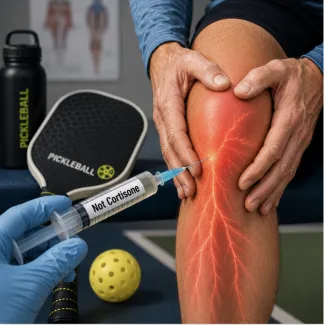
When you play pickleball, chances are your knees will hurt. When I play pickleball, chances are everything will hurt (including my hair).
For musculoskeletal injuries, there are plenty of treatment options: NSAIDs, physical therapy, chiropractors, and steroid injections, commonly called “cortisone shots.” Except that virtually no one gets "cortisone shots" anymore because the injection doesn't contain cortisone anymore.
Well, that makes no sense
Actually, it does. The medical world perpetually abbreviates chemical names. This is usually fine. Would you rather hear cyano-[(1R,2S,3S,4Z,7S,8S,9Z,13S,14Z,17R,18R,19R)-2,7,18-tris(2-amino-2-oxo-ethyl)-3,8,13-tris(3-amino-3-oxo-propyl)-17-[3-[[(2R)-2-[[(2R,3S,4R,5S)-5-(5,6-dimethylbenzimidazol-1-yl)-4-hydroxy-2-(hydroxymethyl)tetrahydrofuran-3-yl]oxy-oxido-phosphoryl]oxypropyl]amino]-3-oxo-propyl]-1,2,5,7,12,12,15,17-octamethyl-8,13,18,19-tetrahydro-3H-corrin-21-yl]cobalt(1+) or is vitamin B12 more palatable?
But sometimes the abbreviations get stretched. Let's look at this as it applies to cortisone and some other steroids [1].
Cortisone ≠ cortisone. At least in the body
Cortisone was first isolated from the adrenal cortex of cows in 1935 and, before long, celebrated as a revolutionary treatment for rheumatoid arthritis. The name stuck around, but cortisone itself did not. Why?
First, cortisone (Figure 1) is a relatively weak anti-inflammatory that is converted in the body to hydrocortisone – the stuff in every other OTC skin remedy in the pharmacy. Hydrocortisone (also known as cortisol) is the drug that does most of the work.
So, you got a cortisol shot, right?
Probably not. The history of drug development is littered with pioneers that were eventually replaced by superior descendants, often from the same family.
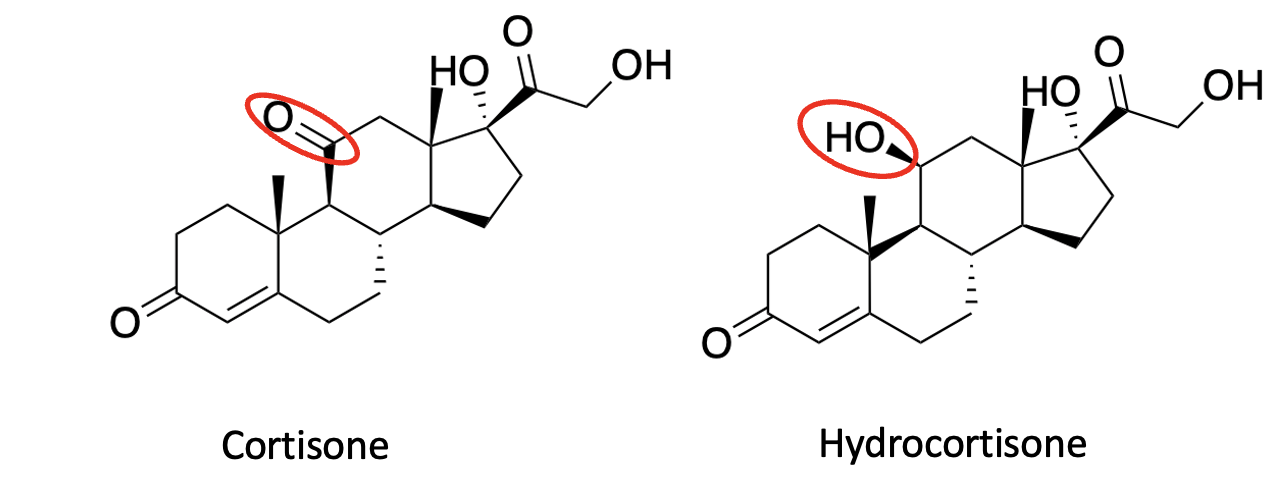
Figure 1. (Left) Cortisone. (Right) Reduction of the ketone group to a hydroxyl group yields hydrocortisone, aka cortisol, the more active molecule.
Hydrocortisone takes a back seat
Chances are that your pickleball-related injection is going to be another creature with the crazy-sounding name triamcinolone acetonide, better known as Kenalog (Figure 2).
Cortisone may have started the steroid revolution, but Seymour Bernstein's triamcinolone helped modernize it. Developed at Lederle Laboratories in the 1950s, the drug was more potent than cortisone and eventually became the go-to ingredient in today's so-called "cortisone shots." Bernstein was a colleague when I joined Lederle in the 1980s. It's possible that he paid my salary, meager though it was.
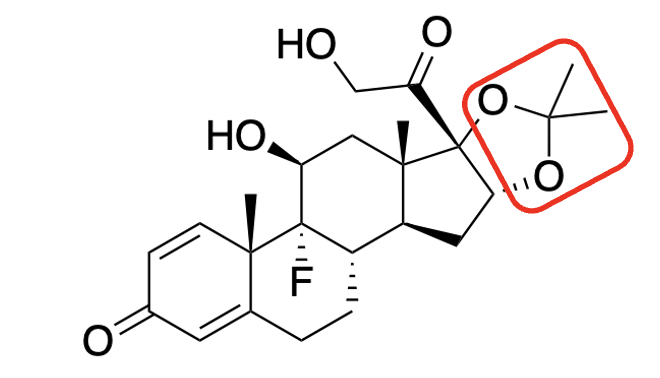
Figure 2. Triamcinolone acetonide, Kenalog. That thing in the red box is called an acetonide.
More "ones"
Even more formidable than Kenalog is prednisone, perhaps the best-known member of the "ones." It's a monster anti-inflammatory, but this one comes in a pill, not a syringe. This is because, as was the case with cortisone, prednisone is not a potent anti-inflammatory steroid. It is a pro-drug of prednisolone, the active species.
So, why does it work orally? Because once it's absorbed from the gut, it passes through the liver, where the ketone group in prednisone is reduced to an alcohol group, giving prednisolone (Figure 3).
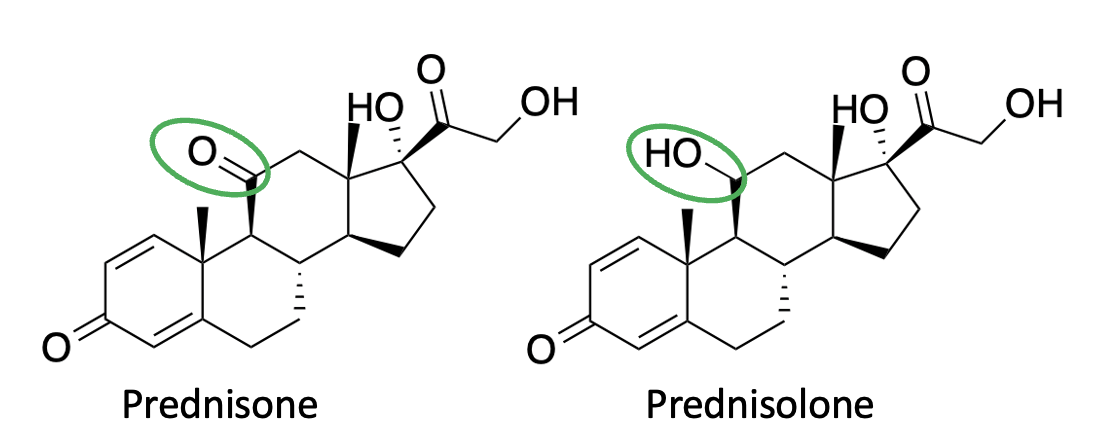
Figure 3. Prednisone (inactive) is converted in the liver to prednisolone (active), involving the reduction of a ketone to an alcohol (green circles).
Methylprednisolone: The final "one"
Methylprednisolone (Medrol) offered yet another improvement. Unlike cortisone and prednisone, which must first be converted into active drugs, methylprednisolone is ready to go as is. It is also more potent and causes less fluid retention than its ancestors, making it useful both as a pill and as an injectable steroid. It comes in a moron-proof dose pack, which morons probably find handy. You've probably seen them (Figure 3).
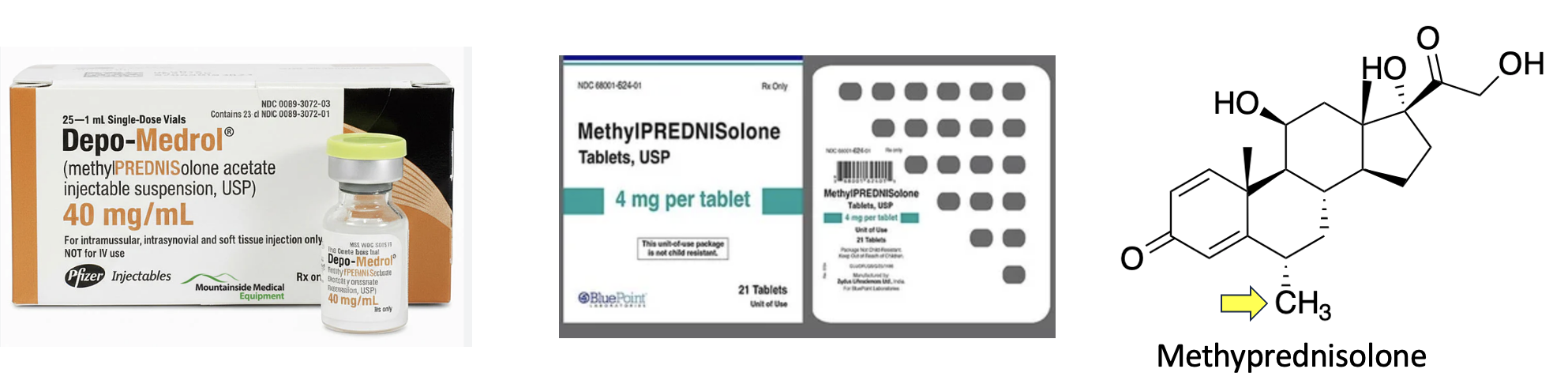
Figure 4. Methylprednisolone is an injectable suspension, and a moron-proof dose pack. Chemically, it is simply prednisolone with a methyl group (yellow arrow) added.
Bottom line
Today, "cortisone shot" is more of a linguistic fossil than a chemical description. The steroid revolution that cortisone started produced a host of descendants—hydrocortisone, triamcinolone, prednisolone, methylprednisolone, and many others—that largely replaced it. Yet while the chemistry evolved, the language did not.
So the next time someone tells you they got a cortisone shot, they're probably right about the shot but wrong about the cortisone.
NOTE:
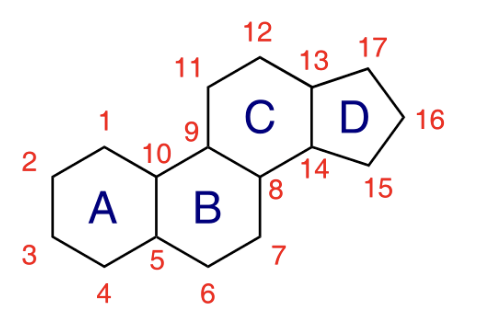
[1] Steroids are defined by a common four-ring chemical framework. Cortisone, hydrocortisone, prednisone, and methylprednisolone share this scaffold, as do cholesterol, bile acids, testosterone, and estrogen. Small structural changes can profoundly alter a steroid's biological activity. Here, I discuss only corticosteroids used to treat pain and inflammation.
The following is a generic steroid structure.

Josh Bloom
Dr. Jonathan (Josh) Bloom, ACSH's Director of Chemical and Pharmaceutical Sciences, earned his Ph.D. at the University of Virginia and completed postdoctoral training at the University of Pennsylvania. During his 20-plus years in drug discovery at Wyeth, his research group discovered the antibiotic Tygacil®, approved in 2005. He holds 25 issued patents and has authored 35 academic papers. Since joining ACSH in 2010, he has written more than 2,000 articles and dozens of op-eds for major newspapers, including The Wall Street Journal and Chicago Tribune.