What Ketosis Changes Throughout the Body
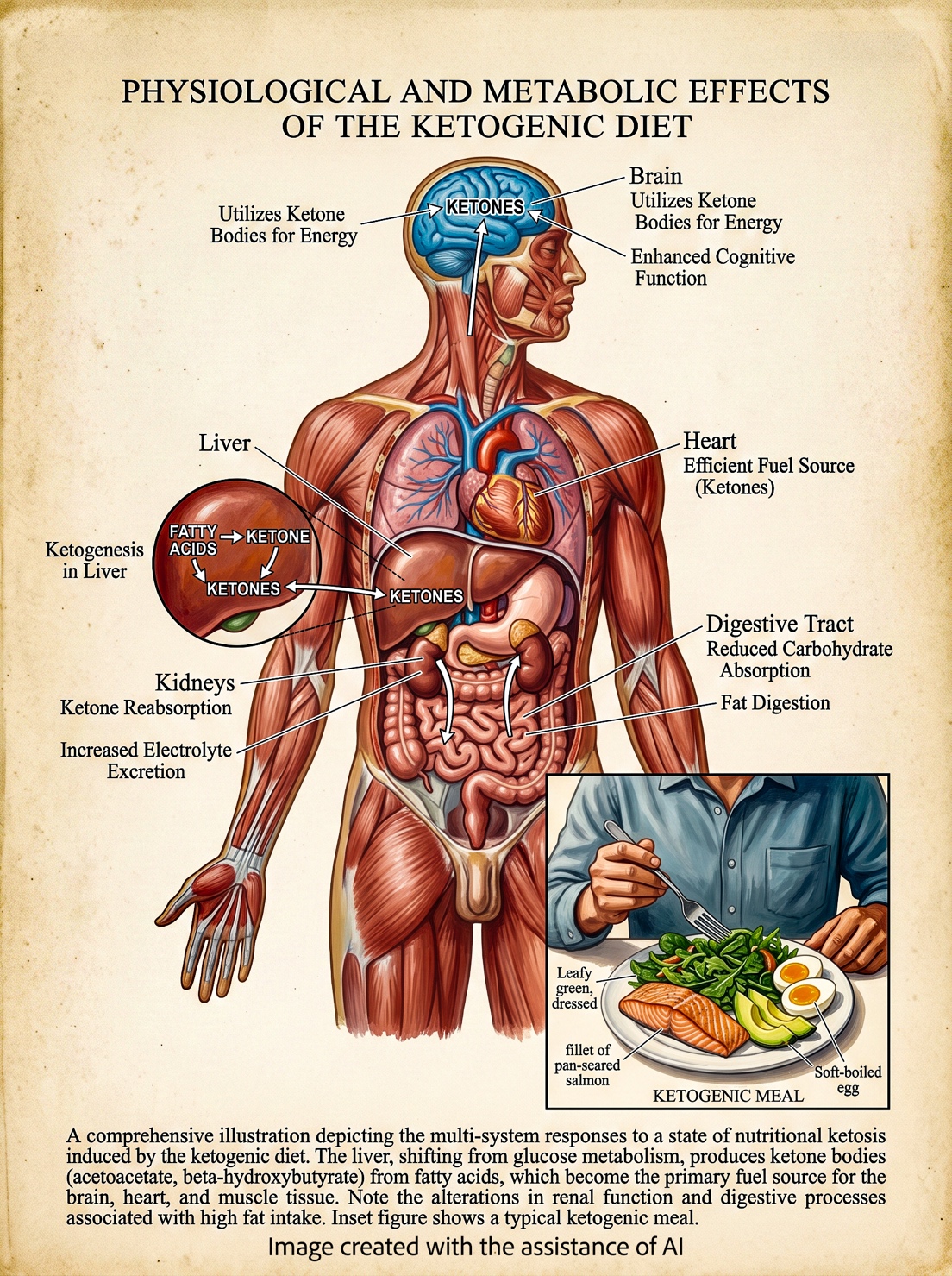 Restricting our carbohydrate intake forces a systemic shift in our body’s fuel, which primarily comes from breaking down carbs into glucose. The new fuel, the ketone bodies—β-hydroxybutyrate (βHB), acetoacetate, and acetone—do not change the “octane” rating as much as they add more “ethanol” to our body’s fuel supply. As a result of becoming our primary fuel, ketone bodies have many downstream effects.
Our brain runs almost entirely on glucose. Ketone bodies cross the blood-brain barrier and now provide 60-70% of the brain’s energy needs; the remainder, in the form of glucose, is created from other metabolic products in the liver in a process termed gluconeogenesis. Ketone bodies, or ketosis, enhance other central nervous system signals that dampen nerve excitability; this is the chief mechanism underlying the efficacy of a keto diet in epilepsy.
With less glucose to manage, insulin secretion is reduced. Typically, this results in lower serum triglycerides and increases in the “good” cholesterol, HDL-C. Reduced insulin signaling causes the kidneys to retain less sodium, increasing urination, reducing blood volume, and ultimately lowering blood pressure. While a reduction in blood pressure may be helpful, the rapid loss of sodium, potassium, and water is felt to be the primary metabolic cause of “keto flu” symptoms, a syndrome of not feeling well or quite right that typically begins within 24 hours of starting a keto diet and lasts for 3 to 5 days.
A keto diet affects our fellow travelers, the gut microbiome, by altering their composition because there are fewer fermentable soluble fibers to munch on. Changes in our dietary fat-to-fiber ratio also affect gut transit, producing both faster (diarrhea) and slower (constipation) transit times. Finally, the predominant ketone body, β-hydroxybutyrate, has anti-inflammatory properties that reduce inflammatory cytokine production.
The Good, the Bad, and the Ugly
- Ketogenic diets reduce inflammation and central nervous “excitability.” The downstream effects on insulin improve lipid profiles and lower blood pressure.
- The initial few days of a ketogenic diet may leave you fatigued, with headaches and muscle cramps; the impact on your microbiome can also cause more or fewer trips to the bathroom. In susceptible individuals, ketone bodies compete with uric acid for urinary excretion, triggering acute gout flares.
- In other susceptible individuals, altered liver cholesterol processing can cause marked surges in ApoB and LDL-C, the “bad” cholesterol, increasing overall cardiac risk.
Does Keto Beat Other Diets for Metabolic Health?
A new study in Cell Metabolism randomized 42 adults with prediabetes and hepatic steatosis, signs of being “metabolically unhealthy,” to either a ketogenic diet, a Mediterranean diet, or a low-fat, plant-based diet (carbohydrate content was 4%, 50%, and 70%, respectively). All diets were prepared and delivered to participants.
All three diets produced a 10% weight loss within essentially the same time interval. All showed similar improvements in fat mass, with reductions in total cholesterol, LDL-cholesterol, ApoB, blood pressure, and triglycerides – all of which delivered cardiovascular risk-factor reduction. The keto diet reduced the liver’s production of fat (lipogenesis) and significantly reduced prediabetes, a finding we might anticipate given the very low carbohydrate intake.
Can we generalize these findings? As with much of leading-edge science, the answer remains a firm yes and no.
Under current consensus guidelines, study participants with the metabolically unhealthy conditions of prediabetes and hepatic steatosis are all considered to have Metabolic Dysfunction-Associated Steatotic Liver Disease (MASLD). Studies indicate this condition affects roughly a third of the US adult population. For those individuals, a ketogenic diet may be the way to go.
For the rest of us, who are overweight but not already metabolically unhealthy, these findings underscore that how we lose weight matters far less than how much. Without baseline insulin resistance or elevated hepatic lipogenesis to manage, strict carbohydrate restriction offers no exclusive physiological advantage for fat loss. Because a 10% weight reduction yielded virtually identical improvements in weight, blood pressure, and cardiovascular risk-related lipoproteins across a macronutrient range (4% to 70% carbohydrate), weight loss itself remains the primary metabolic driver. For most of us, the takeaway is liberating: there is no single mandatory dietary dogma. The "best" approach is simply whichever whole-food pattern leaves you feeling fed and satisfied, and remains sustainable as a lifestyle, not a diet.
Source: Effect of diet macronutrient content on the cardiometabolic response to weight loss: A randomized clinical trial Cell Metabolism DOI: 10.1016/j.cmet.2026.07.020

Chuck Dinerstein, MD, MBA
Director of Medicine
Charles Dinerstein, MD, MBA, is the Medical Director of the American Council on Science and Health. A vascular surgeon with more than 25 years of clinical experience, he brings a physician's understanding of medical decision-making, an appreciation for scientific uncertainty, and a broader perspective on healthcare economics and policy to his writing.