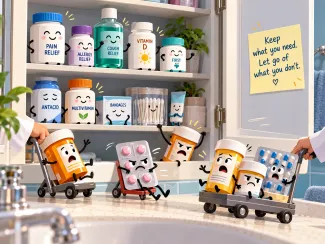
We routinely ask whether there is sufficient evidence to start a drug. Why don't we ask with equal rigor whether there is enough evidence to continue it?
Medications have expiration dates because time and degradation can make them less effective than intended. The reasons for taking those medications don't have the same “best-used-by” date, but they can effectively expire as your health, circumstances, and therapeutic goals change.
October 21 is National Check Your Meds Day, and it offers an excellent opportunity to explore a neglected aspect of chronic disease management: asking an important question, not whether the medication has expired, but whether the reason for taking it has. When should we stop treating?
Medicine has developed sophisticated protocols for initiating and escalating treatment. We have far less structure for reducing or discontinuing medications after they're prescribed. For patients with multiple chronic illnesses, are we treating them as they are today, or preserving prescribing decisions made by several physicians over many years?
The scientific term is deprescribing—the supervised reduction or discontinuation of medications when their potential harms outweigh their benefits, or when they no longer align with a patient's circumstances and goals.
A Checkup for Your Medicine Cabinet
Consumer Reports launched National Check Your Meds Day in collaboration with the Department of Health and Human Services on October 21, 2017.
It encouraged Americans to do an annual brown-bag review by bringing their prescriptions, over-the-counter medications, vitamins, and supplements to a physician or pharmacist to identify interactions, medication errors, and drugs they no longer need.
When More Medicine Means More Risk
 Adverse drug events (ADEs) occur across all age groups. In 2024, an estimated 1.5 million individuals were seen in Emergency Departments for ADEs, with a third hospitalized. Older adults, those 65 years and older, are twice as likely as young adults to be seen in the ED for an ADE. Medications of concern include anticoagulants, which account for 21% of ADEs, as well as diabetes medications and antibiotics (14% each). (14% each)
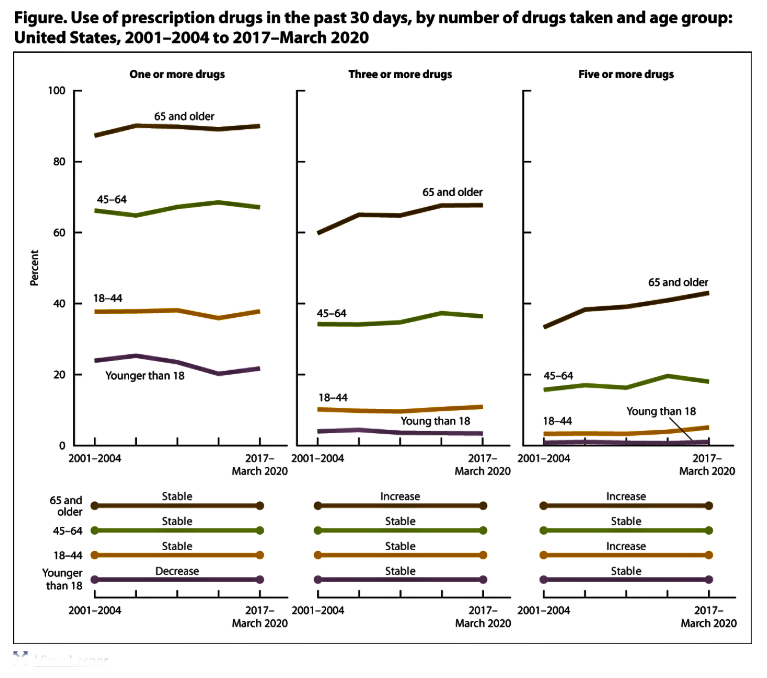
As we age, we are more likely to develop additional chronic ailments. Polypharmacy, the use of five or more prescription drugs, is increasingly common in a health system that is far better at prolonging life than at preventing illness. 43%of U.S. adults 65+ took five or more prescription drugs during a 30-day period from 2017 to March 2020. That number has not declined in recent years.
Another cause of rising medication use is the “prescribing cascade,” in which the side effects of one medication are treated by initiating a second. Guidelines already recognize the problem. The American Diabetes Association's 2025 standards recommend at least annual assessment of polypharmacy in older adults with diabetes and specifically recommend reducing or simplifying treatment when risks, such as hypoglycemia, outweigh benefits. The 2026 ACC/AHA dyslipidemia guidance likewise emphasizes reassessing lipid-lowering treatment as frailty, competing risks, and patient priorities change.
While published studies show that active review can discontinue a potentially inappropriate prescription three times more often than “usual care,” little evidence shows it produces a clinical benefit in reducing ADEs. A 2024 systematic review of medication review and deprescribing among hospitalized older adults found a modest 8% reduction in readmissions, but no clear reduction in mortality. In short – evidence that we can eliminate medications is stronger than evidence that eliminating them consistently improves hard clinical outcomes.
When Does a Treatment Outlive Its Benefits?
Unfortunately, the answer changes with time, circumstances, and the reason the drug was prescribed. Consider the time-to-benefit problem. While antihistamines and antibiotics provide therapeutic benefits within hours to days, other medications, e.g., statins, extend healthspan over years, making them beneficial for those with a long life expectancy. For those with shorter time horizons, that benefit can, in reality, be a burden. What is the value of a 10-year medication for a 2-year individual? The underlying question is whether a patient's likely time to benefit still aligns with their projected lifespan.
Specialist care also raises concerns, as each specialist prescribes medications according to guidelines for the condition they manage. Each prescription may be reasonable in isolation, yet the aggregate regimen may expose the patient to drug interactions, conflicting therapeutic goals, and an unreasonable treatment burden.
That said, polypharmacy is not synonymous with inappropriate prescribing. Individuals with multiple chronic illnesses may well require several drugs targeting different mechanisms of disease.
An effective medication review must therefore consider both under- and overprescribing. The goal is not fewer drugs, but a better balance of benefits, harms, and patient burden.
Five Questions Every Prescription Should Answer
A practical medication-review checklist might consider the following:
- What condition or risk is each medication treating, and is that indication still present?
- What measurable benefit is it providing, and what would likely happen if it were stopped?
- Have age, kidney function, other conditions, or treatment goals changed the benefit-risk calculation?
- Could a symptom attributed to a new disease actually be a medication side effect?
- Could you reduce the dose, simplify the regimen, or safely discontinue a medication?
An annual review is not a hard-and-fast rule. Reviews belong after hospitalizations, major diagnoses, changes in kidney or liver function, increasing frailty, and new adverse effects. Ideally, your primary physician, often working in conjunction with your neighborhood pharmacist, would coordinate the review, but in today’s fragmented health system, that may be more aspirational than realistic.
The ultimate measure of successful deprescribing is not how many medications disappear from the medicine cabinet, but whether patients are better off because of the changes. That gives National Check Your Meds Day a purpose beyond inventorying or disposing of medications. It is an opportunity to sit down with a physician or pharmacist and reconsider not only what we take, but why we take it, whether it still benefits us, and whether its burdens remain justified. The answer may be to stop a medication, adjust its dose, or leave well enough alone. After all, every prescription deserves a reason to begin—and a reason to continue.

Chuck Dinerstein, MD, MBA
Director of Medicine
Charles Dinerstein, MD, MBA, is the Medical Director of the American Council on Science and Health. A vascular surgeon with more than 25 years of clinical experience, he brings a physician's understanding of medical decision-making, an appreciation for scientific uncertainty, and a broader perspective on healthcare economics and policy to his writing.