Investor s Business Daily hails ACSH AIDS paper

By ACSH Staff — Feb 16, 2011
Today’s Investor’s Business Daily includes an editorial lauding the new paper by ACSH’s Dr. Josh Bloom on the central role that the American pharmaceutical companies played in taming the AIDS epidemic. Under the headline, “Capitalism Kills AIDS,” the paper comments:
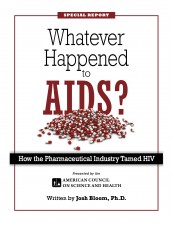
Today’s Investor’s Business Daily includes an editorial lauding the new paper by ACSH’s Dr. Josh Bloom on the central role that the American pharmaceutical companies played in taming the AIDS epidemic. Under the headline, “Capitalism Kills AIDS,” the paper comments:

India s growing malnutrition could be ameliorated by approving biotech crops and pesticides

By ACSH Staff — Feb 15, 2011
In a New York Times article Saturday, journalist Vikas Bajaj highlights the food struggle in rural India, where many people are confronted by the problems of malnutrition and soaring food prices. Four decades after the Green Revolution, which was fueled by the late Nobel Peace Prize laureate and founding ACSH trustee Dr.

In a New York Times article Saturday, journalist Vikas Bajaj highlights the food struggle in rural India, where many people are confronted by the problems of malnutrition and soaring food prices. Four decades after the Green Revolution, which was fueled by the late Nobel Peace Prize laureate and founding ACSH trustee Dr.

Some researchers need to wake up and smell the energy drink

By ACSH Staff — Feb 15, 2011
If it were left up to ACSH's Dr. Gilbert Ross, he would add a sub headline to the article “Energy Drinks May Hurt Kids: Study” that would read, “Then Again, Maybe They Don’t.”

If it were left up to ACSH's Dr. Gilbert Ross, he would add a sub headline to the article “Energy Drinks May Hurt Kids: Study” that would read, “Then Again, Maybe They Don’t.”

High fiber diet may increase longevity

By ACSH Staff — Feb 15, 2011
Some may start scouring their cupboards to dig into a fiber-rich meal after a study was published in the Archives of Internal Medicine, which reveals that eating more fiber may help people live longer. Using data from the National Institutes of Health-AARP Diet and Health Study, researchers asked people between the ages of 50 and 71 what they ate and how frequently they ate it over the last year and then followed them for an average of nine years.

Some may start scouring their cupboards to dig into a fiber-rich meal after a study was published in the Archives of Internal Medicine, which reveals that eating more fiber may help people live longer. Using data from the National Institutes of Health-AARP Diet and Health Study, researchers asked people between the ages of 50 and 71 what they ate and how frequently they ate it over the last year and then followed them for an average of nine years.

Whatever Happened to AIDS? How the Pharmaceutical Industry Tamed HIV

By ACSH Staff — Feb 14, 2011
Whatever Happened to AIDS? How the Pharmaceutical Industry Tamed HIV, explains the central role played by the pharmaceutical industry in transforming AIDS from an inevitably fatal illness to a chronic, manageable disease. This story is largely untold.



Whatever Happened to AIDS? How the Pharmaceutical Industry Tamed HIV, explains the central role played by the pharmaceutical industry in transforming AIDS from an inevitably fatal illness to a chronic, manageable disease. This story is largely untold.

Health reform s emphasis on early diagnosis: more harm than good?

By ACSH Staff — Feb 14, 2011
Speaking of unnecessary medical procedures, a Q&A article in the Los Angeles Times with Dr. H. Gilbert Welch highlights his views on the potential public health consequences of preventative medicine. Though Dr. Welch voices support for health care reform, he takes issue with the Obama Health Care bill’s emphasis on preventive screening.

Speaking of unnecessary medical procedures, a Q&A article in the Los Angeles Times with Dr. H. Gilbert Welch highlights his views on the potential public health consequences of preventative medicine. Though Dr. Welch voices support for health care reform, he takes issue with the Obama Health Care bill’s emphasis on preventive screening.

New FDA-approved 3-D mammography devices may add extra dimension to breast cancer detection

By ACSH Staff — Feb 14, 2011
There’s good news for women worried about their annual mammogram — the FDA has just approved a new 3-D mammography device that may help doctors more accurately detect breast cancer.

There’s good news for women worried about their annual mammogram — the FDA has just approved a new 3-D mammography device that may help doctors more accurately detect breast cancer.

Experts say X-rays, scans for lower back pain lack support

By ACSH Staff — Feb 14, 2011
The American College of Physicians (ACP) announced new guidelines for the assessment of lower back pain that call for fewer imaging scans. According to the ACP “best practice advice,” routine, imaging such as X-rays and CT or MRI scans often reveal abnormalities that are not, in fact, life-threatening.

The American College of Physicians (ACP) announced new guidelines for the assessment of lower back pain that call for fewer imaging scans. According to the ACP “best practice advice,” routine, imaging such as X-rays and CT or MRI scans often reveal abnormalities that are not, in fact, life-threatening.