Testimony from ACSH to NYC on Trans Fats
Read testimony delivered 10/30/06 by Dr. Elizabeth Whelan and by Dr. Ruth Kava
Read testimony delivered 10/30/06 by Dr. Elizabeth Whelan and by Dr. Ruth Kava
Read testimony delivered 10/30/06 by Dr. Elizabeth Whelan and by Dr. Ruth Kava
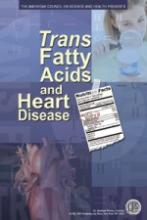
The recent addition of trans fat information to the Nutrition Facts labels on food products, combined with news media reports and activists warnings, have brought these fats to the forefront of public concern.
In a national survey conducted in November 2005, 81 percent of a representative sample of U.S. consumers reported being aware of trans fats, and 54 percent indicated that they were trying to decrease their trans fat consumption (IFIC Foundation, 2006).
An October 30, 2006 piece by Eric "SciGuy" Berger notes ACSH's trans fat position:
Trans fats are, indeed, bad for you. But so are a lot of things we eat. Here's a measured report on the scientific evidence from the American Council on Science and Health:
An October 30, 2006 NewsChannel5.com piece described the trans fat controversy:
Some think the issue is overblown. The American Council on Science and Health (ACSH) said focusing on trans fat obscures the real health message.
"A little bit of trans fat will not kill you. I think the bottom line is we need to keep overall fat consumption to a minimum. If you remove trans fat we are not going to be solving this nation's obesity crisis," Jeff Stier with ACSH said.
 See Jeff Stier on CNBC's Power Lunch on trans fats
 See Jeff Stier on CNBC's Power Lunch on trans fats
An AP editorial on October 19, 2006 celebrated America's booming population as it passed the 300 million mark, quoting ACSH's Todd Seavey:
Todd Seavey, director of publications at the American Council on Science and Health in New York City, gets the last word and it's a thought worth considering: "Despite the occasional growing pains, I'm inclined to think that on balance, the more Americans, the better for us and the rest of the world."
An October 13, 2006 article by Ken Shepherd criticizes ABC News's David Muir for respectfully citing an anti-corporate activist (Barbara Brenner) who not only opposes corporate breast cancer fundraising efforts but claims routine mammograms are not useful:
Dr. Elizabeth Whelan, an epidemiologist and Business & Media Institute (BMI) adviser, told BMI that such a claim was "wholly irresponsible."
This letter appeared on October 12, 2006 in the Wall Street Journal.
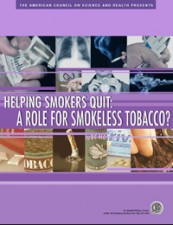 This report provides a description of traditional and modern smokeless tobacco products. It reviews the epidemiologic evidence for low health risks associated with smokeless use, both in absolute terms and in comparison to the much higher risks of smoking.
This report provides a description of traditional and modern smokeless tobacco products. It reviews the epidemiologic evidence for low health risks associated with smokeless use, both in absolute terms and in comparison to the much higher risks of smoking.
A series of articles by Dr. Henry Miller in TCSDaily.com (excerpted on Galen.org) and LegalNews.TV on Oct. 4, 2006 and the Washington Times on Oct. 5 cited ACSH's report Countefeit Drugs: Coming to a Pharmacy Near You: