Are "Low Dose" Health Effects of Chemicals Real?

By ACSH Staff — Dec 11, 2006
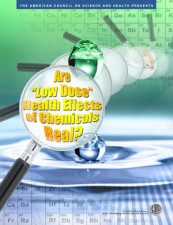
This report examines the "low-dose hypothesis" the idea that in some instances, low doses of a substance may have adverse effects that do not occur at higher doses.

This report examines the "low-dose hypothesis" the idea that in some instances, low doses of a substance may have adverse effects that do not occur at higher doses.

Scientists Debunk "Low Dose" Hypothesis in New Report

By ACSH Staff — Dec 11, 2006
New York, NY -- December 11, 2006. The frequently-made claim that exposure to low doses of environmental chemicals is often more hazardous than exposure to high doses of the same chemical is false. So says a peer-reviewed report released this today by a national science panel. Proponents of the "low dose theory" or the "endocrine disruptor hypothesis" argue that tiny doses of chemicals can be harmful, and they demand the removal of such chemicals from a variety of consumer products.

New York, NY -- December 11, 2006. The frequently-made claim that exposure to low doses of environmental chemicals is often more hazardous than exposure to high doses of the same chemical is false. So says a peer-reviewed report released this today by a national science panel. Proponents of the "low dose theory" or the "endocrine disruptor hypothesis" argue that tiny doses of chemicals can be harmful, and they demand the removal of such chemicals from a variety of consumer products.

New York's Food Police Ride to the Rescue

By ACSH Staff — Dec 10, 2006
A December 10, 2006 piece by Steve Chapman on TownHall.com, which also appeared December 11 in the Chicago Tribune, notes in passing some perspective from ACSH on the trans fat hysteria:

A December 10, 2006 piece by Steve Chapman on TownHall.com, which also appeared December 11 in the Chicago Tribune, notes in passing some perspective from ACSH on the trans fat hysteria:

Letters in Defence of Sir Richard Doll

By ACSH Staff — Dec 09, 2006
No scientists are immune from accusations that they are too close to industry these days, not even recently-deceased ACSH Advisor Sir Richard Doll, despite his pioneering work demonstrating the terrible cancer toll of cigarettes. Luckily, other eminent scientists sprang to his defense in letters to the London Times printed December 9, 2006: From Professor Colin Blakemore et al

No scientists are immune from accusations that they are too close to industry these days, not even recently-deceased ACSH Advisor Sir Richard Doll, despite his pioneering work demonstrating the terrible cancer toll of cigarettes. Luckily, other eminent scientists sprang to his defense in letters to the London Times printed December 9, 2006:
From Professor Colin Blakemore et al

Help for Arthritics?

By ACSH Staff — Dec 08, 2006
This article first appeared December 8, 2006 on TCSDaily.com. There are two new COX-2 inhibitors on the market in Europe and many other regions, offering possible help against both arthritis and cancer but not in the United States: Novartis' Prexige and Merck's Arcoxia. Will our drug agency fairly evaluate them on the standard benefits and risks scale?

This article first appeared December 8, 2006 on TCSDaily.com.
There are two new COX-2 inhibitors on the market in Europe and many other regions, offering possible help against both arthritis and cancer but not in the United States: Novartis' Prexige and Merck's Arcoxia. Will our drug agency fairly evaluate them on the standard benefits and risks scale?

Technophobes and Cell Phones

By ACSH Staff — Dec 08, 2006
A December 8, 2006 column by Jay Ambrose compares cancer fears over cell phones to other bogus health scares of the past, citing ACSH and ACSH Trustee Dr. Henry Miller: Remember the Alar scare? You have to go back to 1989 for that one. It was alleged on a 60 Minutes show that this chemical used in apples would cause childhood cancer, which in fact it would not. The truth emerged and the scare died out in time, but not until the apple industry had suffered a pointless, stupid $375 million setback.
A December 8, 2006 column by Jay Ambrose compares cancer fears over cell phones to other bogus health scares of the past, citing ACSH and ACSH Trustee Dr. Henry Miller:
Remember the Alar scare? You have to go back to 1989 for that one. It was alleged on a 60 Minutes show that this chemical used in apples would cause childhood cancer, which in fact it would not. The truth emerged and the scare died out in time, but not until the apple industry had suffered a pointless, stupid $375 million setback.

Experts: Trans Fat Ban a Healthy Move

By ACSH Staff — Dec 05, 2006
A December 5, 2006 piece by Dan Childs on the ABC News site notes reactions to the trans fat hysteria from ACSH's Dr. Gilbert Ross and recently-deceased ACSH Advisor Dr. David Kritchevsky: The American Council on Science and Health also questioned the decision.

A December 5, 2006 piece by Dan Childs on the ABC News site notes reactions to the trans fat hysteria from ACSH's Dr. Gilbert Ross and recently-deceased ACSH Advisor Dr. David Kritchevsky:
The American Council on Science and Health also questioned the decision.