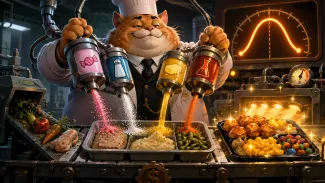
The “story” of ultra-processed foods (UPFs) has become a tale of horror, with an ominous, omnipotent corporate villain, “Big Food,” mapping mammalian dopamine pathways to turn vulnerable children and their parents into submissive consumers. This narrative is comforting because it is simple, and villains can be fought, regulated, or sued. But a historical examination of how tobacco giants shaped the landscape of Lunchables, a prepackaged, grab-and-go meal and snack designed primarily for children, reveals a far more complex reality. We begin not in the grocery aisle but in the boardrooms of an industry searching for somewhere else to grow.
The Tobacco Playbook Meets the Grocery Aisle
In the late 20th century, thanks largely to our public health institutions, the American tobacco industry faced an existential crisis. Rising public health awareness, impending state litigation, and shifting social norms were rapidly shrinking Big Tobacco’s primary habitat. Yet corporations do not simply roll over and die; they migrate. Between 1963 and 2008, the world's largest tobacco firms pursued a massive diversification strategy into the American food supply. As Philip Morris Chairman Hamish Maxwell explained to investors in 1989, cigarettes, beer, and bologna are fundamentally the same business – all marketing low-priced, agriculturally based consumer packaged goods to mass retail markets and all highly resistant to broader economic downturns.
Internal corporate documents and executive correspondence indicate that tobacco companies viewed familiar tools—engineering, flavor enhancement, packaging, and consumer testing—as useful beyond cigarettes. According to an article in the American Journal of Public Health, these companies applied cigarette-style behavioral testing to uncover food preferences and drew on technical expertise in extraction, decaffeination, and flavor testing to improve products such as “Low-fat” Lunchables.
Were these companies corrupting food, or using unusually sophisticated tools in the marketplace?
Exploitation, or Consumer Capitalism?
"...there is one and only one social responsibility of business—to use its resources and engage in activities designed to increase its profits so long as it stays within the rules of the game, which is to say, engages in open and free competition without deception or fraud."
– Milton Friedman, Capitalism and Freedom
The “tobacco playbook” did contain genuine smoking guns: documents showing companies concealed product harms through scientific and regulatory maneuvering. The Lunchables evidence is different. It does not show concealment. Instead, it shows a disciplined and efficient form of consumer capitalism: identifying desires, cultivating them, and meeting them through shared corporate assets. Philip Morris’s food acquisitions allowed the company to spread packaging innovations, taste modifiers, chemical flavorants, and behavioral testing across tobacco, food, and beer. Focus groups and consumer studies were used to probe preferences, sometimes digging, as one document put it, “until we find it.”
What Preservation Requires
The authors argue that, free of Big Tobacco’s influence, food giants like General Foods and Kraft would have optimized Lunchables to meet the constraints of food preservation rather than prioritizing flavor, and as a result, those kiddie grab-and-goes would not be hyper-palatable. But food preservation is not a corporate trick; it is one of our oldest problems.
“Whole foods” are alive, bursting with nutrients, and, unfortunately, like all living things, including us, on a schedule to death. Fats oxidize and go rancid; cheeses lose moisture and weep; carbohydrates get soggy or stale. Much of our history with food has revolved around extending that freshness, preventing spoilage, and halting microbial contamination through cooking, fermentation, pickling, refrigeration, freezing, and dehydration. Modern food preservation, which extends the nutritional value of food from the farm to the increasingly distant table, now uses antimicrobials, antioxidants, stabilizers, and high sodium levels to feed urbanized populations safely through stable supply chains, reduce food waste, and keep prices low. In this context, chemical additives are utilitarian triumphs over nature.
The Science of Bliss
The tension between preservation and palatability is central to modern food science. One way to understand it is through research on military rations, where the federal government faced a practical problem: soldiers needed to consume enough calories from shelf-stable meals that were not always appetizing. At the U.S. Army Natick Lab [2], Dr. Howard Moskowitz, a mathematician and psychophysicist—a scientist who studies how physical stimuli become subjective experiences—measured how people respond to different concentrations of ingredients such as sugar, salt, and fat. Human taste follows an inverted U-curve, with increasing amounts of sugar and salt increasing our “liking” of a food until we reach a Goldilocks point of maximum pleasure, the bliss point. Past the apex, the pleasure response drops off dramatically, and the food becomes unpalatably cloying or overly salty.
Functional magnetic resonance imaging (fMRI) studies show that when fat, sugar, or sodium are combined at their respective bliss points, they trigger a release of dopamine that rewards us. Much like GLP-1’s action in our gut, our brains have a stop mechanism. Eating a large amount of a distinct flavor rapidly tires and desensitizes taste receptors, pleasure drops, and you stop eating. To keep your reward pathways firing and your taste buds interested, food scientists have created complex food layering, keeping it mathematically balanced enough to avoid “taste fatigue” – that is why “you can’t eat just one.”
Culinary Craft vs. Industrial Repair
A chef, at their best, maximizes flavor through technique and the manipulation of whole ingredients: balancing acidity, fat, salt, heat, aroma, and texture to shape the sensory experience. A sauce can rely on butter, salt, volatile aromatics, and a delicate emulsion because it only needs to hold together from kitchen to plate to bite. Crisp skin can remain crisp because it is eaten within minutes. A tasting menu can be designed to be savored slowly, allowing pleasure and satiety to meet.
When preservation is paramount, food often loses some of the qualities that make it pleasurable: freshness, aroma, crispness, moisture, and complexity. Industrial food designers are constrained by time. A product may need to survive a factory line, shipping container, warehouse, grocery shelf, and school locker before it is eaten. To make that possible, ingredients are often separated from their original perishable matrix and rebuilt into shelf-stable components that behave differently from fresh foods. With fewer fresh aromas and transient textures to work with, product developers cannot rely on the same complexity that makes a just-cooked meal satisfying.
Instead, corporate chefs often rely on intensity and sensory repair. Salt, sugar, fat, texturizers, emulsifiers, and timed-release flavor compounds help restore what preservation has stolen: mouthfeel, aroma, moisture, and the burst of flavor that comes when food is chewed. The goal is not simply to prevent spoilage but to make preserved food feel familiar, comforting, and repeatable.
Both approaches require a grasp of sensory psychology, recognizing that eating is an emotional, multisensory experience. Culturally, especially over the last few decades, we have come to view cooking and celebrity chefs as expressions of culinary craft, while we continue to see the work of corporate chefs as, at best, an exercise in biological hacking and, at worst, the smoking gun linking Big Tobacco’s playbook to that of Big Food.
Preservation is not a corporate invention; it is one of civilization’s oldest food technologies. Our modern food system feeds populations through long supply chains, reducing spoilage, lowering costs, and offering convenience to families who often have little time to cook.
But food made durable often loses the freshness, texture, aroma, and complexity that make eating satisfying. The industrial answer has been to restore that lost pleasure through carefully calibrated sensory design, a form of culinary repair, just as a chef might repair a “broken” Hollandaise sauce.
Big Tobacco did not invent the need for shelf-stable, affordable, convenient food. But they brought a corporate culture fluent in consumer testing, flavor manipulation, marketing psychology, and the profitable management of human cravings. The question is not simply whether Lunchables are “bad” or whether additives are unnatural. The harder question is when the legitimate work of making preserved food palatable crosses a line of intent.
Do you see the bliss point as an inevitable byproduct of feeding a mass society cheaply, safely, and conveniently? Or does the intentional use of tobacco-style consumer engineering cross into exploitation? The unsettling answer may be that both are true: modern food companies solved real problems of preservation and access, then learned to turn those solutions into products that keep us reaching for one more bite.
[1] From the UCSF Truth Tobacco Industry Documents Library
[2] The Natick food labs were also responsible for dehydrated potato flakes, juice concentrates, and powdered cheese, all developed to reduce the weight of military logistics – an army does “travel on its stomach.” Food corporations went on to use these discoveries to create Pringles, frozen orange juice, and Cheetos, respectively.
Source: Tobacco Industry Contributions to the Development of Ultraprocessed Food in the United States, 1985–2007: A Case Study of Lunchables American Journal of Public Health DOI: 10.2105/AJPH.2026.308491

Chuck Dinerstein, MD, MBA
Director of Medicine
Charles Dinerstein, MD, MBA, is the Medical Director of the American Council on Science and Health. A vascular surgeon with more than 25 years of clinical experience, he brings a physician's understanding of medical decision-making, an appreciation for scientific uncertainty, and a broader perspective on healthcare economics and policy to his writing.