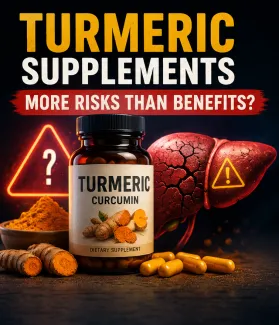
Turmeric supplements are often marketed as a natural solution for chronic inflammation, joint pain, and overall health promotion. Given these numerous therapeutic claims, it is not surprising that the compound has attracted a large consumer following. In the United States, for example, turmeric is among the best-selling dietary supplements and cosmetic ingredients, with total sales increasing from $25.6 million in 2013 to $151.7 million in 2021.
This economic growth can be explained by several factors:
- Turmeric and curcumin products are marketed for a wide range of health conditions, expanding their appeal across diverse consumer groups
- Many consumers also seek "natural" alternatives for the prevention or treatment of chronic diseases
- Marketing campaigns frequently emphasize the anti-inflammatory and antioxidant effects observed in laboratory and animal studies
- Curcumin, turmeric's principal bioactive compound, is often described as having low oral bioavailability when consumed as a spice, creating demand for supplemental formulations designed to enhance absorption
While many consumers turn to these products in the hope of improving their health, the reality is far more complex. International regulatory agencies have increasingly drawn attention to rare but potentially serious cases of hepatotoxicity associated with turmeric and curcumin supplements.
For example, in 2022, France’s National Agency for Food, Environmental and Occupational Health and Safety reported that between 2009 and 2021 surveillance systems in France and Italy had received 120 potentially related adverse-event reports, 67 of which contained sufficient documentation for causality assessment. While many effects were minor (dizziness, nausea and diarrhea), they found more than 40 cases of hepatitis associated with turmeric or curcumin supplements, and four cases were considered life-threatening.
Similarly, in 2023, Australia's Therapeutic Goods Administration (TGA) reported 18 cases of liver problems associated with turmeric and curcumin supplements. Nine reports contained sufficient information to suggest possible supplement-related liver injury, four lacked alternative explanations, and two resulted in serious outcomes, including one death. Following its investigation, the TGA concluded that turmeric and curcumin products carry a rare risk of liver injury, particularly at high doses or in formulations designed to increase bioavailability.
Admittedly, these events appear to be rare. However, the significance of any risk depends on the magnitude of its expected benefits, and the purported benefits of turmeric supplements often rest on weak and unconvincing evidence. Before assuming that "if it's natural, then it's good," it is worth examining both the evidence for efficacy and the available safety data.
What Does the Evidence Say About Turmeric?
The widespread use of turmeric supplements is supported by a large body of research investigating the biological effects of curcumin, turmeric's principal bioactive compound. Among the reviews that best illustrate the breadth of these claims is a comprehensive review published in Frontiers in Nutrition. According to the authors, researchers have examined turmeric and curcumin across a wide range of study designs, from molecular and cellular experiments to animal studies and randomized clinical trials.
The review argues that curcumin interacts through multiple biological pathways and may have therapeutic applications for inflammatory disorders, cardiovascular disease, and diabetes. Numerous in vitro studies have reported antioxidant and anti-inflammatory effects, findings that proponents frequently cite as evidence of its broader health-promoting potential.
If these findings create the impression that turmeric and curcumin function as a modern panacea, that impression largely reflects the reviewers' tone. This limitation is common when reviews of this type lack rigorous inclusion and exclusion criteria and place markedly different levels of evidence side by side.
Although the authors distinguish among findings from in vitro studies, animal experiments, and randomized clinical trials, their final conclusions blur these distinctions. They ultimately state that curcumin could play a role in the prevention and treatment of various diseases based on both preclinical and clinical evidence.
This conclusion is problematic. The clinical trials cited involve highly specific conditions, and a closer examination of some of these studies reveals that the underlying evidence is often far less compelling than the review suggests.
To illustrate this point, I examined the article “Short-term effects of highly bioavailable curcumin for treating knee osteoarthritis: a randomized, double-blind, placebo-controlled prospective study,” which the review cites as evidence that turmeric can relieve pain associated with knee osteoarthritis. In that study, researchers assigned 50 patients with osteoarthritis to receive either a commercial curcumin formulation (180 mg/day) or a placebo for eight weeks. According to the authors, participants in the intervention group experienced a significant reduction in pain.
However, the review omits several important details regarding their cited study. There was insufficient information about randomization and blinding; several outcomes failed to reach statistical significance — let alone clinical significance — and the study was funded by a manufacturer, with three of the authors being full-time or part-time employees.
Although the supplemented group performed better than the placebo group on some measures, these methodological concerns and conflicts of interest complicate the interpretation and reduce confidence in the findings. In short, much of the available research suffers from methodological weaknesses, important limitations, or potential sources of bias.
But what happens when we examine evidence synthesized in systematic reviews and meta-analyses? Do these studies provide more conclusive answers?
An Umbrella Review
Published in June 2025 in Frontiers in Pharmacology, this review synthesized systematic reviews and meta-analyses to evaluate the therapeutic efficacy and safety of orally administered curcumin using various interventions and control conditions.
The authors included 25 meta-analyses published between 2016 and 2024. Worryingly, only nine had been preregistered, which allows for improved transparency.
The included studies also exhibited substantial heterogeneity. Curcumin doses ranged from 50 mg to 6,000 mg, while intervention durations varied from a single day to 12 months. Regarding methodological quality, the authors rated most meta-analyses as very low quality (19) or low quality (3).
The GRADE assessment, a framework commonly used to evaluate the certainty of evidence in systematic reviews and other evidence syntheses, showed that 101 of the 122 outcomes had low or very low certainty - a finding that suggests limited confidence that the observed effects would reliably translate to real-world settings. The remaining outcomes received moderate (17) or high (4) certainty ratings.
- The only outcomes that achieved high-certainty ratings involved musculoskeletal disorders, specifically pain and stiffness scores measured with a self-reported questionnaire designed to assess symptoms of hip and knee osteoarthritis.
- Eight reviews reported mild adverse events, primarily gastrointestinal symptoms such as abdominal distension, as well as headache and dizziness. None reported serious adverse events.
Even these few outcomes achieving high-certainty ratings originated from reviews with important methodological limitations.
Liver Injury
As described in LiverTox, a National Institute of Health publication on drug-induced liver toxicity, curcumin has a long history of safe use, yet some products have recently been implicated in cases of acute liver injury. Although no rigorous evidence supports its efficacy for any medical condition, manufacturers continue to market these compounds for a wide range of indications, including arthritis, hyperlipidemia, diabetes, and, ironically, liver diseases.
For many years, researchers considered turmeric and curcumin safe and did not consistently associate them with liver injury. However, isolated case reports and small case series began to appear with increasing frequency. Initially, investigators attributed these cases to other ingredients in the formulations or to the concomitant use of supplements, given curcumin's poor oral absorption. More recently, manufacturers have adopted various strategies to increase its bioavailability.
Turmeric-associated hepatotoxicity appears to follow a distinctive pattern of liver injury mediated by an immunologic response.
One investigation analyzed reports from an Italian plant database that identified 37 cases of acute liver injury among 73 reports related to the use of Curcuma longa products. Another study provided an analysis from the US Drug-Induced Liver Injury Network (DILIN). Between September 2004 and March 2022, investigators recorded 2,392 suspected cases of drug-induced liver injury, of which 1,798 met the criteria for highly likely causality. Among the 345 cases attributed to herbal products or dietary supplements, 10 were linked to turmeric.
Taken together, these findings reveal a consistent, low-level pattern of liver injury reports associated with higher levels of bioavailable turmeric and curcumin in supplements. Beyond these potential effects, the supplement industry faces recurring problems with adulteration and undeclared ingredients. The UK Committee on Toxicity of Chemicals in Food, Consumer Products and the Environment has warned that turmeric powder and curcumin supplements may contain lead contamination resulting either from cultivation in contaminated soil or from deliberate adulteration with lead chromate to intensify color.
In the idealized world of supplement marketing, turmeric and curcumin promise powerful anti-inflammatory and antioxidant benefits with little downside. In the real world, the evidence is far less reassuring: clinical benefits appear modest, inconsistent, and often supported by studies with important methodological limitations, while higher-bioavailability formulations have been linked to rare but serious liver injury. For consumers, that changes the risk-benefit calculation.
A supplement does not need to be dangerous for everyone to be hard to justify; it only needs to offer uncertain benefits while carrying avoidable risks. Until larger, well-designed trials demonstrate clear clinical value, turmeric supplements are better viewed not as a harmless natural remedy, but as an inadequately proven product whose risks may outweigh its benefits.

Mauro Proença
Mauro Proença is a nutrition graduate student with a postgraduate degree in Clinical Nutrition from the University of São Paulo (USP), Brazil.