No, Pfizer/Moderna Vaccines Can't Give You COVID. It's Impossible.

By Josh Bloom — Mar 02, 2021
There's a new vaccine in town and all the nut logs and screwballs are blabbering nonsense rumors all over the Internet. Here's one that is especially bad – that the Pfizer/Moderna COVID vaccines can give you COVID. No, they can't. It is physically impossible. Here's why.

There's a new vaccine in town and all the nut logs and screwballs are blabbering nonsense rumors all over the Internet. Here's one that is especially bad – that the Pfizer/Moderna COVID vaccines can give you COVID. No, they can't. It is physically impossible. Here's why.

Is the EPA Ignoring Science in Its Re-evaluation of a Possible Cancer Risk?

By Susan Goldhaber MPH — Mar 02, 2021
This week, Jay Barber, one of our readers wrote to us asking about an article he had seen in The Intercept regarding the EPA ignoring a possible cancer risk. Luckily we have two toxicologists among our Board of Scientific Advisors, one of who was able to offer a critique.

This week, Jay Barber, one of our readers wrote to us asking about an article he had seen in The Intercept regarding the EPA ignoring a possible cancer risk. Luckily we have two toxicologists among our Board of Scientific Advisors, one of who was able to offer a critique.

Journalists Regurgitate 'The Monsanto Papers'

By Alex Berezow, PhD — Mar 02, 2021
The mainstream media is repeating the unscientific claims of a dishonest book. A deeper dive into the author of the book would have revealed duplicity and enormous conflicts of interest.

The mainstream media is repeating the unscientific claims of a dishonest book. A deeper dive into the author of the book would have revealed duplicity and enormous conflicts of interest.

Understanding the Obesity Epidemic: Fat Mass Basics

By David Lightsey MS — Mar 02, 2021
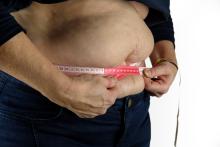
No one will argue that we have a serious weight control and obesity issue in the United States and every industrialized country. For the most part, public policies to combat the problem have been failures. To understand the underlying problem, we must first begin with understanding our physiology.  

No one will argue that we have a serious weight control and obesity issue in the United States and every industrialized country. For the most part, public policies to combat the problem have been failures. To understand the underlying problem, we must first begin with understanding our physiology.  

Modeling Human Behavior is the Hardest of All

By Chuck Dinerstein, MD, MBA — Mar 01, 2021
Modeling the COVID-19 pandemic has become a quasi cottage industry, both in creating the models (as well as their subsequent failed predictions and criticisms). A new model takes on the hardest of variables to accurately portray: behavior. Not of the virus, but of its human hosts.

Modeling the COVID-19 pandemic has become a quasi cottage industry, both in creating the models (as well as their subsequent failed predictions and criticisms). A new model takes on the hardest of variables to accurately portray: behavior. Not of the virus, but of its human hosts.

Peanut Allergies And Their Treatment

By Sharmin Sultana — Mar 01, 2021
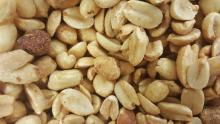
According to the CDC, food allergies continue to be a growing problem for children. Peanut allergy is the number one food allergy among children, and its incidence has increased by 21% since 2010. What happens to our body when we have a peanut allergy, and why are some schools declaring themselves nut-free?

According to the CDC, food allergies continue to be a growing problem for children. Peanut allergy is the number one food allergy among children, and its incidence has increased by 21% since 2010. What happens to our body when we have a peanut allergy, and why are some schools declaring themselves nut-free?

'Dr. Joe' Schwarcz Waxes Poetic About the Wonders of Polyurethane. Which Isn't So Easy.

By Josh Bloom — Feb 27, 2021
Dr. Joe Schwarcz, the director of McGill University's Office for Science and Society, (somehow) churns out one video per week in his "The Right Chemistry" series. "Dr. Joe" manages to make all of them fascinating. This one is about polyurethane, a substance that should NOT be used in place of hair spray.

Dr. Joe Schwarcz, the director of McGill University's Office for Science and Society, (somehow) churns out one video per week in his "The Right Chemistry" series. "Dr. Joe" manages to make all of them fascinating. This one is about polyurethane, a substance that should NOT be used in place of hair spray.

Is Genexa's Is Marketing of 'Clean Children's Medicine' a Dirty Trick?

By Josh Bloom — Feb 27, 2021
"If you dust off a turd, it's still a turd." Even by my (admittedly) low standards, this is rather crude. But, what does it mean? I take aim at Genexa, a company that advertises "real medicine, made clean." A clever marketing scheme, but I don't know what it even means.

"If you dust off a turd, it's still a turd." Even by my (admittedly) low standards, this is rather crude. But, what does it mean? I take aim at Genexa, a company that advertises "real medicine, made clean." A clever marketing scheme, but I don't know what it even means.

Does Dr. Murthy Have Conflicted Interests?

By Chuck Dinerstein, MD, MBA — Feb 27, 2021
Dr. Vivek Murthy, President Biden’s nominee for Surgeon General, previously did a credible job, and presumably if confirmed, that will be true once again. But with the Washington Post reporting that his income last year was $2.6 million, some see a possible conflict of interest.

Dr. Vivek Murthy, President Biden’s nominee for Surgeon General, previously did a credible job, and presumably if confirmed, that will be true once again. But with the Washington Post reporting that his income last year was $2.6 million, some see a possible conflict of interest.

Vitamin D COVID-19 Trial is a Real Mess

By Angela Dowden — Feb 26, 2021
A new study out of Barcelona -- one that was not peer-reviewed -- suggests that vitamin D reduced COVID deaths by 60% and admission to the intensive care unit by 80%. However, the results are highly flawed.

A new study out of Barcelona -- one that was not peer-reviewed -- suggests that vitamin D reduced COVID deaths by 60% and admission to the intensive care unit by 80%. However, the results are highly flawed.