Parents and teachers (as well as public health professionals) are understandably concerned about the recent rise in obesity among young Americans. Just as understandable is the desire to do something to stem the tide. One action, embraced by a number of schools across the nation (including the New York City school system), is substituting supposedly "healthier" foods for so-called "junk" foods and beverages in school vending machines.
Search results
Men s Fitness magazine recently released a report listing the fittest and fattest of the fifty most populous U.S. cities.(1) There doesn't seem to be anything too useful in ranking fattest and fittest cities, but I'll admit that I was curious. Is my current city fatter than my hometown? How do the residents of my college city compare in size to their neighbors a few cities over?
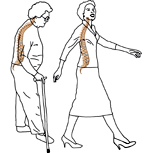 Based on a position paper of the American Council on Science and Health (ACSH) by Felicia Cosman, MD, Medical Director, Clinical Research Center, Helen Hayes Hospital. February 2005
Rodents are an insidious health threat -- but I am not talking about disease-carrying vermin. I am talking about rodents in our nation's most prestigious research laboratories. These animals, through no fault of their own, have been scaring us to death for 50 years while restricting our pursuit of an improved standard of living and longer, healthier lives.
Although it may be appropriate to criticize the revolving-door ethics involved when a former congressman becomes an advocate for an industry with which he had legislative dealings, the issue of government-controlled drug pricing is not a fair target ("Switch raises issues of loyalty," Opinion, Jan. 3). This part of the Medicare drug bill is there for good reason, as witness the current precarious state of our vaccine supply.
A January 26, 2005 American Spectator article by David Hogberg describes ACSH's book America's War on "Carcinogens":
An article by Pat Phibbs on http://BNA.com January 27, 2005 describes the release of ACSH's America's War on "Carcinogens":
Congress and the National Cancer Institute should lead an effort to change the ways animal data are used to predict whether a chemical would cause cancer in humans, the medical director of a consumer-education organization said Jan. 26.
A Wednesday, Jan. 26, 2005 Associated Press article described ACSH's criticism of America's War on "Carcinogens":
WASHINGTON (AP) -- The federal government has for years been scaring Americans about cancer risks for which there is no scientific evidence, a team of public health scientists said today.
The scientists called on Congress and the National Cancer Institute to take the lead in changing the way the government assesses cancer risks, saying the present system is seriously flawed and misleads the public.
An article by Peter Berry Ottaway in Vol. 10, No. 1 (January 2005) of Nutraceuticals International noted EU and U.S. controversy over defining nutritional foods and mentioned an argument made by ACSH's Jeff Stier:
Soros Should Revive the Old Liberalism (from Financial Times)
A January 17, 2005 column by Amity Shlaes in the Financial Times expresses the hope that the left-wing thinktanks to be funded by philanthropist George Soros will raise the intellectual standards of political discourse. She notes that not all political activists are as good as sorting out perceived and actual risks as the American Council on Science and Health:
Today, the American Council on Science and Health releases the book America's War on "Carcinogens": Reassessing The Use of Animal Tests to Predict Human Cancer Risk (see: http://www.acsh.org/publications/pubID.990/pub_detail.asp ), revealing what scientists have long known but regulators ignore: that there is no scientific basis for assuming that everything that causes cancer in lab rodents in high doses is harmful to hum
The ongoing battle against childhood obesity may see a new front: the report card. Texas state Senator Leticia Van de Putte introduced a bill (SB 205) that would require all Texas school districts to print students' body mass indices (BMIs) on report cards sent to parents. For children whose BMIs indicate they are overweight, the report cards would include information for parents about the link between high body weight and health problems.
The latest version of the Dietary Guidelines for Americans, released this month, engendered much analysis and commentary -- some of it good, some not so great.
Americans learned yesterday that cancer has surpassed heart disease as the leading killer of Americans under age eighty-five. So says Cancer Facts & Figures 2005 by the American Cancer Society.
Naturalist Henry David Thoreau, though known as the Sage of Walden, accidentally, but carelessly, sparked a life-threatening fire that blighted 300 acres in 1844, while he was cooking fish in the Concord, MA woods.
No records can be found as to whether anyone was killed or injured in that fire.
Possibly the nation's worst fire was the Peshtigo, Wisconsin, forest fire in 1871, which killed 1,182 people as it roared over 1.2 million acres.
When Rosemary Kennedy died on January 7, we lost a promising life and one of our last survivors from the era of lobotomy. Between 1936 and the 1970s, 40,000 to 50,000 Americans received psychosurgeries in government hospitals, private institutions, and doctors' offices. The news of Kennedy's passing will revive images of that dark time in the history of psychiatric medicine: the filthy back wards in mental hospitals, sick people in restraints, sharp instruments violating the brain, the vacant eyes of permanently damaged patients.
They say that it's good for cardiovascular health, but when I saw the price at a Manhattan supermarket, I almost had a heart attack! $7.99 for a twenty-four-ounce (three-serving) bottle of POM Wonderful, possibly the fastest-growing premium refrigerated juice drink, according to Forbes.
Seeing a previously healthy baby begin to withdraw, lose language skills, and become averse to physical or social attention is a nightmare for any parent. A diagnosis of autism can then lead parents down a long road of feeling guilty, trying frustratingly unsuccessful treatments, and searching for an answer to their questions about the cause of their child's disorder. But when parents turn their quest for answers into a blind-faith crusade against public health initiatives, they may actually end up hurting more than they help.
It would be easy to infer from headlines on many news articles that eating red meat increases the risk of developing colon cancer. For example, "Red Meat increases Colon Cancer Risk," states one, while another trumpets "Red meat newly linked to colorectal cancer."
In fact, the story is significantly more nuanced than such headlines (and many of the associated articles) make it seem.
Perchlorate is a chemical in rocket fuel that can leach into the ground and find its way into water supplies, but there is no evidence it is harmful to humans in small amounts.
As members of a primarily urban society, most Americans have very little or no contact with the sources or methods of producing their foods. Their understandable ignorance has the unfortunate consequence of leaving them vulnerable to misinformation about food and nutrition. Nowhere is this vulnerability more obvious than with respect to genetic engineering, usually misnamed genetic modification.
The Center for Science in the Public Interest (CSPI) recently released a set of guidelines calling for stricter control of marketing of foods and beverages to children, in an effort to address increased obesity rates in kids. The guidelines call for all companies, advertising agencies, schools, and other organizations to eliminate any sort of marketing to children that directly or indirectly endorses foods CSPI deems unhealthy.
In an attempt to protect its citizens, the United Kingdom is reviewing proposals to implement its own color-coded alert system evocative of the one in place in the United States.
1. Focus your efforts on things that matter.
It is important that we distinguish between risks that are real and can be lessened by individuals' actions and those that are theoretical, very small, or beyond our control.
A January 6, 2005 editorial from the board of the New York Sun denounced New York governor George Pataki for ignoring the state's fiscal problems and focusing on non-issues like banning "toxic" cleaning products from state buildings. The piece quoted ACSH's Jeff Stier:
ACSH relies on donors like you. If you enjoy our work, please contribute.
Make your tax-deductible gift today!


Popular articles

ACSH Podcasts