What is Cancer Risk Assessment?
Within environmental risk assessment, a cancer assessment evaluates the risk to the population of developing cancer from exposure to low levels of environmental toxins. To determine whether a chemical poses a cancer risk, two issues are assessed:
- Does the chemical cause cancer?
- If so, what is the concentration at which it is of concern?
The EPA answers the first question by examining available data on humans, animals, and cells and classifies chemicals into one of five categories: Carcinogenic to Humans; Likely to be Carcinogenic to Humans; Suggestive Evidence of Carcinogenic Potential; Inadequate Information to Assess Carcinogenic Potential; and Not Likely to be Carcinogenic to Humans.
For the first three categories, EPA quantifies a chemical’s cancer risk, i.e., at what concentration would cancer occur?
Because environmental chemicals typically occur at very low levels, the EPA needs to extrapolate from high-dose studies to the low doses of chemicals found in the environment. High-dose studies include human studies of accidental or workplace exposure, or, more commonly, animal studies in which rats or mice are fed or inhale a chemical for 2 years, and the number of tumors is evaluated.
The EPA then uses models to evaluate low doses of the chemical and to determine its “safe” level, where it is very unlikely to cause cancer, and uses that level as the basis for setting regulations.
For example, the Safe Drinking Water Act requires the EPA to determine the level at which adverse health effects are unlikely, as the basis for its drinking water regulations. The choice of models dramatically changes the outcome.
What Models are Used?
As I previously discussed, the EPA uses two models in environmental risk assessment:
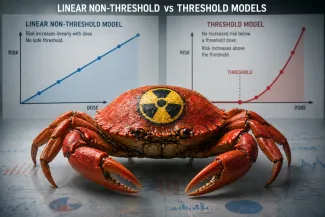
The linear non-threshold model, first used in radiation protection and later extended to chemical carcinogens. It was adopted by the EPA when it was founded in 1970 as the default model for cancer risk assessment. It assumes that every increment of a chemical or radiation dose, no matter how small, constitutes an increased risk of cancer for humans.
The threshold model is used for chemicals that have not been shown to cause cancer. It assumes an exposure level below which there is no increased cancer risk.
The hormesis model is based on the observed phenomenon that low doses of chemicals can have adaptive and sometimes beneficial effects, whereas high doses are toxic. It is not used by the EPA in cancer risk assessment but is used in drug development, medicine, and other fields. The EPA has not adopted this model because of a fear that it would loosen environmental standards.
Linear Non-Threshold Model
The linear non-threshold (LNT) model is based on scientific fraud, so severe that many believe it should be precluded from use as the default model in cancer risk assessment. As documented by Dr. Edward Calabrese:
- It began in the 1930s, when Herman Muller, a US radiation geneticist, claimed to be the first to induce gene mutations in fruit flies by exposing them to high doses of X-rays. He received the Nobel Prize for this discovery in 1946.
- However, he never actually induced gene mutations; instead, he produced structural damage in the chromosomes of the fruit flies, which would not be passed on to generations to cause cancer.
- Muller used his status as a Nobel Prize winner to promote the theory that the effect of X-ray exposure was linear at low doses.
- Even after this model was proven wrong, he blocked or ignored any research results that contradicted his findings and even promoted falsified data.
In 1956, Muller “strong-armed” the radiation protection community into adopting the linear non-threshold model as the default, and the EPA adopted the model when it was formed in 1970. Despite significant flaws in the LNT model, federal agencies, including the EPA, continue to adhere to it.
What Does Science Say?
Today’s knowledge of biology recognizes that:
- The human body has a remarkable capacity to repair damage to genetic material, with a vast number of mutations repaired each day.
- The occurrence of mutations in the human body does not guarantee a carcinogenic outcome – there must be an increasing number of mutations until a threshold where repair is exceeded.
- Many carcinogens at high doses cause immunosuppression, which does not occur at low doses.
- Chemical carcinogens can act through non-DNA mechanisms, such as promoting inflammation and altering hormone signaling.
- Random mutations occur in actively replicating stem cell populations that can cause cancer.
The LNT has largely been refuted by other studies, including:
Toxicology’s largest study, the Mega-Mouse or ED01 study, conducted in the 1970s by the FDA, was designed to answer whether cancer follows the LNT or threshold model.
The FDA exposed over 24,000 mice to the known carcinogen 2-acetylaminofluorene. Standard animal studies, using 50 animals per dose group, can detect tumor rates only about 10 percentage points above the control group. With 24,000 mice, the study detected tumors with just a 1% increase over controls.
The initial analysis reported no threshold for liver tumors and an ambiguous result for bladder tumors. However, a 2003 reanalysis found thresholds for both bladder and liver tumors, using a different method of plotting the results.
A 2019 review of cancer studies reported that most studies showed no-effect levels for tumors, and the authors concluded that “at non-toxic dosages, thresholds exist for the induction of experimental cancer by all types of carcinogens.”
Why Does the EPA Keep Using the LNT Model?
EPA knows its model is flawed, but pressure from competing constituencies, such as environmental groups and industry, has frozen the agency in place. EPA last updated its Cancer Guidelines in 2005.
In 2019, the EPA held a public meeting of its Science Advisory Board (SAB) to discuss updating the guidelines. Critics immediately pounced on the effort, with the journal Science reporting, “On the current timeline, the SAB, which has been stocked with industry-friendly members during the Trump Administration, could bless the new guidelines before any potential new administration could take office in 2021- making them harder to undo.”
As is evident in the Science article, the topic has become highly politicized, with claims that regulations will be loosened and the risk of cancer will increase if the EPA stops using the LNT model. There are accusations that using anything other than the LNT is not health-protective and that it is an industry-driven campaign to loosen restrictions on toxic chemicals.
Since the 2019 SAB meeting, EPA has largely remained quiet about revising its cancer risk assessment. The Biden Administration took a “do not rock the boat” approach, and the current Trump Administration has not spoken publicly on the issue.
Moving Forward
It is time to get risk assessment and its models right. The Administration should create a commission to evaluate which models are appropriate for cancer risk assessment across the government. The commission should be time-limited and composed of scientists and practitioners from diverse backgrounds and viewpoints. Getting this right isn’t about loosening or tightening regulations; it’s about building an assessment grounded in science that reflects biology rather than a model a Nobel laureate bent to fit his conclusions 70 years ago.

Susan Goldhaber MPH
Susan Goldhaber, M.P.H., is an environmental toxicologist with over 40 years’ experience working at Federal and State agencies and in the private sector, with an emphasis on issues concerning chemicals in drinking water, air, and hazardous waste. Her current focus is on translating scientific data into usable information for the public.