
Sometimes an idea is so absurd it can only come out of a university. Here’s a recent example: in order to halt climate change, we should genetically engineer ticks to spread a disease that renders people allergic to red meat. As more people are infected with this tick-borne condition, humanity will eat fewer climate-destroying steaks, thereby cutting carbon emissions from animal agriculture. It sounds like a wild-eyed conspiracy theory your weird uncle might rattle off at Thanksgiving dinner. That’s all I thought it was when I read about it on Slay News. “Scientists Push Plan to Spread Fatal Meat Allergy Among Public to ‘Fight Climate Change’,” the headline declared:
“Scientists from Western Michigan University are pushing a plan to supposedly ‘fight climate change’ that involves deliberately spreading a dangerous tick-borne disease that can trigger a lifelong fatal allergy to red meat.”
But this isn’t just another anti-Bill Gates scare story cooked up on the fringes of the internet. The Slay article cited a real academic paper written by a pair of researchers who are indeed employed by Western Michigan University, Parker Crutchfield and Blake Hereth (“Pronouns: they/them”). The article appeared in Bioethics in July, a legitimate journal owned by the publishing behemoth Wiley, “A trusted leader in research and learning.”

After the paper sparked a ferocious backlash online, Crutchfield insisted it was “just a thought experiment and not an endorsement of spreading the allergy-causing ailment.” Fair enough. This article isn’t a critique of two softheaded academics with ridiculous ideas, it’s just a thought experiment about why they shouldn’t be taken seriously.
Qualifications aside, it’s worth dissecting this paper in detail because destructive policies—like the recent campaign to push children into irreversible medical procedures under the banner of “gender-affirming care”—often start out as crank ideas relegated to obscure academic journals and universities. Then they gain political traction and we have a real problem on our hands.
As the philosopher Elizabeth Anscombe astutely observed, "the point of considering hypothetical situations, perhaps very improbable ones, seems to be to elicit from yourself or someone else a hypothetical decision to do something of a bad kind." With that prescient warning in mind, here’s the case against genetically engineering insects to deliberately harm innocent people.
“Beneficial bloodsucking”
The paper, eerily titled “Beneficial Bloodsucking,” argues that intentionally spreading alpha-gal syndrome (AGS) via lone star tick bites could be ethically permissible, and perhaps necessary, as a means to reduce animal suffering and carbon emissions caused by red meat consumption. According to the CDC, AGS is “a serious, potentially life-threatening” condition that causes an allergic reaction in people who eat red meat. It currently affects nearly 450,000 individuals, the agency estimates. Framing their “thought experiment” as a form of moral bioenhancement, Crutchfield and Hereth lead with this central “convergence argument”:
“Because promoting tickborne AGS prevents something bad from happening, doesn't violate anyone's rights, and promotes virtuous action or character, it follows that promoting tickborne AGS is strongly pro tanto [“to that extent”] morally obligatory.
This argument is fatally flawed in multiple places. “Promoting” AGS actually causes, rather than prevents, harm; it absolutely does violate individual rights; and it disincentivizes virtuous behavior by discouraging people from making sensible nutritional decisions.
Restoring health vs causing harm
First, trying to spread a disease—mild or otherwise—is inherently wrong. Whatever excuse they may concoct to justify it, deliberately releasing ticks into the environment with the intention of making people sick is unethical because it interferes with the proper functioning of their bodies. To use a very simple example, you have legs so you can move yourself from one place to another. If somebody smashes your left ankle with a baseball bat, they will have interfered with your ability to function as you should be able to. Crutchfield and Hereth propose doing the same thing—only using ticks instead of Louisville Sluggers.
There are a handful of contexts in which it’s acceptable to harm someone. Consider this example borrowed from the philosopher Edward Feser: it’s normally unethical to plunge a sharp knife into someone’s body. This assumption can be overruled, for instance, if a surgeon thinks an operation is the best way to restore his patient's health—and he can convince them to undergo the procedure.
Crutchfield and Hereth attempt to sidestep this objection by claiming that “public health measures like vaccination don't violate (even if they infringe) people's right against bodily interference and coercion.” But the analogy doesn’t hold because vaccines prevent disease. If you vaccinate one person or a million, the positive effect is identical; only the size of the effect changes. [1] There's no intention to do harm in service to some warped sense of "the greater good." Furthermore, the vast majority of Americans support immunization, even when vaccines are legally required for school attendance.

In contrast, Crutchfield and Hereth want to infect millions of people with AGS precisely because "it is extremely difficult for most humans to ... forego acting on their desire to eat meat." Their scheme is deliberately harmful and designed to end-run consent (violating both of Feser's qualifiers) because most people won't go vegan voluntarily; in no sense is it comparable to a typical public health intervention.
The ethical case for red meat
It gets better, though. They go on to make a misguided comparison between cannibalism and meat-eating, arguing that both can be prevented on the same grounds:
“If we could introduce a biochemical syndrome into the bodies of cannibals in a way that ensures they are allergic to consuming human meat, then—assuming there is no less bad alternative intervention … we are permitted and arguably obligated to do so because it is morally wrong to consume human meat under most circumstances.”
Because it’s also “morally wrong to consume animal meat under most circumstances,” the argument continues, they are “permitted and arguably required” to spread alpha-gal syndrome among the general population.
The problem here is two-fold. Humans and other animals are not morally equivalent. Our rights are rooted in our ability as a species to reason our way to the best decision in a given circumstance. Dairy cows don’t do that. “No other animals or beings possess this ability to reason, to make conscious choices, to transform their environment in order to prosper,” as the economist Murray Rothbard argued (p 155). If you doubt this fact, stop by the nearest farm and ask any pig what it thinks of “animal rights.”
Equating meat-eating to cannibalism anthropomorphizes farm animals while restricting dietary choices that promote human welfare. Indeed, eating red meat is perfectly ethical, and arguably necessary, because it’s an abundant source of essential nutrients that plants and other proteins often can’t readily provide. Red meat is a rich source of high-biological-value protein, heme iron (which is more absorbable than plant-based iron), vitamin B12, zinc, and selenium—nutrients critical for preventing anemia, supporting immune function, and maintaining cognitive health. These benefits are especially important for children and pregnant women.
The authors don’t challenge these points anywhere in their paper. “For the sake of brevity,” they note instead, “we do not introduce any of the countless arguments concluding that eating meat is wrong.” Brevity is a fine quality, but the paper is a 5,000-word argument for—sorry, “thought experiment” about—forcing people to go vegan or risk serious injury. Surely they could’ve explained, even briefly, why meat-eating is such a terrible sin that they can infect you and your children with a potentially fatal condition.
The authors add in a footnote that they "believe animal suffering is the principal worse‐making cause of widespread meat‐eating." But they're mistaken. Farmers employ extensive measures to protect the welfare of their animals. They do this because—like the rest of us—they don't want to cause unnecessary suffering, and healthy animals are more productive. This is to say nothing of the extensive anti-animal cruelty laws enacted across the US.
A word about sustainability
The paper also assumes another of its critical points: that animal agriculture is a unique threat to the planet. Except to assert that “meat production undermines the ecological and environmental conditions required for the species to survive,” the authors make no case that animal agriculture is actually unsustainable. That’s a ridiculous claim for several reasons, the most important being that animal agriculture is responsible for a relatively small percentage of our greenhouse emissions.
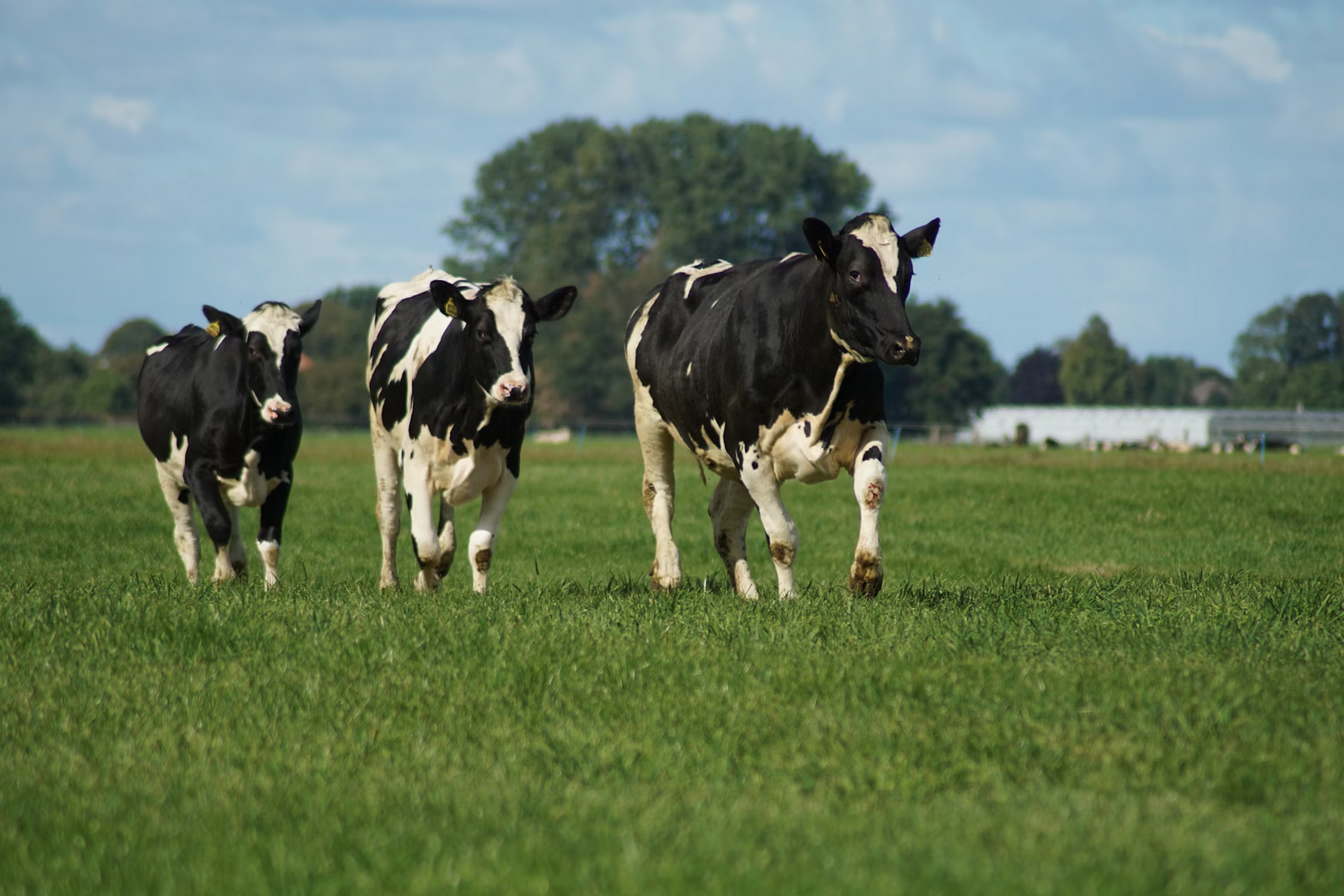
The 14.5 percent figure that circulates liberally online is calculated by combining emissions estimates from developing and developed countries then averaging them across all 200 nations around the globe. It's a misleading estimate because poorer countries are disproportionately agrarian societies; agriculture accounts for most of their economic output, so most of their emissions come from agriculture.
Further, studies have shown that the amount of land dedicated to raising animals for food has declined markedly in recent years. There are 140 million fewer hectares of pasture today than there were in 2000. Moreover, greenhouse gas emissions from land-use changes have fallen by a third over the last two decades.
In other words, agriculture’s footprint is shrinking as practical innovations improve animal health, produce better feed and optimize the animals themselves for food production. Any of these solutions would constitute what Crutchfield and Hereth call a "less bad alternative intervention," which means they have no justification for authoritarian theorizing.
The academy has lost its way
The academy has steadily pumped corrosive nonsense into the popular culture for years. It’s reflective of a mindset completely divorced from the reality most people experience every day. This is evident in Crutchfield’s “thought experiment” defense of his paper. What sort of person even contemplates the idea of deliberately harming others in service to some grand environmental cause?
I honestly don’t know, nor do I particularly care to find out. What I do know is that America’s universities have lost their way. As long as they keep churning out speculative junk like the paper we’ve covered here, they deserve every funding cut and sanction Washington opts to impose on them.
[1] But the same qualifications apply to immunization. We don’t vaccinate certain people, like young children, in some cases because the risk to them outweighs the benefit. In any case, public health officials are still obligated to explain their risk-benefit calculus before recommending or requiring immunization.

Cameron English
Executive Vice President
Cameron English is a writer, editor and co-host of the Science Facts and Fallacies Podcast. Before joining ACSH, he was managing editor at the Genetic Literacy Project.