A Long-Awaited Approval
As the calendar approaches summer and many envision long, leisurely days at the beach, protecting yourself from the sun's harmful rays becomes increasingly important. On June 9, the FDA approved bemotrizinol, the first new sunscreen ingredient approved in the U.S. in 20 years. Amazingly, the FDA completed this approval in 7 months, but the real question is: since this product has been available in Europe since 1999, why has it taken so long for approval in the U.S.?
Bemotrizinol protects against all types of UV radiation and is absorbed through the skin at lower rates than other sunscreen ingredients. It is photostable, meaning it doesn’t break down in sunlight, unlike other sunscreen ingredients that do, which limits how long protection lasts. It also has a low risk of skin irritation. My colleague, Josh Bloom, gets into the chemistry behind bemotrizinol here. Manufacturers can start including it in their sunscreen products as early as August 9, when it will be available under the brand name Parasol Shield.
There is broad recognition that a more effective sunscreen plays an important role in preventing skin cancer. Skin cancer is the most common cancer in the US, and the rates have been rising – melanoma, the deadliest form of skin cancer, increased by 31% between 2011 and 2019, and those numbers are expected to continue rising.
So why did it take the FDA over 20 years to approve this product?
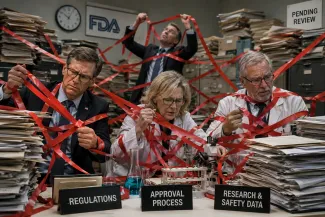
The answer is a convoluted regulatory process, a lack of urgency within the FDA, and bureaucratic inertia.
Regulatory Whack-a-Mole
The FDA regulates sunscreen as an over-the-counter (OTC) drug, not as a cosmetic, unlike many other countries that allow for faster approval. Manufacturers bring OTC drugs to market in the US through the OTC Monograph Process. In 1978, the FDA said it would issue a sunscreen monograph, establishing conditions for sunscreen safety and effectiveness and for product labeling.
The final monograph was issued in 1999, 21 years after it was proposed, and it listed 16 sunscreen ingredients as Category I, generally recognized as safe and effective (GRASE), that could be marketed in the U.S. However, two years later, the FDA indefinitely postponed the monograph, stating that it planned to propose additional amendments.
Even without a formal monograph, Congress and the FDA attempted to increase the availability of OTC sunscreen products. In 2002, the FDA issued the Time and Extent (TEA) application, a rule intended to get more sunscreen ingredients into the monograph system. It could be applied for an active ingredient marketed in a foreign country for at least five years, or in use under a New Drug Application (NDA) for more than five years. [1] However, the TEA process proved slow and ineffective: eight sunscreen ingredients were filed through the TEA process between 1999 and 2019, and none were approved. In 2011, the FDA set requirements for testing and labeling OTC sunscreen products.
Congress Steps In, But The Backlog Remains
In 2014, Congress tried to address the backlog of sunscreen approval requests with the passage of the Sunscreen Innovation Act, which gave the FDA 1 year to respond to the existing backlog and 18 months to respond to any future applications. However, bureaucratic inertia left this law unenforced.
In 2019, (20 years after the 1999 monograph), the FDA updated its examination of the 16 sunscreen ingredients listed in the 1999 monograph as GRASE, concluding that:
- Zinc oxide and titanium dioxide should still be classified as GRASE, allowing them to continue to be used in the U.S.
- Trolamine salicylate and para-aminobenzoic acid (PABA) should be classified as Category II, neither safe nor effective, where the risks outweigh the benefits. However, this classification had no practical effect because no sunscreens sold in the US contained these ingredients.
- The remaining 12 ingredients were to be classified as Category III (insufficient data to make a classification), with requests for data from the manufacturers. The FDA stated they lacked data, specifically on absorption through the skin, irritation, and sensitization.
The lack of FDA action on sunscreens has long frustrated sunscreen manufacturers as foreign competitors were increasing their share of the U.S. sunscreen market. Over the years, a group of sunscreen manufacturers repeatedly proposed a plan to the FDA to use non-animal testing to simplify testing requirements. The FDA failed to approve any alternative approaches.
Pressure Builds Outside Industry
Other groups were also frustrated with the FDA's inaction. US dermatologists, concerned about the rising rates of skin cancer, argued that encouraging people to wear sunscreen was made more difficult by the limited availability of sunscreen ingredients. Consumer groups argued that more choice was needed, and a coalition of doctors, industry executives, and consumer groups came together to encourage Congress to act to pass a law requiring changes at the FDA.
For the second time, Congress stepped in, passing the 2025 SAFE Sunscreen Act, a more comprehensive law than the 2014 Sunscreen Innovation Act, requiring the FDA to:
- Use real-world evidence, observational studies, and other approaches to complement traditional clinical tests.
- Consider non-animal data in place of animal tests.
- Review sunscreen already approved and safely used around the world.
- Use historical safety data demonstrating the safe use of sunscreen ingredients that have previously been accepted for US marketing.
- Incorporate the streamlined administrative order process established by the CARES Act, including establishing a final monograph for sunscreen. [2]
The FDA worked shockingly fast to approve bemotrizinol, approving it within seven months of receiving the approval request. HHS Secretary Robert F. Kennedy, Jr. credits its quick approval to the Trump Administration’s MAHA Strategy Report which called for modernizing processes and applying sound science to regulatory decisions.
In fact, the real trigger may have been a combination of pleasing the MAHA movement and satisfying Congress and the medical community’s desire to see action after decades of incompetence and inaction. As early as August 9, the U.S. consumer will finally be able to apply a better sunscreen that has been available in Europe for over 20 years.
Bemotrizinol's approval is welcome. It proves that a system “at rest” can move when Congress, clinicians, consumers, and industry all push in the same direction. The lesson is not merely that Americans now have access to a better sunscreen; it is that public health regulation must move beyond paralysis by analysis, especially when delay itself carries risks.
[1] A New Drug Application (NDA) is an alternative path to FDA approval. However, the level of detail required, including multiple technical sections such as summaries of animal toxicology studies and clinical data, makes an NDA commercially impractical for OTC sunscreen ingredients.
[2] The CARES Act, emergency legislation adopted during the pandemic, issued a final administrative order saying that it should adopt the same requirements as the 1999 final monograph, except for the labeling and testing requirements, which would conform with the requirements in the 2011 rule.

Susan Goldhaber MPH
Susan Goldhaber, M.P.H., is an environmental toxicologist with over 40 years’ experience working at Federal and State agencies and in the private sector, with an emphasis on issues concerning chemicals in drinking water, air, and hazardous waste. Her current focus is on translating scientific data into usable information for the public.