What I'm Reading (Jan. 31)

By Chuck Dinerstein, MD, MBA — Jan 31, 2020
Here's what we have this time: How to fund the scientific enterprise ... Our complicated relationship with nuclear power ... Ways to read and enjoy more ... and an overlooked environmental consequence to legalizing marijuana.

Here's what we have this time: How to fund the scientific enterprise ... Our complicated relationship with nuclear power ... Ways to read and enjoy more ... and an overlooked environmental consequence to legalizing marijuana.


Bravo Ontario; Forced Opioid Tapering is (Mercifully) Ending

By Josh Bloom — Jan 30, 2020
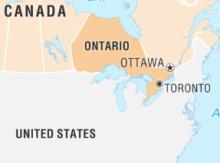
Ontario may be cold, but the same cannot be said of its chief medical officer. Let's hear it for Dr. Nancy Whitmore, the head of the College of Physicians and Surgeons of Ontario. She has the ethics and the courage to make changes in policy that should have never been in place to begin with. Barbaric forced tapering will no longer be permitted, and doctors and patients will make treatment plans together. The U.S. should be looking north.

Ontario may be cold, but the same cannot be said of its chief medical officer. Let's hear it for Dr. Nancy Whitmore, the head of the College of Physicians and Surgeons of Ontario. She has the ethics and the courage to make changes in policy that should have never been in place to begin with. Barbaric forced tapering will no longer be permitted, and doctors and patients will make treatment plans together. The U.S. should be looking north.

Lessons We Learn From Genetic Ancestry Testing

By Chuck Dinerstein, MD, MBA — Jan 29, 2020
We've all seen the ads for genetic testing. They seem to come in two forms. In one, testing tells me more about the ancestors I expected to find; in the other, I have to exchange my kilt for lederhosen. A new study looks at one way in which people respond to these findings.

We've all seen the ads for genetic testing. They seem to come in two forms. In one, testing tells me more about the ancestors I expected to find; in the other, I have to exchange my kilt for lederhosen. A new study looks at one way in which people respond to these findings.

Fearing The Coronavirus

By Chuck Dinerstein, MD, MBA — Jan 29, 2020
Plenty of attention is focused on the growing number of cases in China of the Wuhan coronavirus -- also known as 2019-nCoV -- and those around the world. According to the New York Times, as of this writing, there are at least 132 reported deaths and nearly 6,000 confirmed cases of the disease. While the number of fatalities continues to grow, let's take a moment to understand what these numbers might mean.

Plenty of attention is focused on the growing number of cases in China of the Wuhan coronavirus -- also known as 2019-nCoV -- and those around the world. According to the New York Times, as of this writing, there are at least 132 reported deaths and nearly 6,000 confirmed cases of the disease. While the number of fatalities continues to grow, let's take a moment to understand what these numbers might mean.

Social Media Makes YOU Part of the Fake News Problem

By Alex Berezow, PhD — Jan 28, 2020
There is wide agreement that fake news, exacerbated by social media, is a major social problem and threat to democracy. Yet, we tend to view the problem as being caused by "other people." Actually, you should look in the mirror: You're part of the problem.

There is wide agreement that fake news, exacerbated by social media, is a major social problem and threat to democracy. Yet, we tend to view the problem as being caused by "other people." Actually, you should look in the mirror: You're part of the problem.

With Straight Face, Yale Says Fracking Causes Sexually-Transmitted Infections

By Josh Bloom — Jan 28, 2020
Researchers from the Yale School of Public Health published one of the dumbest papers we've ever seen. They claim that some areas in which fracking takes place (Texas only) have more sexually transmitted diseases. Embarrassingly funny and, yes, "fracking" stupid.

Researchers from the Yale School of Public Health published one of the dumbest papers we've ever seen. They claim that some areas in which fracking takes place (Texas only) have more sexually transmitted diseases. Embarrassingly funny and, yes, "fracking" stupid.

NASEM Makes a Major Plea for Harm Reduction in Drug Policy

By Jeffrey Singer — Jan 28, 2020
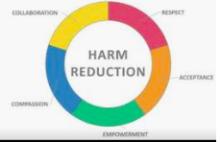
Like ACSH itself, ACSH advisor Dr. Jeffrey Singer is a proponent of harm reduction. Here's his take on a report, issued by the health and medicine panel of the National Academy of Sciences, Engineering and Medicine (NASEM), titled "Opportunities to Improve Opioid Use Disorder and Infectious Disease Services." Not surprisingly, Dr. Singer calls for needle exchange, methadone use, and the use of prescribing pre‐​exposure HIV prophylaxis (PrEP) and post‐​exposure prophylaxis (PEP).

Like ACSH itself, ACSH advisor Dr. Jeffrey Singer is a proponent of harm reduction. Here's his take on a report, issued by the health and medicine panel of the National Academy of Sciences, Engineering and Medicine (NASEM), titled "Opportunities to Improve Opioid Use Disorder and Infectious Disease Services." Not surprisingly, Dr. Singer calls for needle exchange, methadone use, and the use of prescribing pre‐​exposure HIV prophylaxis (PrEP) and post‐​exposure prophylaxis (PEP).

Are Surgeons Providing Care They Promised? RAND Corporation Says No.

By Chuck Dinerstein, MD, MBA — Jan 28, 2020
Bundling surgery and surgical fees into one payment for a so-called episode of care is the goal of CMS. It's meant to reduce costs. But what if physicians don't deliver all the expected services? Should they reimburse some of the money? The RAND corporation says yes -- and estimates the savings at nearly $10 billion annually.

Bundling surgery and surgical fees into one payment for a so-called episode of care is the goal of CMS. It's meant to reduce costs. But what if physicians don't deliver all the expected services? Should they reimburse some of the money? The RAND corporation says yes -- and estimates the savings at nearly $10 billion annually.