Powerball Is For Suckers
Buying a single ticket, the odds of winning the Powerball jackpot are 1 in 292 million. You are never going to win this fortune. Before you launch into an argument with our author, read this.

In seeking to nail down an exact day when chemophobia – an irrational fear of harmless trace chemicals – came into existence, one must consider a singular government act that occurred on Sept. 6, 1958.
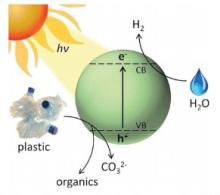
Plastic waste is a worldwide environmental problem. So is the generation of clean energy. Two British groups have come up with a method that, at least in the lab, can degrade plastic and simultaneously generate hydrogen. Light is used as an inexpensive catalyst. That's some very interesting chemistry.
Should machines be allowed to make our moral judgments? They are often smarter and less emotional. But when we make a moral choice, is that what we're really looking for?
According to pharmacologist Ray Dingledine, good science is hard to do because of (1) "our drive to create a coherent narrative from new data, regardless of its quality or relevance"; (2) "our inclination to seek patterns in data whether they exist or not"; and (3) our negligence to "always consider how likely a result is regardless of its P-value." The good news is that this can be fixed.
A male physician disparages female doctors. Things don't go well for him. However, we now can have an honest discussion about the issue.
By and large high schools and colleges, and the organizations that govern them, haven't mandated that cooling tubs be readily available for athletes whose body temperatures climb dangerously high. Recent incidents have shown that teens who could have been saved by having access to ice baths instead die without them.
Did team sports for kids evolve from hunter-gatherers who needed to practice for war? A new paper suggests that is so.
Formaldehyde is one of the most demonized chemicals. Know-nothings try to terrify us about the 10 milligrams of the chemical you get from a packet of aspartame. But did you know that your body produces, uses, and eliminates 50,000 mg of the stuff every day? That's because every living cell in our body requires formaldehyde.
Probability and odds play a large role in explaining the results of medical studies. Yet, they are not the same, and knowing how to understand odds will make it easier to separate the signal from the noise.