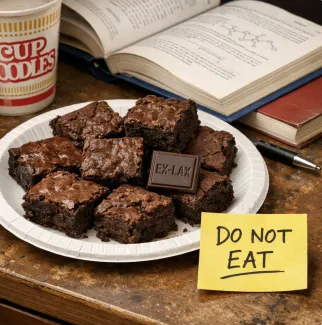
If you're sufficiently old and have ever lived in a dorm, chances are you're either aware of this prank. Or the victim of it:
- People smoke weed.
- Then they get the munchies.
- Brownies are a common and effective remedy for the munchies.
- This is all well and good provided that the brownies are, too.
- But sometimes they're not.
In the 1970s, this was a common prank and means of revenge. You know the story, real or imagined: Someone gets plenty tired of having his brownies stolen. After smoking more weed, he gets help from Betty Crocker and the local pharmacy and bakes a batch of nuclear colon bombs. After smoking more weed, he leaves them out, preferably with a note asking people not to eat them. Then he smokes more weed.

Ex-Lax, ca. 1970, bears a striking resemblance to "real" chocolate. That's because it is just that.
The results are predictable (and gentle!). I'm not going into the stories. They all end the same.
But there are some damn funny comments out there.
WTH? Where is Steve? After all, it normally takes two hosts to introduce TDCLFHTM. The answer? Irving's been eating Brussels sprouts again (after all, hell is where the damn things belong), and Steve couldn't take the stench. He retreated to Purgatory until the air clears.
Cool stuff about phenolphthalein:
- Its name comes from the two ingredients that are used to make it: phenol and phthalic anhydride.
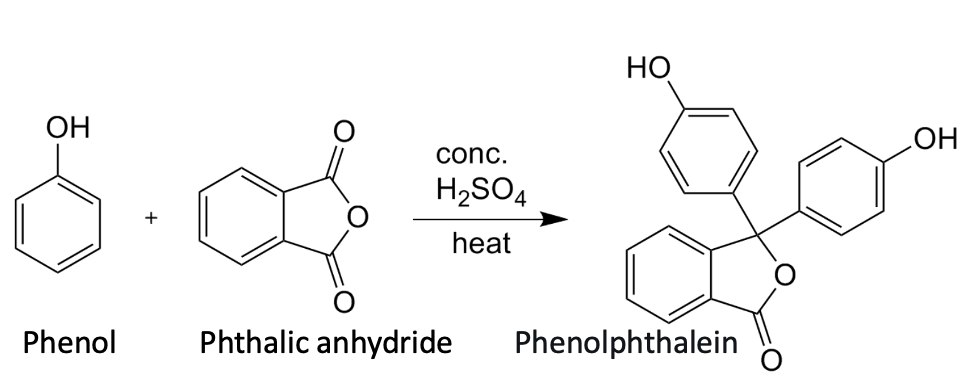
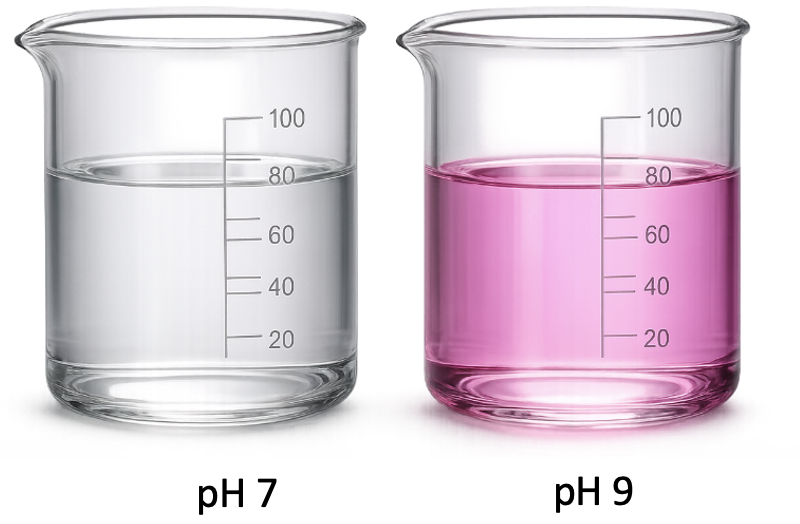
- It's an old-fashioned pH indicator. In acidic, neutral, or slightly basic solutions, it is colorless. At or above pH 8.2, it turns pink. Add acid, and the color disappears. It's rarely used anymore. pH paper and analytical instruments do a better job.
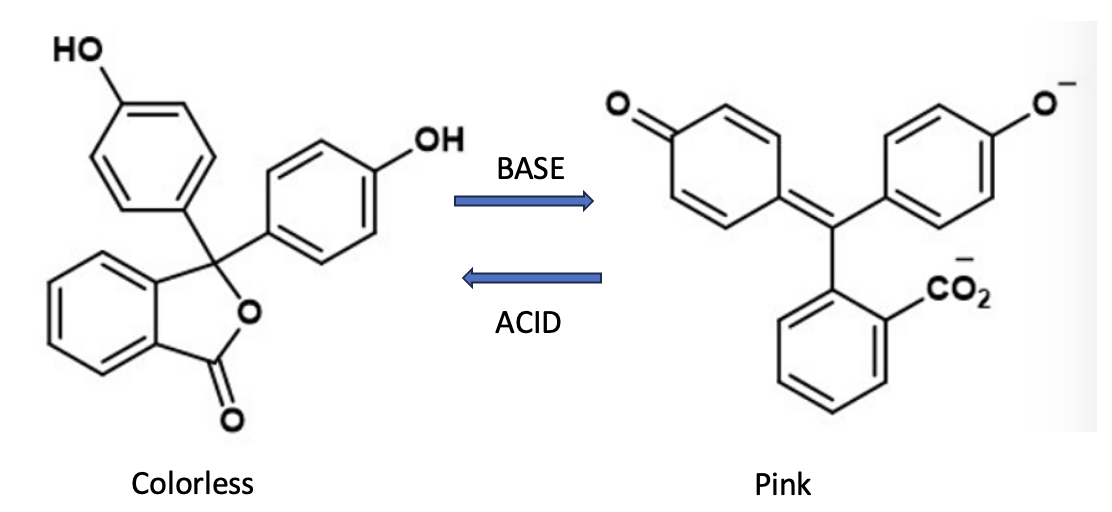
(Left) Phenolphthalein (closed form) at or below pH 8. (Right) Open form pH ~8-12
Quiz! Why is the open form colored?
Another quiz: At very high pH, it becomes colorless again. Why?
- Aside from its toxicity, the Ex-Lax candy bar was doomed anyhow. The FDA has become increasingly concerned about drugs that can be mistaken for candy. It is reasonable to say that the old Ex-Lax bars were candy. The bars weighed about 20 grams. The active drug was measured in hundreds of milligrams. In other words, it was a chocolate bar with a little schmootz in it.
- Doesn't this make you wonder about the proliferation of gummies? Today, you can get antihistamines, laxatives, melatonin, and even cold remedies in gummy form. And this list doesn't even include the huge number of cannabis chemicals. Perhaps the FDA is chewing out of both sides of its mouth.
That's about all I have on Ex-Lax. If you're concerned about Steve, worry not. He's back, having successfully lobbied the Hell HOA for a rule change. All is well.


Josh Bloom
Dr. Jonathan (Josh) Bloom, ACSH's Director of Chemical and Pharmaceutical Sciences, earned his Ph.D. at the University of Virginia and completed postdoctoral training at the University of Pennsylvania. During his 20-plus years in drug discovery at Wyeth, his research group discovered the antibiotic Tygacil®, approved in 2005. He holds 25 issued patents and has authored 35 academic papers. Since joining ACSH in 2010, he has written more than 2,000 articles and dozens of op-eds for major newspapers, including The Wall Street Journal and Chicago Tribune.