A new study in the journal Aging found that people, especially men, who have higher blood levels of the amino acid tyrosine tended to have slightly shorter lifespans. This effect was also seen in women, although to a lesser extent.
The study is conceptually stronger than typical nutrition papers (a low bar) because the researchers used two complementary approaches:
- Were people with higher blood tyrosine levels more likely to die during the study period? That kind of analysis can find correlations, but correlations are often misleading because many health factors travel together.
- A mathematical technique called Mendelian randomization was also used. Instead of simply comparing people with different tyrosine levels, the method looks at genetic variants associated with naturally higher tyrosine levels over a lifetime.
Since genes are fixed at conception, this approach can reduce some of the confounding factors that plague ordinary nutrition studies, such as differences in diet, smoking, obesity, illness, income, and overall health, because these factors generally do not influence which genetic variants a person inherits.
Results and interpretation
Consider the Forest Plot in Figure 1, below.
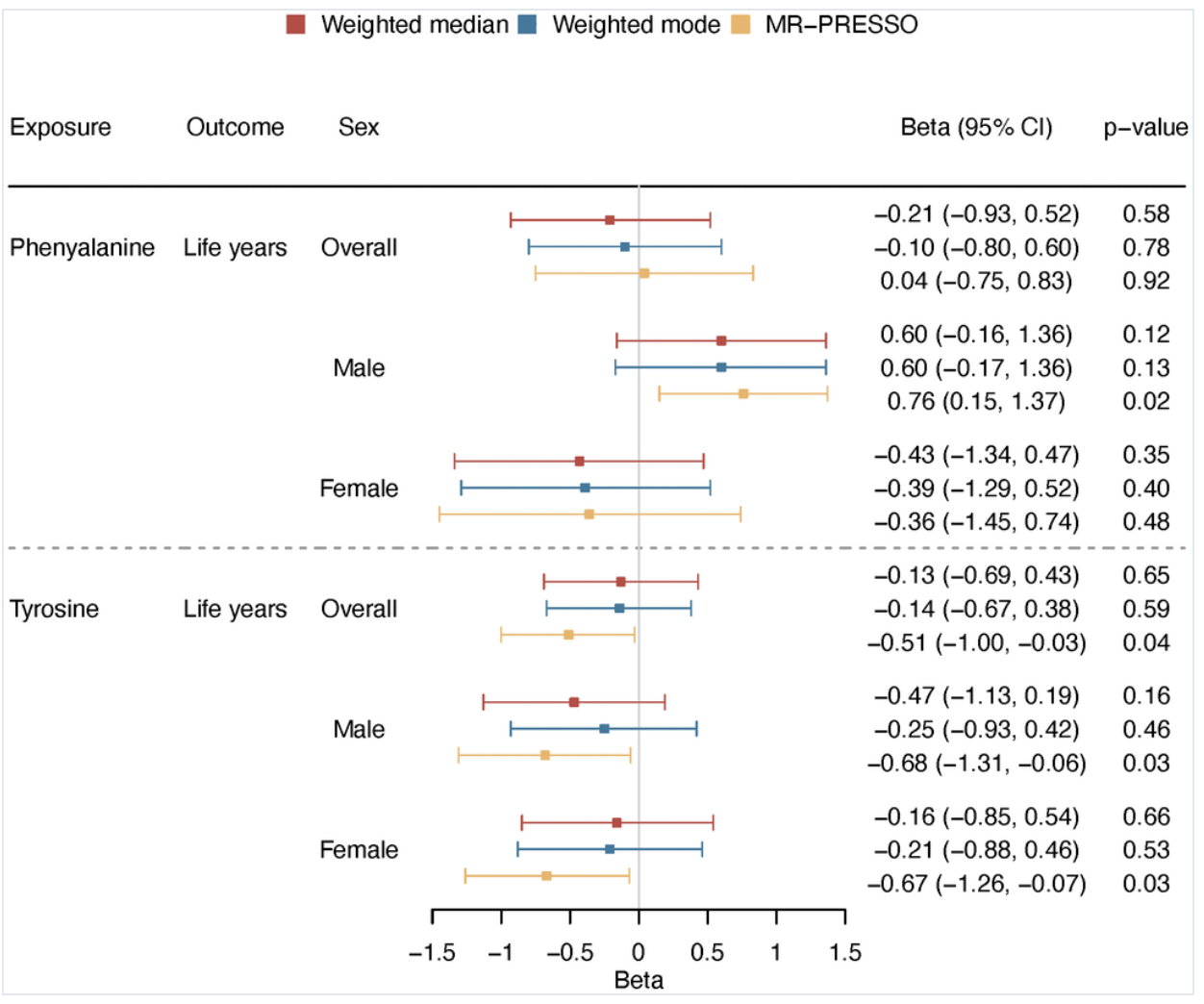
Figure 1. Forest plot showing the estimated effects of genetically elevated phenylalanine and tyrosine levels on lifespan. Lines crossing zero indicate statistically uncertain results. Most analyses showed weak or inconsistent effects, although one method (MR-PRESSO) [1] suggested that higher tyrosine levels may be associated with slightly shorter lifespan. Source: Song et al., Aging (2026).
Why are Phenylalanine and Tyrosine Both Included?
The researchers examined both tyrosine and phenylalanine because the two amino acids are biologically linked. Phenylalanine is converted into tyrosine in the body by an oxidizing enzyme called phenylalanine hydroxylase (Figure 2).
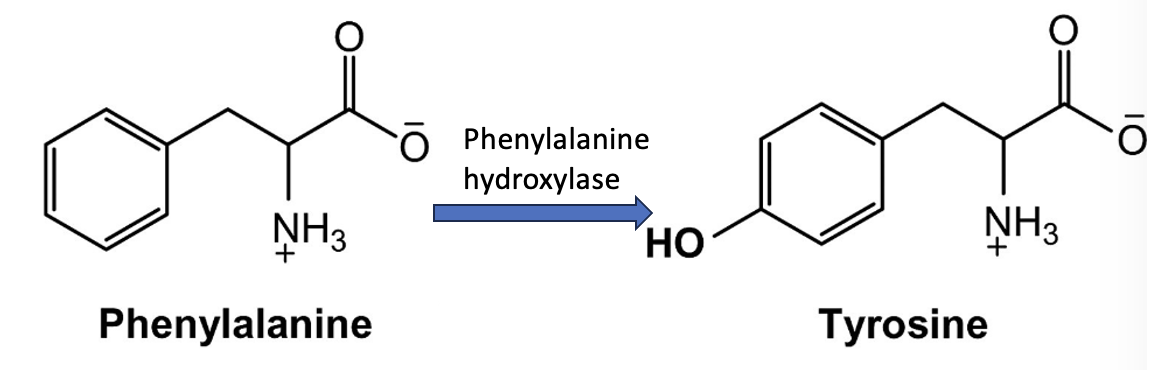
Figure 2. Metabolic conversion of phenylalanine to tyrosine.
As a result, changes in one amino acid often affect the other, making it difficult to determine which one — if either — is actually associated with lifespan. The researchers therefore analyzed both separately and together in an attempt to isolate the independent effects of each amino acid.
How Convincing is the Evidence?
Let's be generous and say "somewhat."
This is not meant as criticism of the researchers. In fact, the study is carefully done. The problem is that even very good epidemiological studies are still epidemiological studies; they can struggle to separate cause from correlation.
The association itself was weak. In the study’s main population analysis, people with higher tyrosine levels had only a slightly higher risk of death (hazard ratio = 1.04), meaning roughly a 4% increase in risk. Effects this small can easily be influenced by confounding factors.
There is another important complication: elevated tyrosine levels are already associated with obesity, insulin resistance, fatty liver disease, and other signs of poor metabolic health.
More likely, elevated tyrosine is acting as a marker of poor metabolic health rather than directly shortening lifespan.
Importantly, the study measured blood tyrosine levels — not how much tyrosine people consumed in their diets. Blood amino acid levels are influenced by many factors besides diet, including liver function, metabolism, insulin sensitivity, and overall health.
Bottom Line
This is an interesting and carefully conducted study, but it does not show that tyrosine itself is a “longevity toxin,” nor does it mean people should avoid protein-rich foods.
The study likely shows that amino acid metabolism changes as metabolic health deteriorates, and that tyrosine may be one signal of that process.
For now, the strongest evidence for living longer remains remarkably boring: don't smoke, maintain a healthy weight, exercise regularly, sleep adequately, and control diabetes and blood pressure. And, at this time, there is little reason for healthy people to worry about tyrosine or phenylalanine levels.
NOTE:
[1] Although MR-PRESSO might sound like a coffee maker, it is simply a statistical method designed to filter out genetic results that may be misleading or distorted by unrelated biological effects.

Josh Bloom
Director of Chemical and Pharmaceutical Science
Dr. Josh Bloom, the Director of Chemical and Pharmaceutical Science, comes from the world of drug discovery, where he did research for more than 20 years. He holds a Ph.D. in chemistry.