I can't even estimate the number of times I've warned the public about the hidden dangers that can be found in the largely unregulated bizzaro universe of the dietary supplement industry. Here are a few examples.
- A commentary about a debate between Dr. David Seres (a member of the American Council on Science and Health's Board of Scientific Advisors) and Sen. Orin Hatch (and others) that appeared on the Stat website.
- An op-ed published on Issues and Insights, co-written with my colleague, Dr. Henry Miller.
- A video from 2015 about New York State Attorney General Eric Schneiderman quoted Dr. Seres and me about abuses in the supplement industry.
- An article about the addition of prescription medications to otherwise worthless supplements to make them "work."
- An article I wrote for Science 2.0 about multiple cases of liver toxicity attributed to supplement use.
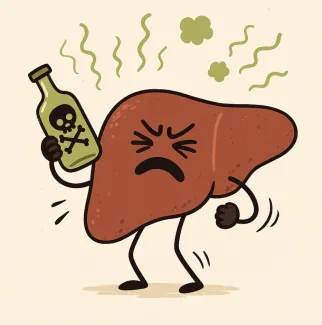
It's the last topic that I want to revisit. A search of the term "liver detox" on Amazon yields more than 5,000 products. This pseudoscientific sales pitch is based on the fallacy that your liver somehow needs help getting "cleansed." It does not.
This claim borders on ironic, considering the liver is the body’s primary metabolic organ, by a wide margin. Your liver is the "dishwasher" of the human body, and this brand of dishwasher needs no soap.
I’m far from the only one who’s been sounding the alarm. The medical community has been raising concerns about supplement-related liver damage for many years, though these warnings are often ignored, drowned out by slick marketing and public misconceptions. The primary misconception? That supplements are "natural" and therefore less likely to be harmful than prescription drugs. This is nonsense
A recent article in Health Matters (August 2025), written by Camille Bautista-Fryer, a senior writer at NewYork-Presbyterian Hospital (NYP), brings this issue back into focus.
Supplement use has grown over the past decade, with an increasing number of people interested in wellness and holistic care. From boosting your immune system to supporting mental health, many dietary and herbal supplements claim to benefit the body and mind – but can supplement use actually damage your liver?
- Camille Bautista-Fryer
Bautista-Fryer extensively quotes Dr. Robert Brown, the chief of Gastroenterology and Hepatology at NewYork-Presbyterian and Weill Cornell Medicine and a colleague of Dr. Seres [1].
The liver’s job is to metabolize all the foods you eat and figure out what doesn’t belong...Supplements are not regulated the same way as medications, so there may be ingredients included that buyers are unaware of.
-Dr. Robert Brown
What kinds of supplements should we be concerned about? Here are a few from Brown's list:
- Kava
- Turmeric
- Ashwagandha
- Black cohosh
He adds,
Many people can be asymptomatic for a long time, during which time only a blood test would reveal that their liver is inflamed...[i]n severe cases, the damage can progress to liver failure, requiring a transplant.
His statement is backed by data.
Liver injuries from supplements are still rare but rising quickly
A 2024 Lancet article estimates that the proportion of [Drug-Induced Liver Injury] (DILI) cases in the US that can be attributed to herbal dietary supplements increased from approximately 7% in 2004–05 to 20% in 2013–14. And a presentation at the 2023 American Association for the Study of Liver Diseases Meeting backs this up:
From 2004-2005 to 2020-2021, the proportion of [Herb-Induced Liver Injury] (HILI) cases attributed to non-body building agents jumped from 6% of all drug-induced liver injuries reported to 21%
And there are other cases of liver damage from supplements not mentioned in this article [2].
Let's close with some thoughts from Dr. Seres. They are especially relevant in today's topsy-turvy world of medicine:
"It is perpetually frustrating to me that parents are willing to feed untested and unproven nostra and potions to their children, exposing them to potential harm with little likelihood of benefit, simply because they are touted as “natural” or “nutritional”, while at the same time dismissing scientific fact simply because it is scientific."
David Seres, M.D., private communication, 8/20/19
I can't add much to this.
[1] Seres calls Brown "brilliant."
[2] Some other documented cases of liver toxicity include (mostly small numbers):

Josh Bloom
Dr. Jonathan (Josh) Bloom, ACSH's Director of Chemical and Pharmaceutical Sciences, earned his Ph.D. at the University of Virginia and completed postdoctoral training at the University of Pennsylvania. During his 20-plus years in drug discovery at Wyeth, his research group discovered the antibiotic Tygacil®, approved in 2005. He holds 25 issued patents and has authored 35 academic papers. Since joining ACSH in 2010, he has written more than 2,000 articles and dozens of op-eds for major newspapers, including The Wall Street Journal and Chicago Tribune.