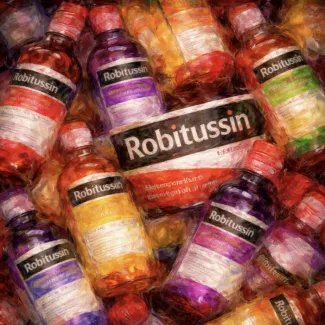
Have you shopped for cough medicine recently?
It’s overwhelming—a syrupy madhouse, and maybe intentionally so. There are SO many choices, and that's just for Robitussin. When you include other brands—and I won’t even get into equivalent store products—it’s not unreasonable to hail a pedicab to get from one end of the aisle to the other.
Keep reading, and you will see 15 (!) different incarnations of Robitussin (22 if you add in children's' brands). Are they all necessary, or is this just a scheme by Haleon [1] to get you to cough up a bunch of money for stuff that you don't need? More fundamentally, do they work at all? We shall see.
Choke on this
Guess how many drugs are approved to be in cough medicines? Would you believe TWO? Here they are.
- Dextromethorphan – a non-opioid morphinan [2] used as a cough suppressant
- Guaifenesin – a glycerine derivative marketed to loosen thick mucus.
How well do these work?
Not well.
A 2014 Cochrane Database of Systematic Reviews paper by Dr. Susan M. Smith and colleagues at RCSI Medical School in Ireland analyzed 29 placebo-controlled randomized trials involving 4,835 children and adults using OTC cough medicines in community settings.
Results?
Guaifenesin wasn’t so great
"Evidence for guaifenesin is weak and inconsistent. Of three adult placebo-controlled trials, only one showed a benefit, while two found no effect; no qualifying pediatric trials demonstrated benefit. Overall, guaifenesin performs little better than placebo, despite its ubiquitous presence in “chest” and “mucus” cough products."
Neither was dextromethorphan
“There is no good evidence for or against the effectiveness of over-the-counter medicines in acute cough.”
Smith, et.al., Cochrane Review, 2014
How many marginally useful cough medicines do we need?
This is where marketing takes over, and it’s hard to miss. Why? Look at this mess from the Robitussin Site.
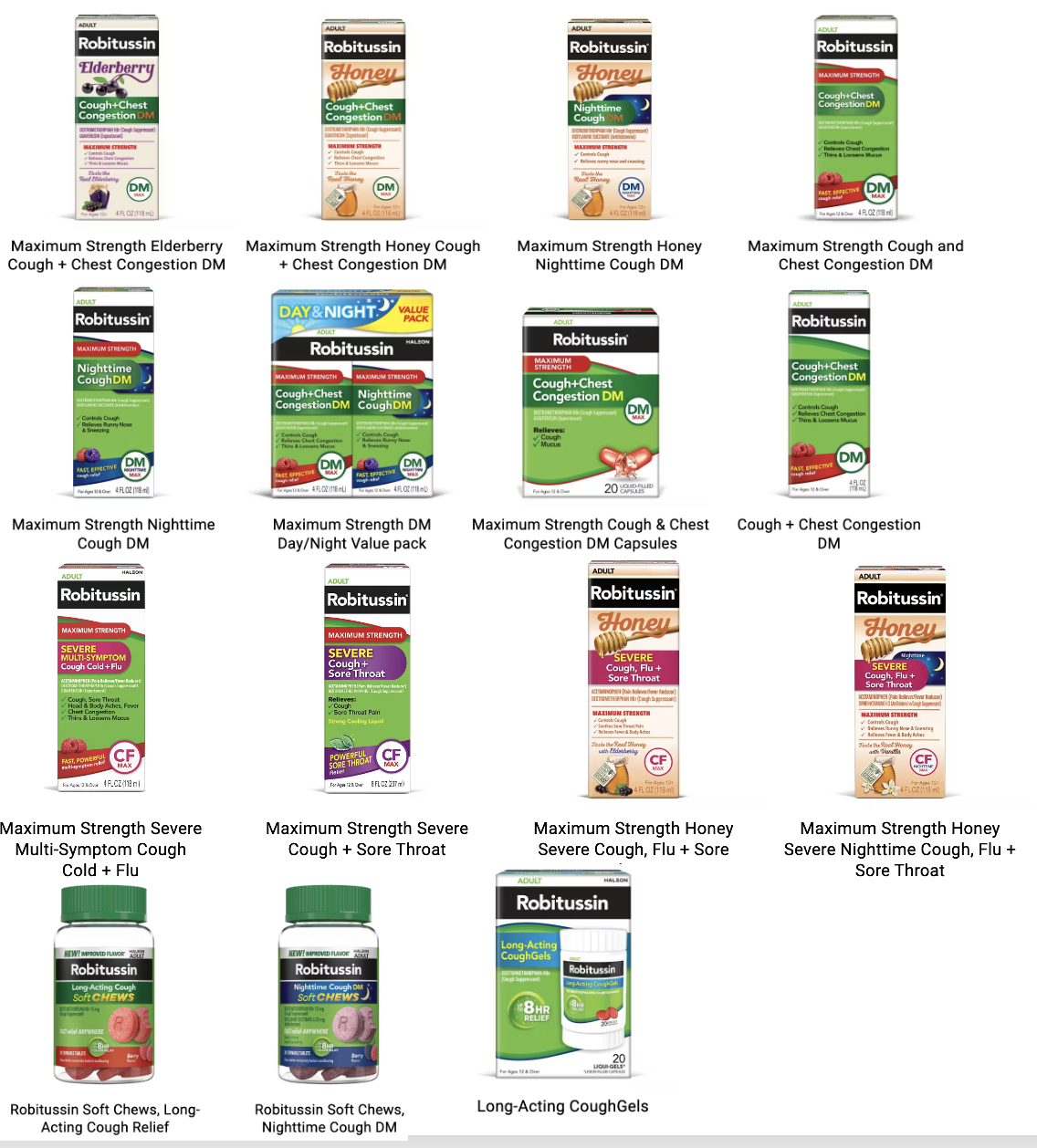
The 15 "different" adult cough syrups listed on the Robitussin site.
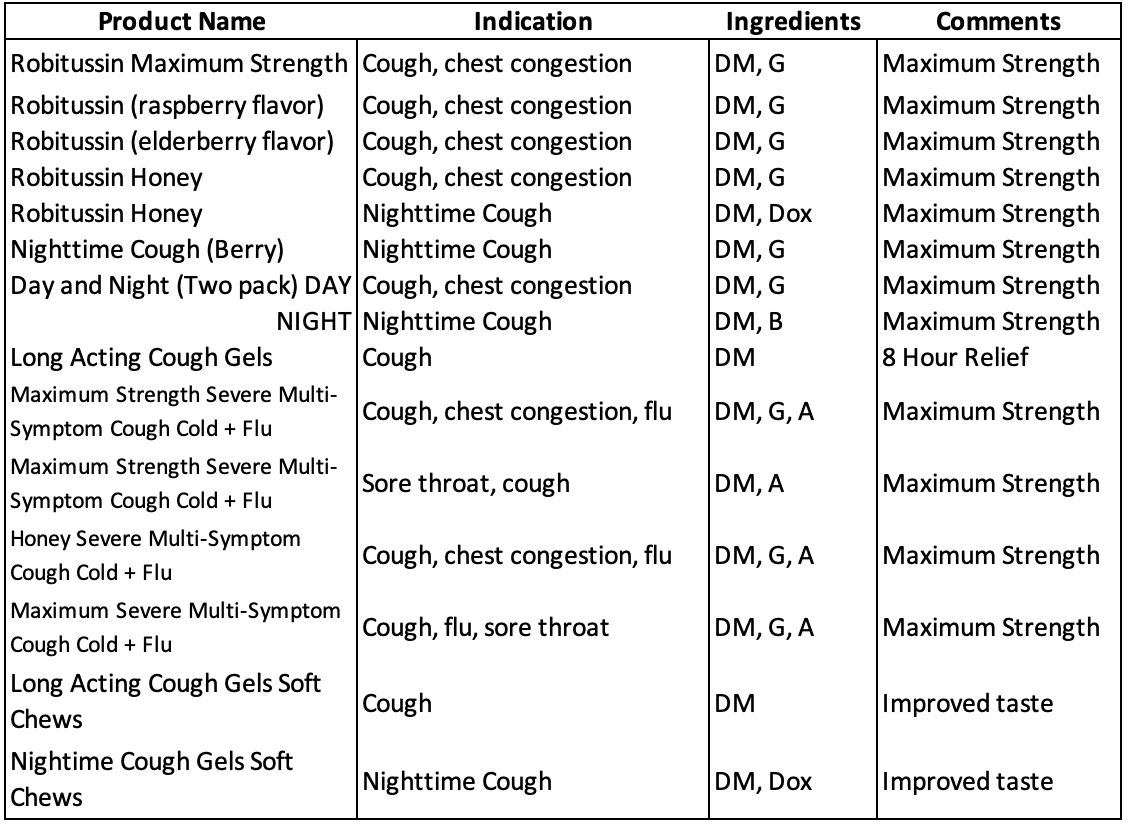
What's in all these things?
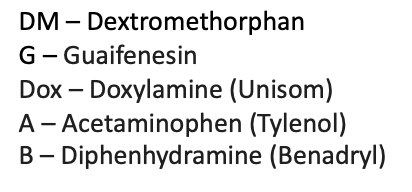
For this, we need an Excel spreadsheet. I kid you not.
Marketing, not health
Even a cursory look at the 15 Robitussin adult cough products reveals that virtually all of them contain dextromethorphan or guaifenesin, and most contain both. Also:
- All 15 products contain dextromethorphan, which performs a little better (maybe) than a placebo. (Children's versions offer a mere seven choices.)
- Nine contain guaifenesin, which likewise performs (maybe) a little better than placebo.
- All the syrups are maximum-strength, differing only by flavor and the addition of other OTC products.
- Doesn't this make you wonder what happened to regular strength? Is it less effective?
- Do we really need five flavors crowding the shelves? They all taste like recycled drain openers.
- To address the taste issue (and add an additional brand), they sell long-acting gels that contain only dextromorphan.
- In an act of mind-bending creativity, there's also a two-pack, which contains the standard dextromorphan-guaifenesin combination for the day, but the guaifenesin gets the boot at night, replaced with diphenhydramine (Benadryl).
Other “creative” combinations, such as dextromethorphan–guaifenesin–acetaminophen, allow Haleon to offer still more pretty bottles.
- Seriously, do we really need all of these?
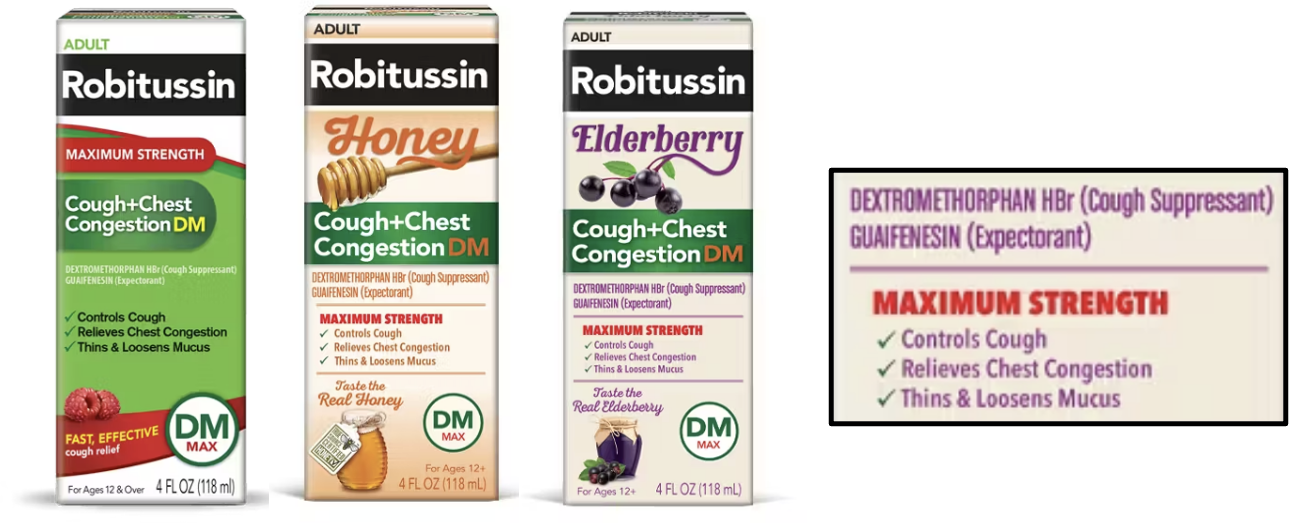
Three identical products, differing only by putrid flavor.
Bottom line
Little of this has anything to do with improved health or better cough control. It’s marketing, plain and simple. By repackaging the same two marginally effective drugs—and occasionally chucking in other marginally effective ingredients—Haleon relies on sleight of hand to overwhelm consumers and separate them from their money. It's not surprising that the cough and cold aisle looks like a twisted medical version of a hoarder reality show.
[1] Haleon, which now owns the Robitussin brand, was spun off from GlaxoSmithKline’s consumer healthcare division in 2022 and now markets an extensive lineup of cough products built around the same limited set of active ingredients.
[2] Morphinans are part of a chemical family that is structurally related to morphine. Only a small minority have opioid-like effects.

Josh Bloom
Dr. Jonathan (Josh) Bloom, ACSH's Director of Chemical and Pharmaceutical Sciences, earned his Ph.D. at the University of Virginia and completed postdoctoral training at the University of Pennsylvania. During his 20-plus years in drug discovery at Wyeth, his research group discovered the antibiotic Tygacil®, approved in 2005. He holds 25 issued patents and has authored 35 academic papers. Since joining ACSH in 2010, he has written more than 2,000 articles and dozens of op-eds for major newspapers, including The Wall Street Journal and Chicago Tribune.