Naloxone and Naltrexone: Virtually Identical But Very Different

By Josh Bloom — Mar 20, 2024
Naloxone and Naltrexone sound alike, look alike chemically, and are both used to counter the misuse of opioids. But pharmacologically, they're strikingly different. This is why the two drugs are used for different purposes. Confused? Let's clear things up.
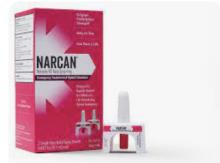
Naloxone and Naltrexone sound alike, look alike chemically, and are both used to counter the misuse of opioids. But pharmacologically, they're strikingly different. This is why the two drugs are used for different purposes. Confused? Let's clear things up.


Snake, The Other White Meat

By Chuck Dinerstein, MD, MBA — Mar 20, 2024
Picture this: a farm where the phrase "the other white meat" takes on a whole new meaning. It’s where farmers swap their pitchforks for snake tongs and hooks, where the scales are tipped in favor of protein, and fewer greenhouse gases are released.

Picture this: a farm where the phrase "the other white meat" takes on a whole new meaning. It’s where farmers swap their pitchforks for snake tongs and hooks, where the scales are tipped in favor of protein, and fewer greenhouse gases are released.

Reducing Air Pollution Is Always A Good Thing, But How Good Has It Really Been?

By Fred Lipfert, PhD — Mar 19, 2024
Reducing air pollution is a universally acknowledged goal, heralded for its potential to improve public health and environmental quality. However, amidst the enthusiasm for cleaner air, a critical question emerges: How effective have our efforts truly been?

Reducing air pollution is a universally acknowledged goal, heralded for its potential to improve public health and environmental quality. However, amidst the enthusiasm for cleaner air, a critical question emerges: How effective have our efforts truly been?

Can Fasting Reverse Aging?

By Chuck Dinerstein, MD, MBA — Mar 19, 2024
A recent study published in Nature suggests that the key to a longer, healthier life is not achieved by stuffing our faces around the clock. Instead, starving ourselves for a bit might be the ticket to turning back the clock on aging. What is the science behind this hunger game? Is fasting the ultimate cheat code for defying time?

A recent study published in Nature suggests that the key to a longer, healthier life is not achieved by stuffing our faces around the clock. Instead, starving ourselves for a bit might be the ticket to turning back the clock on aging. What is the science behind this hunger game? Is fasting the ultimate cheat code for defying time?

Viral Diseases: What You Need To Know

By Henry I. Miller, MS, MD — Mar 19, 2024
We can create a public health infrastructure that is more resilient to outbreaks of viral illnesses by better understanding the nature of virus infections and how to address vaccine hesitancy.

We can create a public health infrastructure that is more resilient to outbreaks of viral illnesses by better understanding the nature of virus infections and how to address vaccine hesitancy.

Plastic Plague: Unwelcome Guests in Your Arteries?

By Chuck Dinerstein, MD, MBA — Mar 18, 2024
Micro- and nanoplastics, found in the plaque within our arteries, are born from the ubiquitous presence of plastics in our environment. They are raising eyebrows and heart rates among scientists and physicians, courtesy of a groundbreaking study in the New England Journal of Medicine (NEJM).

Micro- and nanoplastics, found in the plaque within our arteries, are born from the ubiquitous presence of plastics in our environment. They are raising eyebrows and heart rates among scientists and physicians, courtesy of a groundbreaking study in the New England Journal of Medicine (NEJM).

Thinking Out Loud: Death from Drugs. Is it Overdoses, or Poisonings?

By Chuck Dinerstein, MD, MBA — Mar 15, 2024
The New York Times recently delved into a societal debate concerning the terminology used to describe unintentional deaths caused by drugs, particularly opioids. This discourse revolves around the distinction between labeling such deaths as overdoses versus poisonings, a seemingly subtle yet significant choice that carries implications for policy and perception.

The New York Times recently delved into a societal debate concerning the terminology used to describe unintentional deaths caused by drugs, particularly opioids. This discourse revolves around the distinction between labeling such deaths as overdoses versus poisonings, a seemingly subtle yet significant choice that carries implications for policy and perception.

For (Key Lime) Pi Day: The World's Best Recipe

By Josh Bloom — Mar 14, 2024
As is widely known, March 14 is also called Pi Day. That's because the mathematical figure, which is used, among other things, to calculate the area of a circle, is termed "irrational," in that it cannot be converted to a fraction – with decimals that go on infinitely. However, it begins with 3.14, hence the association with the calendar. With that, shall we share the recipe for the world's best Key Lime Pi(e)? Absolutely.

As is widely known, March 14 is also called Pi Day. That's because the mathematical figure, which is used, among other things, to calculate the area of a circle, is termed "irrational," in that it cannot be converted to a fraction – with decimals that go on infinitely. However, it begins with 3.14, hence the association with the calendar. With that, shall we share the recipe for the world's best Key Lime Pi(e)? Absolutely.

Air Pollution: Do Accidents Matter?

By Fred Lipfert, PhD — Mar 14, 2024
We spend 85% of our time indoors, and air conditioning can provide relief when and where we need it. Nevertheless, regulatory agencies continue to press for tighter outdoor emission controls. Their mantra is that lives can be shortened by long-term (years) exposure, no matter how trivial. This is the linear, no-threshold hypothesis currently promulgated by EPA.

We spend 85% of our time indoors, and air conditioning can provide relief when and where we need it. Nevertheless, regulatory agencies continue to press for tighter outdoor emission controls. Their mantra is that lives can be shortened by long-term (years) exposure, no matter how trivial. This is the linear, no-threshold hypothesis currently promulgated by EPA.

What I'm Reading (Mar. 14)

By Chuck Dinerstein, MD, MBA — Mar 14, 2024
Willie Loman 100 little ideas, who needs just one big idea And some nuggets of thought Buckle up for a ride through the corridors of thought control at the NY Times

Willie Loman
100 little ideas, who needs just one big idea
And some nuggets of thought
Buckle up for a ride through the corridors of thought control at the NY Times