Are Doctors Overprescribing Statins?
In the 60-and-older category, 50 percent of men and 38 percent of women are on cholesterol-lowering drugs. Is that really necessary?

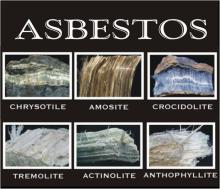
Asbestos is used in many building construction materials and vehicle products, due to its strength and ability to resist heat, fire and chemical and biological degradation. But as thousands of New York City residents are now aware, those who live near last week's steam-pipe explosion that sent a geyser of asbestos particles airborne, there's so much more to know about it.
When business models drive medical systems, low-value care ensues. The concern is compounded by the tremendous growth in urgent-care and retail clinics. These facilities are now contributing to 40 percent of outpatient antibiotic prescriptions.
Scribes inputting data into electronic medical records are supposed to free-up time for physicians, letting them care for their patients. But surprisingly, it may actually make care worse. Is this another example of unintended consequences?
This law firm shows no concern for the truth. It fits comfortably and profitably into our postmodern world, in which truth and lies are no longer distinguishable. Unscrupulous people can make a lot of money by exploiting the public's confusion over vaccines, chemicals and pharmaceutical products.
Rather than be critical of a study that produced unsurprising results, they can instead be leveraged to help address the problem. That can be done by family members using the findings to engage hospital personnel, in order to get their assistance in making sleep more of a priority for loved-ones under their care.
Sometimes when we dismiss a study it is not that the data is "false," but how they are fashioned into a narrative that raises eyebrows. Data may seem absolute, it is the interpretation that provides context.
Infectious disease remains a national and global security threat. With the ease in which people can travel around the world, we should expect other exotic diseases to arrive in America. Ebola, Lassa, and Zika have already done so, and yet-to-be-identified microbes are also likely to be imported.
Lake Okeechobee, in South Florida, is being plagued by an enormous algae bloom. But what's causing the problem is not algae: it's a plant-like pathogen called cyanobacteria. Blooms from this type of bacteria are dangerous because they release a variety of deadly neurotoxins, which can kill humans and animals.
Disgust is an emotional cue, and it helps us avoid situations fraught with disease. Are we responding to how infectious diseases are transmitted, or how they appear?