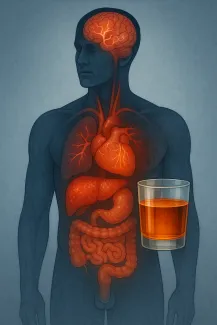
When I asked ChatGPT for chemicals that may affect men more than women, a long list appeared, including alcohol, endocrine-disrupting chemicals, such as phthalates and bisphenol A, and lead [1]. The reasons for these gender-related differences include hormonal differences between men and women, specific interference with the male reproductive system, genetic and metabolic variations, and differing lifestyle and occupational factors.
AI chatbots are masterful at sifting through reams of articles and arriving at conclusions that appear reasonable. However, the truth is often more complex, underscoring why human analysis remains critical to making sense of results.
Libations
ChatGPT reports that men face higher risks from alcohol, including increased chances of liver disease, specific cancers, heart disease, and reproductive issues. Men are also more likely to experience fatal outcomes from alcohol-related liver cirrhosis compared to women.
Although this is technically correct, the actual picture is much more complicated, with women fast catching up to men in some of these alcohol-related diseases.
- Liver disease: Deaths from alcohol-associated liver disease doubled to 12.53 deaths per 100,000 people from 1999 to 2022, with a significant acceleration from 2018 to 2022. Although men had higher mortality rates than women, women exhibited a more rapid increase, narrowing the sex gap.
- Cancer: Although the media has highlighted the association between breast cancer and alcohol consumption in women, very little attention has been given to alcohol-related cancers in men. Alcohol consumption has been associated with an increased risk of seven types of cancer in men: mouth, esophagus, liver, throat, larynx, prostate, and colon and rectum.
- Heart disease: In the past, data were often cited that suggested that low levels of alcohol consumption had a protective effect on the heart, but recent studies have challenged the idea that any level of alcohol consumption has positive effects on the heart. Excessive alcohol consumption, either chronically or from binge drinking, has been associated with heart disease in both men and women, with women at higher risk after consuming smaller amounts for shorter durations than men.
- Reproductive issues: Chronic and heavy alcohol consumption is linked to reduced sperm quality, hormonal imbalances, and testicular damage. A Danish study found that young men who drank more than 40 units of alcohol [2] a week had a 33% reduction in sperm count compared to men who drank 1-5 beers or glasses of wine a week.
Alcohol is, without a doubt, the #1 compound that affects men’s health. Reducing alcohol consumption is the most effective way to improve overall health.
Disrupters
Endocrine-disrupting chemicals interfere with the body’s hormones, e.g., estrogen, testosterone, and insulin, which control many biological processes, including growth, fertility, and reproduction.
One group of endocrine disrupters are phthalates. These compounds are used as liquid plasticizers and are found in many products, including food packaging, cosmetics, fragrances, children’s toys, and medical device tubing. Another is Bisphenol A (BPA), used in manufacturing food packaging and other applications. Small amounts of BPA may also be found in the lining of some canned foods and beverages, in water bottles, and other consumer goods.
Although there has been a fair amount of media attention focused on endocrine disruptors, with articles proclaiming that they are responsible for a multitude of health issues, including men’s reproductive health, the science does not support this. As I wrote several years ago about these chemicals, "The Dose Makes the Poison," the levels of BPA exposure are so low that it is unsurprising that most human studies have reported no health effects; the effects noted and widely proclaimed are in animal studies at very high levels.
In addition, government agencies and scientific organizations completely ignore the many naturally occurring substances in plants that act as endocrine disruptors. Soy products, including tofu and soy milk, and alfalfa, disrupt hormones. Caffeine is the most crucial compound left off almost all lists of endocrine disruptors. In women, caffeine consumption can cause the body to produce excess cortisol, altering estrogen levels. Some reports suggest that caffeine could be linked to lower sperm concentration and quality in men, but larger studies have not verified this connection.
Endocrine-disrupting chemicals, at the doses found in consumer products and the environment, do not pose a risk to men’s health.
Lead
Low levels of lead are associated with harmful effects on children's brain development, including intelligence, behavior, and memory. Studies have looked at prenatal exposure, lead exposure to the mother while she is pregnant, which can cross the blood-brain barrier into the fetus, and postnatal exposure, in which the child is exposed to lead directly through the air, water, food, or soil. Some studies have examined whether boys are more sensitive to these effects than girls.
- A study of 5-year-old children concluded that an increase in behavioral problems in boys was associated with increased lead levels through prenatal exposure. Girls were affected as well, from postnatal exposure leading to sleep and attention problems.
- A study in Japan examined intellectual development, as measured by IQ in 12-year-old children. Postnatal exposure to lead was associated with lower IQ in boys, but neither type of exposure was associated with reduced IQ in girls.
- In a review of 51 studies, prenatal lead exposure was associated with decreased general and nonverbal IQ in boys, but not in girls.
Although these studies show that boys appear more sensitive to lead than girls, there is a significant caveat: they rely on IQ tests and reports of behavioral disturbances. Both are subjective measures of brain effects and may say more about developmental differences between boys and girls than about lead effects.
Although data suggest that boys may be more sensitive to the effects of lead on the brain than girls, both sexes are at risk and should take steps to eliminate exposure when possible.
Men are increasingly seeking health information from AI rather than physicians, a trend driven by convenience but fraught with limitations. Chatbots cannot replace the nuance and contextual understanding that human experts bring to complex health issues. Men might use them as a starting point, not a substitute, for medical advice. When it comes to something as vital as your health, chat—but verify.
[1] Other chemicals on the list included arsenic, mercury, benzene, pesticides including methyl parathion and DDT, PFAS (forever chemicals), and manganese.
[2] A unit defined as one beer, one glass of wine, or 40 mL of spirits

Susan Goldhaber MPH
Susan Goldhaber, M.P.H., is an environmental toxicologist with over 40 years’ experience working at Federal and State agencies and in the private sector, with an emphasis on issues concerning chemicals in drinking water, air, and hazardous waste. Her current focus is on translating scientific data into usable information for the public.