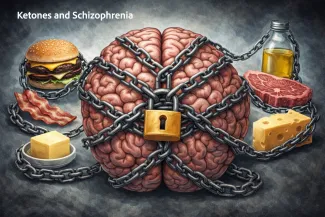
Schizophrenia is a severe mental disorder that distorts the perception of reality, often producing delusions, hallucinations, and disorganized behavior. It causes significant disability, affecting personal, social, educational, and occupational functioning, and is often accompanied by stigma and discrimination. This disorder impacts roughly 23 million people worldwide, or about 1 in 345 individuals. Although its exact causes remain unclear, several treatments have demonstrated effectiveness, including antipsychotic medications, cognitive behavioral therapy, and assisted living programs.
Robert F. Kennedy Jr., the secretary of the US Department of Health and Human Services, has controversially added the ketogenic diet to this list.
On February 4, [1] RFK Jr. visited Tennessee to advocate for reformulated dietary guidelines and urged Americans to “eat real food.” Drawing on nostalgic claims that the US experienced its healthiest period during his uncle’s administration, he described current health trends as a national crisis, citing alarming statistics.
The most striking and concerning moment occurred when he stated,
“Today, we know that the things we eat are causing mental illnesses in this country. … Dr. Pollan from Harvard cured schizophrenia with a ketogenic diet, …[and people] lost their bipolar diagnosis by changing their diets.”
His statements are problematic for two main reasons:
- He appears to have confused the researcher. As reported in the New York Times, he likely meant psychiatrist Christopher Palmer, who co-authored a 2019 paper exploring the ketogenic diet, based on his experience with two patients, as a potential therapeutic option for schizophrenia, not as a cure.
- Second, in presenting the ketogenic diet within a political narrative that openly endorses saturated fats, whole dairy products, and red meat creates a misleading impression that a diet high in these foods supports overall mental health. None of the cited studies support such a conclusion.
Even if the ketogenic diet were proven effective in treating schizophrenia, that would not automatically make it an ideal dietary pattern for the general population. It would only indicate potential usefulness in a specific clinical context and would not justify broad claims about promoting mental health.
Given this context, it is important to examine these studies more closely to determine what we actually know about the possible relationship between diet and mental illness. Before doing so, however, it is helpful to briefly review what a ketogenic diet entails.
The Ketogenic Diet
Although there are several low-carbohydrate diets, the ketogenic diet is a dietary pattern that limits carbohydrates to approximately 20–50 grams per day, provides adequate protein, and significantly increases fat intake to induce ketosis. In a state of greatly reduced carbohydrate intake, lower insulin levels stimulate the liver to produce an alternative energy source: ketone bodies from fatty acids.
Clinicians initially established the ketogenic diet as a treatment for epilepsy, particularly for children unresponsive to anticonvulsant medications. While many physicians still reserve it as a last-line option for intractable epilepsy, some organizations, such as the International Ketogenic Diet Study Group, recommend offering it earlier, after the failure of two antiepileptic drugs. In certain conditions, including two rare epileptic syndromes, Dravet and Doose syndrome, clinicians may introduce it even sooner.
Today, the ketogenic diet is also used in other contexts, such as managing type 2 diabetes and supporting weight loss, e.g., the Atkins diet and its less restrictive modification, which does not require weighing foods or strictly calculating macronutrient ratios.
However, the ketogenic diet is not suitable for everyone. Clinicians should avoid prescribing it to individuals with a rare inborn error of metabolism (pyruvate carboxylase deficiency) or patients with acute pancreatitis, since the pancreas plays a central role in fat digestion, and a sudden increase in fat intake may worsen the condition. Potential adverse effects must also be considered.
For otherwise healthy individuals without proper professional guidance, some people focus exclusively on macronutrient distribution and total caloric intake while neglecting overall dietary quality. This approach may reduce fiber and vitamin intake and increase saturated fat consumption, thereby elevating cardiovascular risk. It can temporarily raise uric acid levels, potentially triggering gout in predisposed individuals.
We can now turn to the central question: Does it cure schizophrenia?
Current thinking on the Relationship Between Schizophrenia and the Ketogenic Diet
I will begin with Dr. Palmer’s most recent publication, as it helps explain why some researchers consider the ketogenic diet a potentially indicated and effective intervention for schizophrenia. Published in 2025, the article proposes that inducing a metabolic state similar to fasting could reduce pathological inflammation and help correct central metabolic dysregulation in schizophrenia. The authors describe schizophrenia as involving dopaminergic dysregulation, systemic and central immune activation, metabolic alterations, mitochondrial dysfunction, and immune dysregulation, factors associated with greater symptom severity and functional decline. These alterations create a cycle of neuroinflammation and impaired brain energy production.
The ketogenic diet, by increasing beta-hydroxybutyrate, a key ketone body, could suppress inflammatory pathways, reduce pro-inflammatory gene expression, neutralize free radicals, and enhance antioxidant defenses. It may also improve mitochondrial efficiency and dysregulation by providing ketone bodies as an alternative energy substrate. In addition, ketosis may modulate adaptive immunity and reduce insulin resistance, which often emerges early in schizophrenia.
However, despite these biologically plausible mechanisms, clinical evidence remains limited. Most existing studies rely on small samples, short intervention periods, and face substantial challenges to dietary adherence. This represents the most recent review, and while the authors express cautious optimism, the current body of evidence lacks high-quality clinical trials. Most available data come from preclinical studies in animal models, in vitro experiments, or isolated case reports.
Secretary Kennedy’s Citation
Secretary Kennedy appears to be referring to a 2019 article by Palmer, reporting two patients with schizophrenia reportedly achieving long-term remission while following a ketogenic diet, without ongoing antipsychotic treatment.
The first case describes an 82-year-old woman diagnosed at age 17 who experienced multiple hospitalizations, suicide attempts, and extensive medication trials. In 2008, she adopted a ketogenic diet for weight loss and reported marked improvement within two weeks. Over the following months, she discontinued her medications on her own. According to the report, she achieved complete remission of psychotic symptoms, no longer experienced suicidal ideation, lost approximately 68 kilograms, and no longer required specialized psychiatric care.
The second case involves a 39-year-old woman diagnosed in 2003 who remained symptomatic despite multiple treatments. In 2013, she initiated a ketogenic diet to address gastrointestinal complaints and abruptly discontinued 14 medications, which precipitated severe psychosis and hospitalization. During admission, she maintained the diet and restarted antipsychotic therapy. After one month, she reported complete remission, an outcome she had not previously experienced with the same medication. Clinicians gradually discontinued the antipsychotic over the following year, and she reportedly remained symptom-free and off medication for five years.
Case reports can only generate hypotheses; they cannot establish causality, and remain highly vulnerable to confounding factors, including observer and recall bias. The authors suggest that the ketogenic diet may represent a potential treatment capable of inducing prolonged remission without antipsychotics and restoring functionality. However, they emphasize the need for randomized clinical trials to establish safety and efficacy.
More robust evidence, from a study in Psychiatry Research, showed benefit along with important limitations. This four-month trial followed 23 overweight outpatients, aged 18–75, with schizophrenia or bipolar disorder, at least one metabolic abnormality, and ongoing psychotropic treatment. Physicians were allowed to adjust medications as clinically indicated. Of the 21 patients completing the study, 5 had been diagnosed with schizophrenia, and 16 with bipolar disorders. 60% were compliant with dietary therapy, as measured by weekly ketone body levels in their blood (ketosis), more than 80% of the time.
- Participants experienced an average weight loss of 10%, improved glycemic markers, and 17% improvements in life satisfaction and overall functioning, as well as 19% in sleep quality.
- Overall psychiatric severity decreased by a third in 80% of patients with greater dietary adherence associated with greater symptom reduction. For those with schizophrenia specifically, the Brief Psychiatric Rating Scale, a measure of symptom severity, fell by 32%.
The authors concluded that the ketogenic diet
“is a feasible and acceptable supplemental treatment…in those with bipolar or schizophrenia illness with co–morbid metabolic abnormalities.”
However, major limitations remain: the small sample size, selection bias toward motivated outpatients, short follow-up, and lack of a control group make it impossible to rule out placebo effects, reporting bias, or regression to the mean. Continuous coaching may have influenced outcomes, and medication adjustments during the trial could have contributed to the improvements.
In short, Secretary Kennedy’s “evidence” supporting the claim that the ketogenic diet cures schizophrenia consists of case reports, which cannot establish causality, and a small, uncontrolled pilot study with multiple methodological limitations.
It is worth noting that Dr. Palmer himself echoes this criticism:
“While I appreciate Secretary Kennedy’s enthusiasm for my work, I have never claimed to have cured schizophrenia or any other mental disorder, and I certainly never use the word ‘cure’ in my work.”
In the same report, Paul Appelbaum, a psychiatrist and professor at Columbia University, offered an even more forceful assessment:
“It is simply misleading to suggest that we know that ketogenic diets can improve the symptoms of schizophrenia, much less that they can cure the condition.”
I do not know what motivated Secretary Kennedy to make such an absurd claim, which was easily disabused. Statements like this can harm patients with schizophrenia, who, faced with limited therapeutic options, may turn to a strategy that carries risks, requires professional supervision, and ultimately provides no additional benefit.
[1] The remarks can be found at 30:20 in the broadcast
Source:
The Ketogenic Diet: An Anti-Inflammatory Treatment for Schizophrenia? J Inflamm Res. DOI: 10.2147/JIR.S540859.
The ketogenic diet and remission of psychotic symptoms in schizophrenia: Two case studies. Schizophr Res. DOI: 10.1016/j.schres.2019.03.019.
Ketogenic Diet Intervention on Metabolic and Psychiatric Health in Bipolar and Schizophrenia: A Pilot Trial. Psychiatry Research. DOI: 10.1016/j.psychres.2024.115866

Mauro Proença
Mauro Proença is a nutrition graduate student with a postgraduate degree in Clinical Nutrition from the University of São Paulo (USP), Brazil.