In an era where it seems like our country can’t agree on much, cancer remains an outlier of an issue. Most people agree that cancer is bad and that we should invest time, money, and people into researching causes, treatments, preventions, and potential cures.
What if I told you that there is a virus that is responsible for certain types of cancer, that it’s sexually transmitted, and that virtually everyone will be exposed to it in one form or another? Sounds pretty scary, right?
HPV: The Hidden Cancer-Causing Virus You’ve Probably Never Thought About
Human Papillomavirus (HPV) causes cancer. With more than 200 strains of HPV, virtually everyone will be exposed to it. That sounds really bad, except that not all strains are equally harmful to our health. Most strains are easily cleared by a healthy immune system. However, 12 strains are “high-risk” for developing cancer, with just two of those being responsible for the vast majority of HPV-cancer cases.
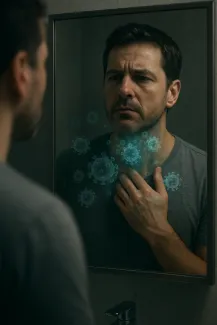
HPV is responsible for cancer of the cervix, vagina, vulva, penis, anus, and throat/mouth (oropharyngeal cancer). It is responsible for around 50,000 cases of cancer in the United States per year. Not only is this devastating to those who are diagnosed and their loved ones, but it’s a large financial burden on health systems. But, there is good news!
The Vaccine That’s Changing the Cancer Story
The current HPV vaccine protects against nine strains of HPV, all of which have the potential to cause cancer: 6, 11, 16, 18, 31, 33, 45, 52, and 58. Strains 16 and 18 are the two associated with most HPV-related cancers, including those of the throat, penis, and anus. Strains 6 and 11 are the ones that are primarily associated with genital warts.
While HPV is primarily associated with cervical cancer, it’s also thought to cause 60-70% of oropharyngeal cancers in the US.
“HPV can infect the mouth and throat. It usually takes years after being infected with HPV for cancers to develop in the oropharynx (back of the throat, including the base of the tongue and tonsils).”
This largely impacts men, who are about twice as likely as women to develop oropharyngeal cancers. Not only are men more likely to develop HPV oropharyngeal cancers, but alcohol and tobacco use also raise the risk of developing oropharyngeal cancers, and men are more likely to engage in those behaviors.
“Signs of HPV infection can be found in about two out of three oropharyngeal cancers.”
The HPV vaccine is currently a part of the recommended vaccine schedule for kids. The recommendation is that kids get their first dose at 11 or 12 years old. It is routinely recommended for those aged 26 or younger. However, that doesn’t mean you shouldn't consider getting it if you’re older than 26. According to the *CDC Vaccines and Immunizations page on HPV:
“Some adults ages 27 through 45 years might decide to get the HPV vaccine based on discussion with their clinician, if they did not get adequately vaccinated when they were younger.”
HPV Vaccination Isn’t Just for Kids
While the current blanket recommendation is for everyone between roughly 11 and 26 to get vaccinated, let’s focus on adults older than that, especially men. There are two main reasons for men to consider getting the HPV vaccine if they haven’t already.
- Protecting Against New Exposure: Even if you are in a long-term, monogamous relationship, circumstances change—death, divorce, infidelity, and more. The vaccine is designed to prevent future infection from the high-risk strains it covers. It provides protection far into the future, regardless of what twists life may take.
- Expanding Protection (the 9-Valent Gap): The current HPV vaccine protects against nine strains of HPV. However, the 9-valent recombinant vaccine wasn’t approved until the end of 2014. If you were vaccinated before roughly 2016, you were likely vaccinated with a quadrivalent vaccine. While that vaccine was effective, it only protected against four strains of HPV. A man who was 16 in 2014 and received HPV shots would be 27 now and just outside the blanket recommendation for the 9-valent vaccine. If you received an earlier version of the shot, talk to your doctor about updating your protection.
For those wondering about the possible side effects of the vaccine, it’s very similar to a flu shot: mostly potential soreness at the injection site. Some people may develop a mild fever, experience muscle/joint pain, and/or a headache. Occasionally, people may be allergic to the shot, but that is extremely rare. The HPV vaccine is safe and effective.
No Brainer for Men’s Health
It can be difficult when looking for reasons for hope in the face of cancer. However, the HPV vaccine gives us a lot of hope. Vaccination is one of the only ways to proactively and safely prevent several specific types of cancer. HPV-related throat and mouth cancers, which disproportionately affect men, can be stemmed.
This November, as we focus on men’s health, consider the HPV vaccination for you, your sons, family members, and friends. It’s a simple, safe, and effective measure to protect yourself against one of the most common cancer-causing viruses and ensures a peace of mind that is rare these days. It’s truly a no-brainer way to protect yourself and your loved ones.
*As of this writing, the last time this page was updated was November 16, 2021.

Katie Suleta, DHSc, MPH
Katie Suleta is a regional director of research in graduate medical education for HCA Healthcare. Her background is in public health, health informatics, and infectious diseases. She has an MPH from DePaul University, an MS in Health Informatics from Boston University, and has completed her Doctorate of Health Sciences at George Washington University.