COVID-19’s Math: Why Don't the Numbers Add Up?

By Chuck Dinerstein, MD, MBA — Apr 13, 2020
The numbers associated with COVID-19, its infectivity, hospital admissions, deaths, are all being studied like tea leaves for any pattern or trend. And the numbers vary quite a bit. Those variations are often ascribed to the veracity of the source or some underlying agenda of hope or fearmongering, and occasionally to a mathematical error.

The numbers associated with COVID-19, its infectivity, hospital admissions, deaths, are all being studied like tea leaves for any pattern or trend. And the numbers vary quite a bit. Those variations are often ascribed to the veracity of the source or some underlying agenda of hope or fearmongering, and occasionally to a mathematical error.

Every Picture tells a Story - Traffic and Air Pollution

By Chuck Dinerstein, MD, MBA — Apr 13, 2020
For those wanting to see the relative contribution of traffic and power generation to air pollution, consider this picture of Los Angeles. LA sits in a basin surrounded by mountains, I grew up there and can remember days when you can actually see the mountains.

For those wanting to see the relative contribution of traffic and power generation to air pollution, consider this picture of Los Angeles. LA sits in a basin surrounded by mountains, I grew up there and can remember days when you can actually see the mountains.

Coronavirus: Country Comparisons Are Pointless Unless We Account for These Biases in Testing

By ACSH Staff — Apr 11, 2020
Different countries may appear to have different death rates, but only because they have applied different sampling and reporting policies to their accounting efforts. It's not necessarily because they are managing the virus any better, or that the virus has infected fewer, or more, people.

Different countries may appear to have different death rates, but only because they have applied different sampling and reporting policies to their accounting efforts. It's not necessarily because they are managing the virus any better, or that the virus has infected fewer, or more, people.

Wrestling with COVID-19: A Lesson in Tradeoffs

By Special to ACSH — Apr 11, 2020
How well we do in assessing the economic outcomes of the COVID-19 lockdown will determine how well we do in the next match. And there will be a next match.

How well we do in assessing the economic outcomes of the COVID-19 lockdown will determine how well we do in the next match. And there will be a next match.

MIT Screwball Blames Glyphosate for COVID, and Everything Else

By Josh Bloom — Apr 10, 2020
Q: Where do you go to find overpaid, under-sane professors, talking about chemistry when they know nothing about it? A: MIT, the home of Dr. Stephanie Seneff, who has spent a career making up nonsense about glyphosate. And she's outdone herself this time: Glyphosate causes COVID. Nope, not kidding.

Q: Where do you go to find overpaid, under-sane professors, talking about chemistry when they know nothing about it?
A: MIT, the home of Dr. Stephanie Seneff, who has spent a career making up nonsense about glyphosate. And she's outdone herself this time: Glyphosate causes COVID. Nope, not kidding.

Never let a good crisis go to waste – Air Pollution Edition

By Fred Lipfert, PhD — Apr 10, 2020
Without a doubt, our world is now quieter since sheltering began, and we can imagine that the air smells sweeter. These are good things but purchased at the terrible costs of COVID-19 suffering and death and devastation of the global economy. The environmental scientist in me thought about lessons to be learned from our present situation.

Without a doubt, our world is now quieter since sheltering began, and we can imagine that the air smells sweeter. These are good things but purchased at the terrible costs of COVID-19 suffering and death and devastation of the global economy. The environmental scientist in me thought about lessons to be learned from our present situation.

Coronavirus and COVID-19: What We Know That Just Ain't So

By Alex Berezow, PhD — Apr 09, 2020
A new review article published in The Lancet concludes that school closures are ineffective at controlling coronavirus epidemics. What else could be wrong with the conventional wisdom about COVID-19?

A new review article published in The Lancet concludes that school closures are ineffective at controlling coronavirus epidemics. What else could be wrong with the conventional wisdom about COVID-19?

Another COVID Contender, N-Hydroxycytidine Looks Pretty Good. Especially If You're a Mouse

By Josh Bloom — Apr 09, 2020
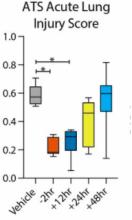
In the frantic fight to get an effective antiviral into the hands of a terrified world, there's a new kid on the block. This one is called N-hydroxycytidine and it's rather interesting. NHC is a potent inhibitor of coronavirus replication in cells, it's really easy to synthesize and it'll protect you from the virus. (That is, if you're a lab rodent.)

In the frantic fight to get an effective antiviral into the hands of a terrified world, there's a new kid on the block. This one is called N-hydroxycytidine and it's rather interesting. NHC is a potent inhibitor of coronavirus replication in cells, it's really easy to synthesize and it'll protect you from the virus. (That is, if you're a lab rodent.)