What I'm Reading (Apr. 16)
Making good use of our time at home, murmurations, life in Beijing, what will be the new normal, and a boost from 4 lads from Liverpool.
Despite study after study, and the writings of expert after expert over the last 25 years, as a society we've failed to provide for our own security in the face of a potential public health threat. We have failed to supply and maintain our strategic national stockpile, we have consistently underfunded our public health infrastructure and we have underfunded our hospitals' preparedness. That's how we got to where we are today.
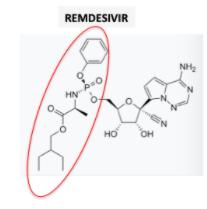
The world anxiously awaits while clinical trials of remdesivir are in progress. The drug failed to stop Ebola. Does this mean it will also fail to stop coronavirus? No. According to a new study in the Journal of Biological Chemistry, the drug should work better. Here's why.
A South Korean company named Seoul Semiconductor claims to have developed an ultraviolet light-emitting diode (UV LED) that can kill 99.9% of SARS-CoV-2 in 30 seconds.
It's quite likely that the human toll from COVID-19 will not be as bad as the prediction models forecasted. That's because models contain simplifying assumptions that rarely hold true in the real world; our human response is probably the least predictable of all. And yet, while all models are useful, all models are also wrong.
If or when the economy collapses -- and especially if the virus keeps spreading anyway -- public sentiment will change quickly and drastically. Americans' trust in the medical establishment may be shaken. Like ventilators, the national supply of goodwill isn't unlimited.
"Test here. Test now. Test, baby, test!" has become the conventional wisdom for handling the COVID-19 pandemic. But false positives and false negatives create substantial problems for mass testing.
There is a persistent belief that COVID-19 is "like seasonal flu." While there are similarities, the clinical course is very different.
The recently-passed Coronavirus Aid, Relief, and Economic Security Act includes a surprise: a loophole for surprise billing in testing for COVID-19.
No, the novel coronavirus that causes COVID-19 is not a biological weapon. But that doesn't mean the virus didn't escape from a laboratory. A growing body of circumstantial evidence indicates that very well may be what happened.