For Whom the Bell Tolls - End of Life Concerns Affect more Patients
As our care improves, more patients have end-of-life concerns and issues. But sadly physicians are not necessarily meeting those needs.
The mustaches are the symbolic equivalent of the pink ribbons associated with breast cancer awareness. Let's help the men in our lives take control of their health – and fight against preventable diseases.
Senator Rand Paul's medical difficulties evolve after being assaulted while mowing his lawn.
Upon seeing what he deemed a poorly-constructed paper by a colleague in physics, Wolfgang Pauli is apocryphally said to have, "This isn't right. This isn't even wrong."
Warfarin, a drug that prevents blood from clotting, has long been used for those at high risk of clots, and thus at an increased risk of stroke and other ills. A recent study indicates that not only is warfarin effective for that purpose, its use might also protect against cancer.
Alzheimer’s Disease is so frustrating to its victims, caregivers, and scientists looking for effective treatments. In what at first glance is a "Dracula moment," Alkahest – a Silicon Valley start-up – weighs in on the effects of infusing the plasma of younger, healthier individuals into patients with Alzheimer's.
Australia’s health system is an information industry – it is awash with data. Tragically, though, the data is not well collated, not put into the hands of the people responsible for acting on it. Nor is it shared with patients.
Multiple “data sets” measure the safety of hospital care in Australia, but they are rarely linked, sometimes incomplete, and almost always delayed. We have lots of data about hospital safety, but it’s not used to make us safer when we have to go to hospital.
Science struggles in a regulatory environment that increasingly puts the precautionary principle over benefit, and regulators that cater to environmental groups that view science as some corporate conspiracy.
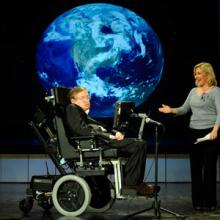
Dr. Hawking's recent turn toward morbid pessimism is unfortunate. He is saying things that, if they weren't coming from him, most scientists would laugh at. It's sad that such a great physicist and science communicator is tainting his legacy with nonsense.
The research, which actually was being conducted for a different purpose – to learn more about treating epilepsy – revealed that neurons fire more slowly for someone's operating on less sleep, resulting in delayed responses time to stimuli. And the more sleep lost, the worse the condition became.