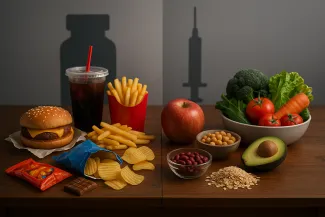
In the last few years, the treatment of obesity has undergone a seismic shift. For decades, bariatric surgery stood as the most effective and durable intervention we had for severe obesity. However, today, GLP-1 receptor agonists, available in the form of injectable medications such as Ozempic and Mounjaro, have emerged as a powerful new tool.
As a bariatric surgeon, I’ve seen firsthand how life-changing surgery can be. As a whole food plant-based advocate, I’ve spent years encouraging people to take ownership of their health through nutrition and lifestyle choices. So, I find myself in an interesting position of welcoming GLP-1s as a genuine breakthrough, while also questioning what their rise says about us as a society.
The Promise of GLP-1s
GLP-1 medications work by enhancing the body’s natural satiety mechanisms. They reduce appetite and “food noise,” slow down digestion, and help people feel fuller for longer. The net effect is striking as most patients end up consuming far fewer calories without conscious restriction.
The convenience factor cannot be overstated. A once-weekly injection is easier to maintain than a daily habit change. And for patients who have struggled for years with diets that fail, or who dread the idea of surgery, GLP-1s are a welcome alternative.
The results speak for themselves. In clinical studies, patients can lose 15–20% of their body weight in a year! These are numbers that start to approach bariatric surgery, at least in the short term. New oral agents, such as orforglipron, are showing similarly impressive weight loss over 72 weeks, providing patients with even more options beyond injections.
But as with all “hacks,” there’s more to the story.
Risks and Realities
Like any medication, GLP-1s come with side effects. Nausea and constipation are common and usually manageable. Thankfully, diarrhea and abdominal pain are less common side effects. More concerning are the risks of gallstone disease and pancreatitis. Although animal studies raised questions about certain cancers, the link remains uncertain in humans.
Another reality is that GLP-1s do not cure obesity. Once the medication is stopped, the body’s natural GLP-1 levels remain suppressed, appetite returns, and weight regain is common. These drugs are best thought of as chronic therapy, like blood pressure or diabetes medications, rather than a one-time fix. That may be acceptable. After all, millions take lifelong prescriptions for chronic disease. But it raises an uncomfortable truth: GLP-1s don’t solve the root problem.
The Real Problem: Our Lifestyle
Here’s where the dichotomy comes in for me. The obesity epidemic is not caused by a deficiency of GLP-1 medication. It’s caused by the incompatibility of our modern lifestyle with the way our biology is designed to function.
The Western diet, characterized by an abundance of ultra-processed foods, excessive animal products, sugar, salt, and oil, promotes weight gain and an increased risk of metabolic diseases. Add sedentary living, chronic stress, poor sleep, and a culture of a pill to fix any and everything, and the results are predictable: obesity, diabetes, heart disease, and cancer.
GLP-1s work because they hack our biology. They override our drive to eat in an environment flooded with hyperpalatable foods. But they don’t change the environment itself. They don’t alter the fact that most social gatherings revolve around less nutritious food, or that family culture often dictates what’s on the dinner table.
That’s where nutrition, and specifically whole food plant-based nutrition, remains irreplaceable.
A Natural Alternative
If patients reduced their consumption of ultra-processed foods and replaced them with fruits, vegetables, whole grains, legumes, nuts, and seeds, the benefits would be profound. Many would achieve similar weight loss results, with the added protection against chronic diseases that no medication can provide.
But my patients have taught me something humbling: that compliance is hard. It’s not just about willpower. It’s about being able to eat the same food as your family. It’s about navigating parties, restaurants, and holidays without feeling like an outsider. It’s about culture, convenience, and the comfort of eating what everyone else is eating.
GLP-1s don’t require you to fight against those currents. That’s part of their appeal.
GLP-1s vs. Surgery
Bariatric surgery has always faced stigma. Fewer than 1% of those who qualify ever undergo it. Many view it as “cheating.” And while it is extraordinarily effective with durable long-term weight loss and diabetes remission, etc., it is invasive, requires recovery, and comes with its own risks.
GLP-1s, by contrast, are socially acceptable. They don’t require explaining scars or rearranging your GI tract. They don’t disrupt your social life. They simply quiet your appetite and let you live as everyone else does, just eating less of it.
But here’s the catch: unlike surgery, the benefits of GLP-1s are not durable if the medication is stopped. A recent study in JAMA Surgery, involving over 30,000 patients, found that metabolic surgery led to an average 28.3% weight loss, compared to 10.3% with GLP-1s over approximately two years, providing clear evidence that surgery remains the most effective long-term intervention.
Where I Land as a Practitioner
So how do I reconcile all this? I view GLP-1s as a tool, a very good one, but not perfect. They buy people time, creating opportunities for health that patients might otherwise never access.
But I can’t ignore that we’re still hacking biology rather than addressing lifestyle. As a physician, I prefer to see people make those lifestyle changes. But as a realist, I also recognize that people have finite time. If a medication can give them extra years in better health to see their children grow up, or grandchildren be born, then so be it.
GLP-1s, surgery, and lifestyle aren’t mutually exclusive. In fact, the most powerful results often come when we combine them: surgery or medication for a reset, paired with a nutritional program to sustain and protect the gains.
Looking Ahead
Already, over a hundred new GLP-1–based medications are in development. Prices will likely fall. Access will expand. For many, these drugs will become as routine as statins or antihypertensives.
No pill or injection can replace what happens when people eat the foods their biology was designed for. Fruits, vegetables, whole grains, legumes, nuts, and seeds remain the foundation of a healthy diet. The future of obesity treatment isn’t surgery versus medication versus diet. It’s synergy. And the most successful patients will be those who harness the necessary tools with practitioners willing to guide them wisely.
Dr. Oluseun “Seun” Sowemimo is a bariatric surgeon, healthcare leader, and Cornell-trained executive dedicated to helping patients transform their health through science-driven, sustainable approaches.

Oluseun Sowemimo, MD
Dr. Oluseun “Seun” Sowemimo is a bariatric surgeon, healthcare leader, and Cornell-trained executive dedicated to helping patients transform their health through science-driven, sustainable approaches