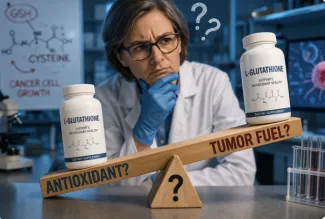
Antioxidants are supposed to be the good guys—the biochemical equivalent of a cleanup crew, mopping up cellular damage. But what if one—an Amazon favorite—is quietly moonlighting as fuel for cancer? A new study suggests that glutathione, a supplement aisle staple, may have a split personality.
I hate to deliver (groan) bad news, but—as I've said many times before—you'd better be careful with the supplements you're gulping down. They're unregulated and may be unsafe, ineffective, or both.
Glutathione—a ubiquitous antioxidant—seems like an unlikely villain, let alone something that might help fuel tumor growth. But in the world of supplements, you never really know. Although I was surprised by the findings of a new Nature paper, others probably weren't. There are a number of papers that address glutathione blocking as a potential anti-cancer strategy. The most recent of these was published only weeks ago in Cancer Research.
Who to believe? Hard to say, but although the vendors of the 3000+ glutathione products sold on Amazon probably won't like this, I suspect the Bezos vans will "just keep rollin’ along." ⇐ Lyrics guess, anyone?
Stay curious. Stay informed. Free, independent writing delivered weekly
— no ads, no sponsored fluff.
Join Now
Donate
Can an antioxidant really be harmful?
The Nature paper, “Catabolism of extracellular glutathione supplies cysteine to support tumours,” reports that glutathione can serve as a fuel for cancer cells. Fabio Hecht and colleagues, mostly from the University of Rochester, show that tumors can use extracellular glutathione as a cysteine source—cysteine being one of the proteinogenic [1] amino acids (Figure 1).
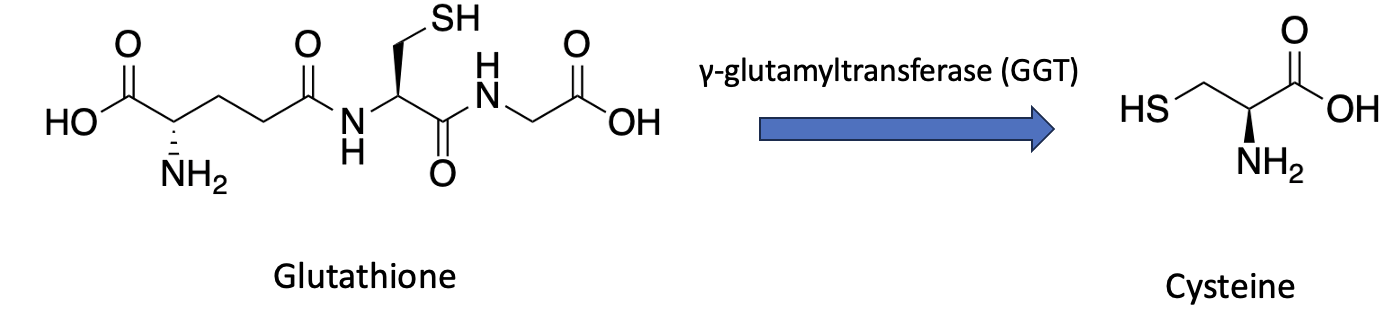
Figure 1. Cancer cells metabolize glutathione, forming cysteine, which can fuel tumor growth.
Why cysteine?
Cancer cells are known to generate far more oxidative stress because their rapid growth and altered metabolism produce large amounts of reactive oxygen species (ROS)—chemically reactive molecules that can damage DNA, proteins, and membranes.
The irony should be obvious: glutathione is supposed to protect cells from oxidative stress, yet cancer cells are using it as a source of the very material they need to survive that stress. It’s like burning your lifeboat to stay warm.
Evidence supporting the paper's central claim
The researchers found high levels of glutathione within tumors and used isotope-tracing experiments to show that cancer cells take up extracellular glutathione and convert it into cysteine. More importantly, when they blocked this pathway, tumor growth slowed in preclinical models. This process is mediated by enzymes such as γ-glutamyltransferase, which allow tumors to harvest cysteine from extracellular glutathione.
Bottom line
Importantly, none of this means you should avoid fruits and vegetables (even if they’re a bit icky). But it does raise an interesting question about high-dose, unregulated supplements that flood the body with compounds tumors may be able to exploit—and potentially distort normal metabolism in ways we don’t fully understand.
And while the science continues to evolve, one thing probably won’t: the Bezos vans will keep rollin’ along.
NOTE:
[1] Of the hundreds of amino acids found in the human body, only 20 are proteinogenic–encoded by DNA and used to produce proteins.