What I'm Reading (Oct. 14)
Cooking has always been chemistry you can eat, the murmurations of swallows, Capitalism, the commons, and China, and a movie about moths but not Mothra

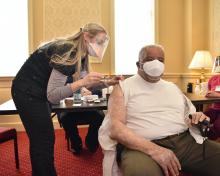
A friendly exchange between a former vaccine skeptic and a University of Florida scientist illustrates how we can get more people immunized, during the pandemic and beyond.
In March, President Biden fired 40 independent, external science advisors at the Environmental Protection Agency. A president had never done that. He replaced them with researchers – many of whom receive, or are involved in research that receives, millions of taxpayer dollars from EPA grants. This act epitomizes the politicization of an executive agency.
With the school year underway, teacher vaccine mandates, and mask mandates in partial or full effect, have we made our children safer? That we cannot say, at least as yet, but a new study can tell us something about how COVID-19 can and does spread.
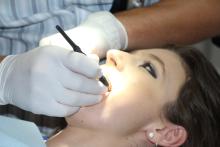
We visit the dentist almost as much as we see physicians. But insurance coverage for dental care for many of us is non-existent. Congress is quietly, to this point, thinking of changing that situation.
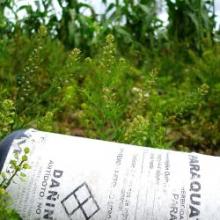
A new wave of lawsuits alleges that the weedkiller paraquat causes Parkinson's Disease. The evidence continues to undermine this claim.
Some vaccines are one-and-done, like measles. Others are annual events, like the seasonal flu. There's new data as to where on that spectrum the COVID-19 vaccine lies.
On September 9th, President Biden announced his three-pronged vaccine mandate. The first two, addressing workers employed by the federal government and employees of hospitals and health care facilities funded by the federal government, are legal no-brainers such that even Libertarians aren’t putting up much of a fight. It’s the third prong that gives pause.
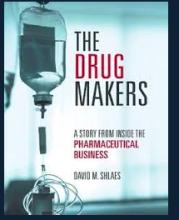
Dr. David Shlaes has been following the various discussions around the development of rapid diagnostic tests for acute bacterial infections. The ACSH advisor has concluded that broad-spectrum empiric therapy of potentially serious infections in the hospital will continue – and well it should – regardless of the availability of such rapid tests.
The process of respiration – converting oxygen to carbon dioxide and energy – is what life is all about. This metabolic process, which humans and animals must do to live, changes the environment when we inhale air and release our breath back into the world. How does COVID-19 fit into this?