New Screening Tool for Substance Use In Primary Care Patients

By Krystal Alexander — Sep 01, 2016
The Diagnostic and Statistical Manual of Mental Disorders (DSM) V has relegated the terms substance abuse and substance dependence, replacing them with substance use. Substance use disorders (SUD) are characterized as mild, moderate, or severe according to the new diagnostic criteria which require evidence of impaired control, social impairment, risky use and pharmacological indicators (tolerance and withdrawal). The actual substances in consideration include alcohol, cannabis, hallucinogens, inhalants, opioids, sedatives/ hypnotics/ anxiolytics, stimulants, and tobacco. 

The Diagnostic and Statistical Manual of Mental Disorders (DSM) V has relegated the terms substance abuse and substance dependence, replacing them with substance use. Substance use disorders (SUD) are characterized as mild, moderate, or severe according to the new diagnostic criteria which require evidence of impaired control, social impairment, risky use and pharmacological indicators (tolerance and withdrawal). The actual substances in consideration include alcohol, cannabis, hallucinogens, inhalants, opioids, sedatives/ hypnotics/ anxiolytics, stimulants, and tobacco. 

Cholera In Haiti: The UN Finally Concedes What Science Showed Years Ago

By Julianna LeMieux — Sep 01, 2016
Haiti did not have a single case of cholera until October 2010 -- 10 months after a devastating earthquake leveled the country on Jan. 12 of the same year, killing up to an estimated 300,000 people. 

Haiti did not have a single case of cholera until October 2010 -- 10 months after a devastating earthquake leveled the country on Jan. 12 of the same year, killing up to an estimated 300,000 people. 

We Are Killing Ourselves

By Jamie Wells, M.D. — Sep 01, 2016
In case you're wondering, it isn't just you that has more than your share of accidents. Hundreds of thousands of people per year do, as well. The Department of Health and Human Services reports that unintentional injuries are the No. 3 cause of death in the United States and account for 1 of every 4 visits to the emergency room.

In case you're wondering, it isn't just you that has more than your share of accidents. Hundreds of thousands of people per year do, as well. The Department of Health and Human Services reports that unintentional injuries are the No. 3 cause of death in the United States and account for 1 of every 4 visits to the emergency room.

Huffington Post Wants to 'Teach the Controversy' on GMOs

By Alex Berezow, PhD — Aug 31, 2016
One of the latest contributions from the Huffington Post to the national dialogue comes courtesy of self-described teenage "food safety activist" Rachel Parent, who skyrocketed to fame after giving an anti-GMO talk for Tedx, and debating Kevin O'Leary. Her new article is titled "GMO Propaganda Has No Place In Your Child's Classroom." She then goes on to regurgitate her own propaganda.

One of the latest contributions from the Huffington Post to the national dialogue comes courtesy of self-described teenage "food safety activist" Rachel Parent, who skyrocketed to fame after giving an anti-GMO talk for Tedx, and debating Kevin O'Leary. Her new article is titled "GMO Propaganda Has No Place In Your Child's Classroom." She then goes on to regurgitate her own propaganda.

AAP Policy on Vaccine Hesitancy Glosses Over Real World Solutions

By Jamie Wells, M.D. — Aug 31, 2016
The American Academy of Pediatrics wants to guide clinicians on “Countering Vaccine Hesitancy” among parents. This policy statement, published in the journal Pediatrics, rightly champions vaccination as "one of the greatest public health achievements of the last century." There is just one problem; pediatricians actually don't need more guidelines and protocols.

The American Academy of Pediatrics wants to guide clinicians on “Countering Vaccine Hesitancy” among parents. This policy statement, published in the journal Pediatrics, rightly champions vaccination as "one of the greatest public health achievements of the last century." There is just one problem; pediatricians actually don't need more guidelines and protocols.

Exercise Helps Keep Aging Brain in Shape

By Ruth Kava — Aug 31, 2016
We all know aerobic exercise -- running, swimming, walking briskly -- is good for the heart. Apparently it's also good for the brain, too. Researchers wanted to know what happens to the brains of older folks who exercised vigorously and often, if they stopped exercising. The report of their study was published in the journal Frontiers in Aging Neuroscience.

We all know aerobic exercise -- running, swimming, walking briskly -- is good for the heart. Apparently it's also good for the brain, too. Researchers wanted to know what happens to the brains of older folks who exercised vigorously and often, if they stopped exercising. The report of their study was published in the journal Frontiers in Aging Neuroscience.

Spotty Produce Needs You To Care About It, Too

By Ana-Marija Dolaskie — Aug 31, 2016
When it comes to picking produce at the grocery store, don't judge a book by its cover! Spotted fruits and veggies aren't spoiled or harmful — they've simply been through a lot, and they need a little TLC.    

When it comes to picking produce at the grocery store, don't judge a book by its cover! Spotted fruits and veggies aren't spoiled or harmful — they've simply been through a lot, and they need a little TLC.


Folate Fortification Good for Babies' Hearts As Well As Brains

By Ruth Kava — Aug 31, 2016
Fortification of enriched grain foods with the B vitamin folate has been mandated in the U.S. and Canada since 1998. Since then, the prevalence of central nervous system defects in babies has decreased, as was the purpose of the fortification. A recent Canadian study indicates that such fortification has also reduced the prevalence of several heart malformation — an unexpected benefit.

Fortification of enriched grain foods with the B vitamin folate has been mandated in the U.S. and Canada since 1998. Since then, the prevalence of central nervous system defects in babies has decreased, as was the purpose of the fortification. A recent Canadian study indicates that such fortification has also reduced the prevalence of several heart malformation — an unexpected benefit.

Vaginal Douching Linked to HPV Infection

By Alex Berezow, PhD — Aug 30, 2016
Roughly 1 in 3 women douche, but there is no good health reason to do so. Douching can change the makeup of the bacteria that normally live in the vagina, and it can even make women more susceptible to STDs. Now, researchers have added another concern: Douching appears to increase the risk of infection with HPV (human papillomavirus), which causes cervical cancer. 

Roughly 1 in 3 women douche, but there is no good health reason to do so. Douching can change the makeup of the bacteria that normally live in the vagina, and it can even make women more susceptible to STDs. Now, researchers have added another concern: Douching appears to increase the risk of infection with HPV (human papillomavirus), which causes cervical cancer. 

How Do Herpes Drugs Work?

By Josh Bloom — Aug 30, 2016
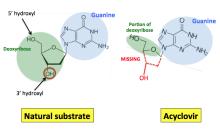
Sometimes drugs behave very well. They do what they are supposed to do, and do it well, maybe even without side effects. We are fortunate to have one of these that works against a very common infection — herpes simplex virus.

Sometimes drugs behave very well. They do what they are supposed to do, and do it well, maybe even without side effects. We are fortunate to have one of these that works against a very common infection — herpes simplex virus.