Commonly Cited Stat — 10 Bacteria For Every 1 Human Cell — Is Wrong

By Alex Berezow, PhD — Aug 26, 2016
When I was still in school, the rule-of-thumb for the human microbiome was that bacteria outnumbered human cells 10-to-1. Not so, say the authors of a new PLoS Biology paper, who re-crunched the numbers. According to their estimate, the ratio is much closer to 1-to-1.


When I was still in school, the rule-of-thumb for the human microbiome was that bacteria outnumbered human cells 10-to-1. Not so, say the authors of a new PLoS Biology paper, who re-crunched the numbers. According to their estimate, the ratio is much closer to 1-to-1.

Latest IARC Report Connects Fatness with More Cancers

By Ruth Kava — Aug 25, 2016
We've known for a while that excess body fat (as in overweight and obesity) can raise the risk not only of chronic diseases like diabetes, but also some types of cancer. A new report indicates that the number of types of cancer may be more than we have thought.

We've known for a while that excess body fat (as in overweight and obesity) can raise the risk not only of chronic diseases like diabetes, but also some types of cancer. A new report indicates that the number of types of cancer may be more than we have thought.

I've Had More Exposure To Agent Orange Than Anyone: Here's What I Know

By Mike Newton — Aug 25, 2016
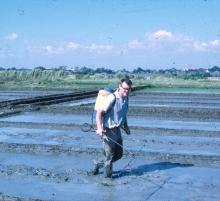
In 1972, the National Academy of Sciences asked me to investigate the persistence of Agent Orange and other defoliants used during the Vietnam War. For seven months, I walked in the chemical in my bare feet. Now at age 83, the bottom line is that I am a very healthy guinea pig after huge and nearly continuous exposure to herbicides.

In 1972, the National Academy of Sciences asked me to investigate the persistence of Agent Orange and other defoliants used during the Vietnam War. For seven months, I walked in the chemical in my bare feet. Now at age 83, the bottom line is that I am a very healthy guinea pig after huge and nearly continuous exposure to herbicides.

Brussels — a Final Destination for Medical Care

By Chuck Dinerstein, MD, MBA — Aug 25, 2016
Brussels is now a destination for medical tourism. Unfamiliar with the term? According to the CDC , "medical tourism" refers to foreign travel for the purpose of receiving medical care. It's estimated that up to 750,000 US residents travel abroad for medical care each year....The most common procedures that people undergo on medical tourism trips include cosmetic surgery, dentistry, and heart surgery.”

Brussels is now a destination for medical tourism. Unfamiliar with the term? According to the CDC , "medical tourism" refers to foreign travel for the purpose of receiving medical care. It's estimated that up to 750,000 US residents travel abroad for medical care each year....The most common procedures that people undergo on medical tourism trips include cosmetic surgery, dentistry, and heart surgery.”

Organic Farms Yield 20% Fewer Crops than Conventional Farms

By Alex Berezow, PhD — Aug 25, 2016
Organic farming produces 20% fewer crops. An inefficient food production system is, by definition, not sustainable. The authors also underscore this point by noting that “if all US wheat production were grown organically, an additional 12.4 million hectares (30.6 million acres) would be needed to match 2014 production levels.” Extrapolate that out to the rest of the globe, and one can easily see how organic farming cannot feed the world.

Organic farming produces 20% fewer crops. An inefficient food production system is, by definition, not sustainable. The authors also underscore this point by noting that “if all US wheat production were grown organically, an additional 12.4 million hectares (30.6 million acres) would be needed to match 2014 production levels.” Extrapolate that out to the rest of the globe, and one can easily see how organic farming cannot feed the world.

Funding Scientific Research In A Scientific Way

By ACSH Staff — Aug 24, 2016
We need a more scientific approach to funding scientific research. It won't be easy to evaluate short-term crises against long-term epidemics, but too many lives are at stake to shy away. Scientists have a key role to play in educating decision makers on risk and helping to get that balance right.

We need a more scientific approach to funding scientific research. It won't be easy to evaluate short-term crises against long-term epidemics, but too many lives are at stake to shy away. Scientists have a key role to play in educating decision makers on risk and helping to get that balance right.

Animal Protein Vs Plant Protein: Do We Have to Choose?

By Kedist Tedla — Aug 24, 2016
The importance of protein for muscle-building and cell functions was discovered in the 1830's, but there is still some controversy regarding what's considered an ideal source of protein for overall health. A recent study in the Journal of American Medical Association directly compared animal protein with plant protein, and it produced some interesting results.

The importance of protein for muscle-building and cell functions was discovered in the 1830's, but there is still some controversy regarding what's considered an ideal source of protein for overall health. A recent study in the Journal of American Medical Association directly compared animal protein with plant protein, and it produced some interesting results.

Engage the Dutch, to Help Keep U.S. Flooding at Bay

By Erik Lief — Aug 24, 2016
The nation's coastal waters are rising, and towns dating back centuries are at serious risk of being engulfed and disappearing completely. What should the U.S. be doing to address this cascading calamity? More engagement and continued dialogue with the Dutch, who are experts iin the field of flood prevention, might be a good place to start.

The nation's coastal waters are rising, and towns dating back centuries are at serious risk of being engulfed and disappearing completely. What should the U.S. be doing to address this cascading calamity? More engagement and continued dialogue with the Dutch, who are experts iin the field of flood prevention, might be a good place to start.