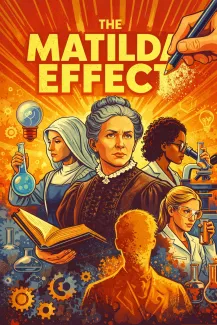
The Matilda Effect- How Women’s Discoveries Are Written Out
The bias against acknowledging the achievements of women scientists and inventors, and whose work is often attributed to their male colleagues was first recognized by suffragist Matilda Joslyn Gage in 1870. The term “Matilda effect” was coined by science historian Margaret Rossiter in 1993. The woman inspiring the concept, as described in Mrs. Gage’s article Woman as Inventor, was Catherine Littlefield, whom Mrs. Gage credits as inventing the cotton gin. (And you thought it was Eli Whitney?)
“The most remarkable invention of the age….the cotton gin- owes its origin to a woman, [the employer and patron of Whitney], Catherine Littlefield Greene, with whom the idea originated.”
According to Rossiter, among the notable women suffering this prejudice were:
- Trotula, a 12th-century Italian woman physician, who wrote books which, after her death, were attributed to male authors.
- Nettie Stevens, an American geneticist who discovered the X and Y sex chromosomes in 1905, and whose work was attributed to Nobel winner Thomas Hunt Morgan.
- Marietta Blau, an Austrian particle physicist, pioneered the use of photographic nuclear emulsions to image and accurately measure high-energy nuclear particles. Although she was awarded several prizes, including the Lieben Prize in 1937, she was passed over by the Nobel Committee.
- Along with Lise Meitner, Rosalind Franklin, geneticists Esther Lederberg and Barbara McClintock, mathematician Emmy Noether, physiologist Gerti Cori, and the natural philosopher Duchess Margaret Cavendish, whose contributions were featured in my Great Women’s series
But these ignored women, and their supremely important contributions to science and society, are only the tip of the iceberg. For example, there is Muriel Wheldale, who did foundational work in biochemical genetics, a field that notably failed to recognize women until recently, including the contributions of Martha Chase, Laura Garnjobst, and Daisy Dussoix, to name a few. Some of these women weathered the slights and insults and continued to achieve; for others, the emotional bruising was too much, and they withdrew from further scientific contribution or withered into obscurity.
Dr. Martha Chase: co-discoverer of DNA's role
Upon graduating college in 1950, Martha Chase was assigned as Alfred Hershey’s lab assistant at Cold Spring Harbor. Alfred Hershey was a phage [1] geneticist who did one of the most famous experiments in molecular biology, piggybacking on the work of Nobel Laureate Joshua Lederberg. His “blender" experiment proved that DNA carried genetic information. Their joint paper, published in 1952, confirmed that genetic information was not by protein, as everyone believed, but by DNA.
Interestingly, his biography mentions his assistant, Martha Chase, along with noting the connection with Joshua Lederberg’s work, although the contribution of Lederberg’s wife and collaborator is excluded, as would soon be Martha Chase’s contribution when the work was considered by the Nobel Prize Committee.
“It is alright to be modest, but one does not want to be anonymous either,”
Alice Hamilton, Mother of Occupational Medicine in America
Some authors attribute her sad personal life to a lack of recognition. Hershey, but not Chase, was awarded the 1969 Nobel Prize, which he shared with Salvador Luria and Max Delbrück for their work on the genetic structure of viruses. Since no more than three can share the Nobel, conveniently Chase’s status as a lab technician “justified” her exclusion. After that, she earned a PhD at USC in 1964, but shortly thereafter, she dropped out of scientific work altogether. She died of dementia in 2003.
Dr. Laura Garnjobst: co-discoverer of gene function
After earning her PhD from Stanford in 1936, Laura Garnjobst became the supervisor of Edward Tatum’s genetics laboratory and served as his research assistant, a post she held for the remainder of their careers. Although she was promoted to associate professor of microbiology at Rockefeller University when Tatum won the 1958 Nobel Prize, shared with Joshua Lederberg for discovering that genes act by regulating definite chemical events, neither Tatum nor his biographers mentions her name or her role in his work. That makes 1958 a seminal year for the Nobel Committee’s anti-woman bias - ignoring the contributions of both Dr. Garnjobst and Lederberg’s wife, Esther.
Dr. Daisy Dussoix
Most of us have heard of Harold Varmus, the first Nobel Laureate to head the NIH. But how many of heard of his collaborator, Dr. Daisy Dussoix? Biophysicist Daisy Dussoix collaborated with Varmus and J. Michael Bishop on their work on the role of retroviruses in cancer development, for which they won the Nobel Prize in 1989. The research discovered retroviral oncogenes (cancer genes), demonstrating that these oncogenes can arise from normal cellular genes (proto-oncogenes), which can be activated by mutation to become cancer-causing genes.
Dr. Dussoix was integrally involved in this work, which continued through her collaboration with Nobel Laureate Werner Arber. But “her central role … was disregarded by the 1978 Nobel committee,” which awarded the prize to three men who failed to adequately acknowledge her contributions.
“I am very angry, because apparently he [Werner Arber] hardly mentioned my name, and I have done half the work for which he has received the Nobel Prize.” Dr. Daisy Dussoix.
Fanny Hesse: The Woman Who Created Agar and Enabled Bacterial Research
Consider Frau Fanny Hesse, wife, technician, and collaborator with Dr. Walter Hesse, a colleague of Robert Koch. It was Mrs. Hesse who pioneered the use of agar as a solid culture medium for plating bacterial cultures, and without whom the seminal work of Koch, e.g., the discovery of the bacteria that cause anthrax and cholera, would have been impossible.
The Matthew Effect
Sociologically speaking, the Matilda effect is said to be a corollary of the Matthew Effect, where more famous scientists are more often credited with discoveries than junior scientists who either collaborated with them or actually did the initial work, a term derived by a founding father of sociology, Robert Merton.
“For to everyone who has, more will be given, and he will have abundance, but from him who has not, even what he has will be taken.”
Gospel of Matthew 13:12 and 25:29
Ironically, another victim of the Matilda effect was Merton’s collaborator and later wife, Harriet Zuckerman , who supplied the core data for her husband’s work. The initial 1968 publication reduces her role to a series of endnotes (rather than a co-authorship), which Merton later acknowledged as a mistake.
When Talent Is Judged Fairly
The existence of the Matida effect has been verified and corroborated in studies done in the Netherlands, Italy, and Spain. Other studies contradict these findings in the fields of psychology and sociology, although the phenomenon is well-recognized in other fields, such as music. A seminal demonstrated that using screens to conceal orchestra candidates’ identities increased women’s chances of advancing in preliminary rounds by 11 percentage points and their likelihood of being selected in final rounds by 30%.
What Gets Lost When Women Go Uncredited
The Matilda Effect isn’t just a historical footnote — it’s a persistent pattern that continues to erase women’s scientific contributions, artificially elevates the men who benefited from them, and discourages women from pursuing their dreams or persevering in their work. The record shows how often women generated the breakthroughs while men collected the credit. Yet the success of “blind” orchestra auditions proves something powerful: when bias is stripped away, talent finally has room to be seen. Correcting the scientific record demands the same clarity — not merely as an act of fairness, but as a necessary step toward encouraging talent and fostering societal contributions by recognizing brilliance for what it is and for who actually produced it.
[1] A phage is a virus that specifically infects, replicates within, and destroys bacteria.
Source: A Hidden Legacy: The Life and Work of Esther Zimmer LederbergTom Schindler

Barbara Pfeffer Billauer JD MA (Occ. Health) PhD
Professor Barbara Pfeffer Billauer is an internationally recognized scholar of public health law, bioethics, and the laws of medical care, focusing on the integration of science and law and its impact on day-to-day policy and legal outcomes. She has lectured and published extensively, in scholarly journals and law reviews, and has written and edited seven books for lay and academic audiences.