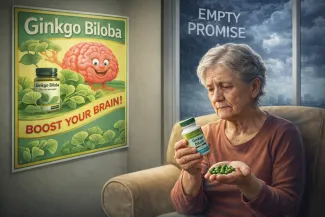
Last year, the WHO released alarming data on dementia, a group of conditions marked by declines in memory, language, reasoning, and other cognitive functions.
Dementia, caused by various brain diseases, is the seventh leading cause of death and a major source of disability among older adults, with Alzheimer’s accounting for 60–70% of cases. In the United States alone, more than 6 million people are affected, with over 100,000 deaths per year and projections suggesting annual new cases will double to about 1 million by 2060. Globally, about 57 million people are living with dementia, over 60% in low- and middle-income countries, with nearly 10 million new cases annually.
Terror at the Doorstep
These numbers fuel a growing fear of dementia. An editorial in Alpha Psychiatry notes rising anxiety, catastrophizing of normal memory lapses, and delayed medical evaluation. A study published in The Gerontologist found many participants viewed dementia as the worst possible outcome, driven by fears of losing identity and becoming a burden. As one patient put it:
"..it's scary to think about getting lost, losing who you are. I think that's the scariest part... losing, in a way, your soul.”
This mix of fear, uncertainty, and lack of definitive treatments not only drives research but also creates space for snake oil vendors offering cognitive supplements.
The global market for these products is estimated at around $10.95 billion, with projections exceeding $23 billion by 2030. Herbal extracts have a substantial market share, driven by the appeal of “natural” products, multifunctional claims, and aggressive marketing strategies.
Among these products, ginkgo biloba stands out. Used for centuries in traditional Chinese medicine, it shows neuroprotective effects in vitro, including reducing oxidative damage and β-amyloid toxicity, the main component of Alzheimer’s amyloid plaques. Yet clinical trials yield inconsistent results. This raises a familiar concern: Ginkgo biloba’s popularity may rest less on solid evidence and more on marketing, tradition, and early low-quality studies.
To examine the scientific literature, we turn to a recent Cochrane report on whether its effects are real or largely indistinguishable from placebo.
The Evidence for Ginkgo biloba
Traditional Chinese medicine uses ginkgo biloba for various conditions, with indications varying by part: seeds for cough, asthma, and parasites; leaves for memory loss, cognitive disorders, arrhythmias, and cancer. These uses rely on anecdotal experience and traditional concepts, such as thermal energy and organ affinity, rather than modern scientific evidence.
In the 1970s, standardized extracts of Ginkgo biloba, such as EGb 761, were formulated and studied for dementia and vascular disorders. Preclinical studies suggested potential benefits for cognition, mood, stroke, and traumatic brain injury, attributed to antioxidant and vasoprotective effects, increased cerebral blood flow, and reduced oxidative stress.
Instead of encouraging caution, these early findings, combined with commercial interests, fueled a highly lucrative market with US spending about $1.8 billion last year, despite the lack of robust clinical evidence.
One of the main clinical trials on the subject, published in 2006, was the GEM Study, a multicenter, double-blind, randomized, placebo-controlled trial. Researchers followed more than 3,000 participants aged 75 years or older, all without established neurological disease, for up to five years. Participants received 120 mg of EGb 761 twice daily.
The primary objective was to assess the incidence of dementia, including Alzheimer’s disease, along with secondary outcomes such as cognitive and functional decline, cardiovascular events, and mortality.
Over the course of the study, 523 participants developed dementia, with no significant differences between treatment groups. Age, sex, and baseline mild cognitive impairment did not modify the effect. Analyses restricted to participants without baseline signs of disease also showed no differences in cognitive decline between groups [1].
The study had limitations. Treatment adherence was moderate (60%, and the long interval between neuropathological changes and clinical manifestation may have obscured potential effects. Despite these limitations, the verdict is clear: ginkgo biloba did not reduce the incidence of dementia or Alzheimer’s disease in individuals aged 75 years or older.
Unfortunately, this conclusion seems to remain confined to practitioners of evidence-based medicine. Outside these circles, new studies continue to suggest the opposite.
A clear example is the systematic review of systematic reviews and meta-analyses published in Frontiers in Aging Neuroscience, which evaluated ten studies of ginkgo biloba for the prevention of mild cognitive impairment and dementia.
- In mild cognitive impairment, ginkgo showed no effect on activities of daily living, with inconsistent evidence for cognitive improvement.
- In dementia, some results favored ginkgo over placebo in overall clinical outcomes, with possible dose effects, but findings for daily functioning remained inconsistent.
- Improvements in cognition, neuropsychiatric symptoms, and quality of life were reported in some cases, without evidence of altered disease progression.
The authors concluded that the evidence supports the efficacy of ginkgo biloba extract in mild cognitive impairment and different forms of dementia, including Alzheimer’s disease. They also considered the extracts generally safe.
If we stopped here, the conclusion would seem inevitable: ginkgo biloba works, and the GEM study simply failed to capture its effects, possibly due to low participant adherence. However, this interpretation does not hold when we examine the review more closely.
The first issue is the tone. At several points, the authors appear to defend the extract rather than critically evaluate the evidence, emphasizing limitations of unfavorable findings, while applying less scrutiny to supportive reviews, suggesting narrative bias.
There is also substantial overlap among reviews, many of which rely on the same small set of trials, creating an illusion of consistency while simply recycling the same data. These studies frequently have conflicts of interest involving industry funding and author affiliations, which increases the likelihood of favorable results. High heterogeneity among studies further complicates interpretation, in some cases making pooled analyses questionable.
The problem lies not in a single limitation, but in the aggregate. What initially appears to be a consistent body of evidence reveals itself as a collection of heterogeneous, potentially biased, and repeatedly reused data, a classic garbage-in, garbage-out scenario.
The new systematic review published by Cochrane helps clarify this persistent myth in the field of cognitive health prevention.
The nail in the coffin?
Published in 2026, the review builds on past work. While the 2009 version found no cognitive benefit of ginkgo biloba, newer studies have suggested modest effects on cognition, daily functioning, and overall clinical status. Some guidelines, including those from the Asian Clinical Expert Panel on Neurocognitive Disorders, have even endorsed its use.
The current review evaluated randomized trials through 2024, including 82 studies totaling 10,613 participants, mostly from China. Trials were generally small, with a median sample size of 92. Common issues of bias included inadequate blinding and a lack of pre-registered protocols. Funding was often unclear: half of the studies gave no report, while others involved industry funding.
- In individuals with subjective cognitive complaints, the evidence of benefit had very low certainty, with inconsistent data on cognition or daily functioning.
- In mild cognitive impairment, ginkgo had little or no effect at 6 months on cognition, clinical status, or daily activities, based on moderate-certainty evidence.
- In dementia, ginkgo produced modest improvements at 6 months in clinical, cognitive, and functional outcomes, but by 12 months, the effects were absent or uncertain.
- The results for cognition and activities of daily living follow a similar pattern, with possible small benefits supported by limited studies with inconsistent and imprecise evidence.
Based on these findings, the Cochrane authors conclude that in individuals with cognitive complaints, it remains unclear whether ginkgo improves overall clinical status; for mild cognitive impairment, there is no meaningful clinical benefit. For dementia, ginkgo may produce small to moderate improvements at 6 months in clinical status, cognition, and daily functioning. However, this interpretation appears overly optimistic, as it relies on low-certainty evidence with substantial heterogeneity.
Several limitations further weaken these findings. The studies show substantial variability in extract use, diagnostic criteria, and cognitive assessment, all of which limit comparability. Although funding sources and potential industry ties were reported, no stratified analysis was performed. This is a key limitation, given the well-established link between industry funding and favorable outcomes.
Taken together, the evidence points in a consistent direction: any benefits of Ginkgo biloba are small, short-lived, and supported by low-quality, highly variable data. What looks like a signal of efficacy dissolves under closer scrutiny into bias, heterogeneity, and repeated recycling of the same limited evidence base. Ginkgo is less a breakthrough than a case study in how weak evidence can be amplified into a strong belief.
Yet its popularity persists, fueled by fear, marketing, and the enduring appeal of “natural” solutions. The reality is less comforting but more honest: there is no pill that meaningfully prevents dementia. As is often the case in complex conditions, no magic solution reduces the risk of dementia. The most effective strategies remain the least marketable: access to quality education throughout life, cognitive stimulation in midlife, use of hearing aids when needed, control of cardiovascular risk factors, regular physical activity, smoking reduction, treatment of depression, reduction of social isolation, and the promotion of safe environments for aging.
Ginkgo biloba doesn’t just fail to live up to its claims; it distracts from what actually works.
[1] The presence of the APOE ε4 allele, the main genetic risk factor for late-onset Alzheimer’s disease, strongly predicted dementia risk, but had no interaction with treatment.
Sources: The Ginkgo Evaluation of Memory (GEM) study: design and baseline data of a randomized trial of Ginkgo biloba extract in prevention of dementia. Contemp Clin Trials. DOI: 10.1016/j.cct.2006.02.007.
An Overview of Systematic Reviews of Ginkgo biloba Extracts for Mild Cognitive Impairment and Dementia. Front. Aging Neurosci. DOI: 10.3389/fnagi.2016.00276.
Ginkgo biloba for cognitive impairment and dementia. Cochrane Database Syst Rev. DOI: 10.1002/14651858.CD013661.pub2.

Mauro Proença
Mauro Proença is a nutrition graduate student with a postgraduate degree in Clinical Nutrition from the University of São Paulo (USP), Brazil.