Air Pollution Lowers IQs ... Of Reporters Who Write About It

By Josh Bloom — Dec 20, 2017
It's no secret that air pollution is bad news (but no longer in the U.S.). It's also no secret that people write sensationalized junk that poses as science to drive home a point or support an agenda. Today we're having a two-for-one special. You get both. And no – small particulate matter does not affect IQ. This is beyond ridiculous.
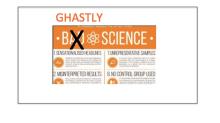
It's no secret that air pollution is bad news (but no longer in the U.S.). It's also no secret that people write sensationalized junk that poses as science to drive home a point or support an agenda. Today we're having a two-for-one special. You get both. And no – small particulate matter does not affect IQ. This is beyond ridiculous.

Decline of Chickenpox a Problem for Millennials?

By Alex Berezow, PhD — Dec 20, 2017
According to the CDC, the percentage of children who have ever had chickenpox has fallen dramatically since a vaccine was licensed for use in the U.S. in 1995. But because fewer kids have chickenpox, there is less virus circulating among the public. It's thought that exposure to the virus helps keep shingles in check, which is normally associated with older folks.

According to the CDC, the percentage of children who have ever had chickenpox has fallen dramatically since a vaccine was licensed for use in the U.S. in 1995. But because fewer kids have chickenpox, there is less virus circulating among the public. It's thought that exposure to the virus helps keep shingles in check, which is normally associated with older folks.

Rattlesnake Pills Worse Than Snake Oil?

By Ruth Kava — Dec 20, 2017
Snake oils are useless nostrums promoted to treat and/or cure virtually any type of ailment. But they don't have to come from snakes. Some, however, do — such as the rattlesnake pills recently dinged by the CDC for being contaminated with Salmonella bacteria. Kind of ironic, because instead of curing, they actually make the user sick.  

Snake oils are useless nostrums promoted to treat and/or cure virtually any type of ailment. But they don't have to come from snakes. Some, however, do — such as the rattlesnake pills recently dinged by the CDC for being contaminated with Salmonella bacteria. Kind of ironic, because instead of curing, they actually make the user sick.
 

Don't Worry Serena, You Will Ace Teething

By Julianna LeMieux — Dec 20, 2017
When the best female tennis player in history asks for teething advice, we're happy to oblige. Unfortunately, there's only one thing that can be done to help with a baby's teething – and it's probably not what you think.                   

When the best female tennis player in history asks for teething advice, we're happy to oblige. Unfortunately, there's only one thing that can be done to help with a baby's teething – and it's probably not what you think.   


Using Eyes as Cursor: Helping ALS Patients 'Speak'

By Erik Lief — Dec 20, 2017
The technology that allows someone to communicate written sentences solely with their eyes is truly incredible. And that fascinating device provides at least some merciful measure of freedom for those trapped by the progressive, unceasing horrors of ALS, otherwise known as Lou Gerhig's Disease.

The technology that allows someone to communicate written sentences solely with their eyes is truly incredible. And that fascinating device provides at least some merciful measure of freedom for those trapped by the progressive, unceasing horrors of ALS, otherwise known as Lou Gerhig's Disease.

Stopping Predatory Journals Takes Teamwork

By Julianna LeMieux — Dec 19, 2017
Predatory journals – which are non-indexed, non-archived and lack transparency – have been called a “corruption of the communication of science." Because our organization's mission is to improve the communication of science, we want to stop them in their tracks. But what can be done?             

Predatory journals – which are non-indexed, non-archived and lack transparency – have been called a “corruption of the communication of science." Because our organization's mission is to improve the communication of science, we want to stop them in their tracks. But what can be done? 


An AI Breakthrough in Drug Discovery? Not So Fast

By Josh Bloom — Dec 19, 2017
Drug discovery is a long, tortuous and impossibly difficult job. A group at the University of Warwick has come up with a mathematical model that seems to be a very big step in streamlining the process. But is it really? To answer this we need to take a look at how drugs are discovered. 

Drug discovery is a long, tortuous and impossibly difficult job. A group at the University of Warwick has come up with a mathematical model that seems to be a very big step in streamlining the process. But is it really? To answer this we need to take a look at how drugs are discovered. 

10 Biggest Junk Science Stories of 2017

By Alex Berezow, PhD — Dec 19, 2017
It's the season for Top 10 lists. The challenge, as usual, is to narrow down all the junk science we debunked this year to just the 10 best (or is that worst?) stories. It would be far easier to create a Top 100 list.

It's the season for Top 10 lists. The challenge, as usual, is to narrow down all the junk science we debunked this year to just the 10 best (or is that worst?) stories. It would be far easier to create a Top 100 list.

You Will Slip & Fall; 4 Ways to Avoid a Fracture

By Erik Lief — Dec 19, 2017
More than 300,000 elderly folks fracture their hip each year, and 95% of those hospitalizations are caused by falling, usually sideways. If there were a few simple ways to minimize this chance of serious injury, wouldn't it be smart to know them? Sure it would. And here they are.    

More than 300,000 elderly folks fracture their hip each year, and 95% of those hospitalizations are caused by falling, usually sideways. If there were a few simple ways to minimize this chance of serious injury, wouldn't it be smart to know them? Sure it would. And here they are.